
A friend who runs a boutique travel desk in Bandra told me something in June that stuck with me: half her Seychelles enquiries this year came from people who’d already been to the Maldives twice and wanted “the other one.” That’s the shift happening right now. Seychelles isn’t a mystery destination anymore — it’s the upgrade Indian travelers are actively asking for, and the tourism board knows it. In the first week of August alone, Tourism Seychelles ran roadshows in Delhi and Mumbai specifically to court Indian travel agents, on the back of a year where Indian arrivals grew by roughly 75%.
So this is the guide I’d have wanted before I went: what the visa actually involves, whether you fly direct, which of the three inhabited islands deserves your time, what it costs in rupees rather than vague “expensive” hand-waving, and a route that doesn’t have you wasting a day figuring out ferries.
Why Seychelles, and why now
Seychelles has spent the last decade being the destination Indian travelers heard about from someone else’s honeymoon photos but never quite got around to booking — partly because there was no direct flight, partly because Maldives absorbed all the “Indian Ocean island trip” search traffic by default. That’s shifting. Tourism Seychelles is targeting 15,000 Indian arrivals in 2026, up from about 13,400 in 2025, and its roadshow stops in Mumbai, Ahmedabad, and Delhi this year were explicitly built around Indian airline partners — IndiGo and Air Seychelles both showed up — and there’s active discussion of adding direct flight capacity beyond the current Mumbai route.
None of that changes what’s actually on the islands. It just means the logistics are getting easier at the exact moment more Indian travelers are looking for a Maldives alternative that isn’t overwater-villa-or-nothing — Seychelles has real hiking, real towns, and granite boulders the size of buildings instead of just sandbanks.
<a name=”visa”></a>
Seychelles visa for Indians: what you actually need
Here’s the good news first: Indian passport holders don’t apply for a visa in the traditional sense. You get a free Visitor’s Permit stamped on arrival, and there’s no embassy visit, no printed visa sticker, no waiting period. But — and this trips people up — you do need to apply online for a Tourist Authorization before you fly, which is a separate step from the visitor’s permit and needs to be sorted at least a couple of days ahead, not at the airport.
What you’ll need to show:
- A passport valid for at least six months beyond your entry date
- Confirmed return or onward tickets
- Proof of accommodation for every night of your stay (a hotel confirmation is fine)
- Proof you can cover your trip — roughly $150 a day is the informal benchmark immigration officers use, though nobody’s counting exact rupees at the counter if your booking and card look legitimate
The permit itself is typically granted for up to 30 days, extendable if you genuinely need longer, though almost nobody does for a first trip. One thing worth flagging honestly: rules like this shift, and Seychelles immigration has tightened documentation checks in the past when arrival numbers spiked, so confirm the current Tourist Authorization process on the before you book anything non-refundable.
Getting there: flights from India
There’s one direct route right now: Mumbai to Victoria (Mahé) on Air Seychelles, roughly four times a week, taking about 4 hours 30 minutes. If you’re not flying out of Mumbai, you’re connecting — usually through Abu Dhabi, Dubai, or Colombo on Etihad, Emirates, or SriLankan, which stretches the journey to 8-12 hours depending on the layover.
Round-trip fares from Mumbai run anywhere from roughly ₹40,000 in a genuinely good shoulder-season sale up to ₹1,00,000+ if you’re booking close to peak dates. From Delhi or Bangalore, budget ₹55,000-₹1,20,000 depending on the connection and season — the wide range is real, not a typo, because Seychelles fares swing hard between low and peak season in a way Southeast Asia routes generally don’t.
The direct Mumbai flight is worth planning your dates around if you can. Four hours thirty is a completely different trip than a red-eye through Abu Dhabi with a four-hour layover, and if the direct-flight talks floated at this year’s roadshow go anywhere, expect more capacity — and better fares — from late 2026 onward.
Best time to visit
Seychelles sits close enough to the equator that it doesn’t really have a “bad” season the way some tropical destinations do, but it does have two distinct wind patterns, and they matter more than most guides let on.
April-May and October-November are the sweet spots — the transition windows between the two trade wind seasons, when the sea calms down on both coasts and you get warm, mostly still weather. December through March is the northwest monsoon: hotter, more humid, with a real chance of short, heavy downpours, though it rarely ruins a whole day. May through September is the southeast trade wind season — drier air, but choppier seas on Mahé’s west coast, and this is when seaweed washes up on Praslin’s Anse Lazio and Côte d’Or beaches, which nobody mentions in the brochure photos. It’s not dangerous, just less photogenic, and resorts do rake it daily, but if a specific beach is the whole point of your trip, time it around this.
Mahé, Praslin, La Digue — which islands and how long
Ninety percent of the first-time Seychelles trips I’ve seen planned badly make the same mistake: booking one resort on Mahé for the whole week because it’s simplest. Don’t. The three main islands are different enough in character that skipping two of them is like visiting Kerala and never leaving the airport hotel.
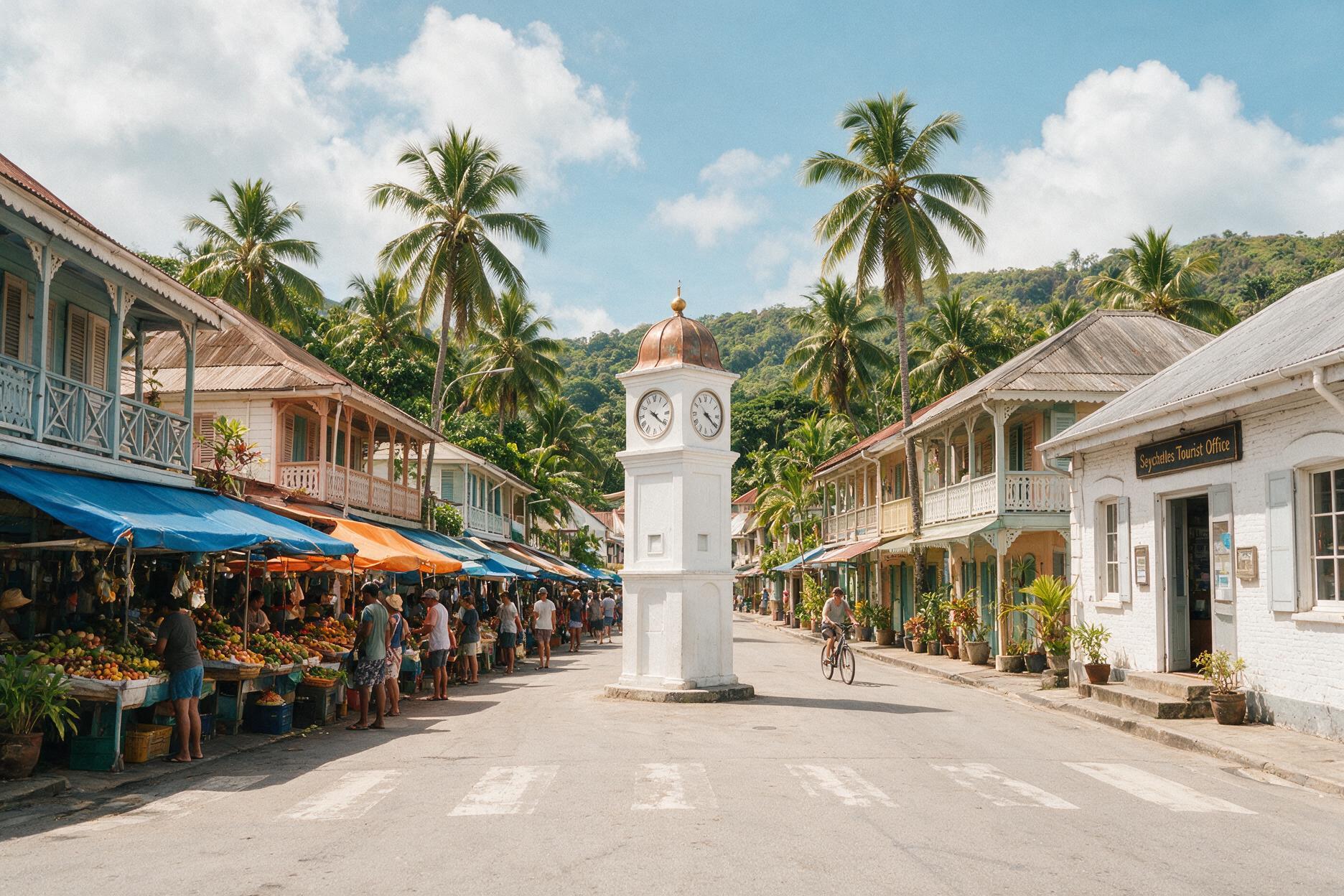
Mahé is the biggest and the only one with real infrastructure — Victoria (one of the smallest capital cities in the world, genuinely walkable in an afternoon), the airport, and Morne Seychellois National Park covering a fifth of the island with hiking trails up to Morne Blanc. Base yourself here for two to three nights.
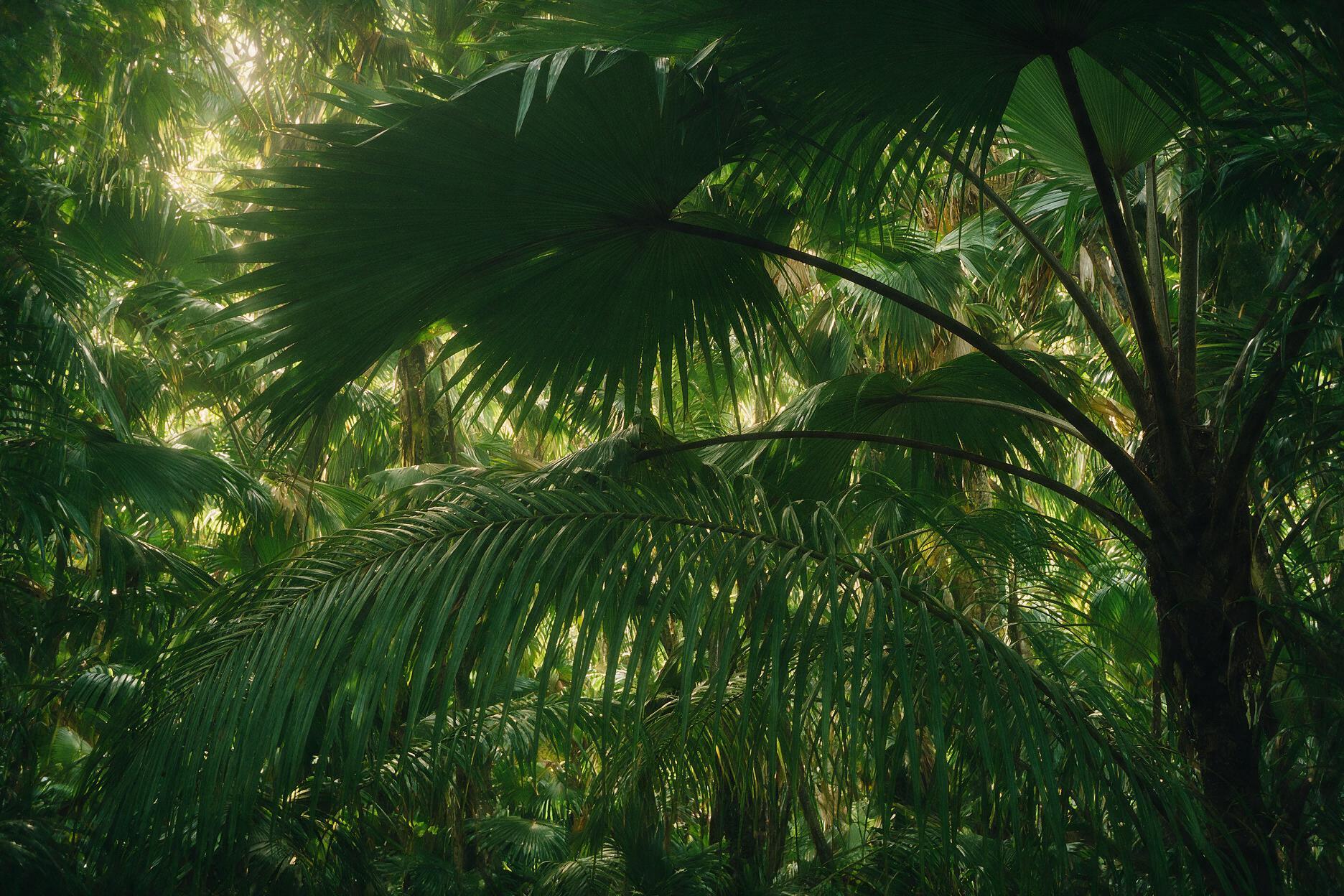
Praslin is quieter and greener, home to the Vallée de Mai — a UNESCO World Heritage-listed forest and one of only two places on earth where the coco de mer palm grows wild, with a seed shaped like nothing you’ve seen before. Anse Lazio, when the seaweed isn’t in, is regularly ranked among the best beaches on the planet. Two to three nights.
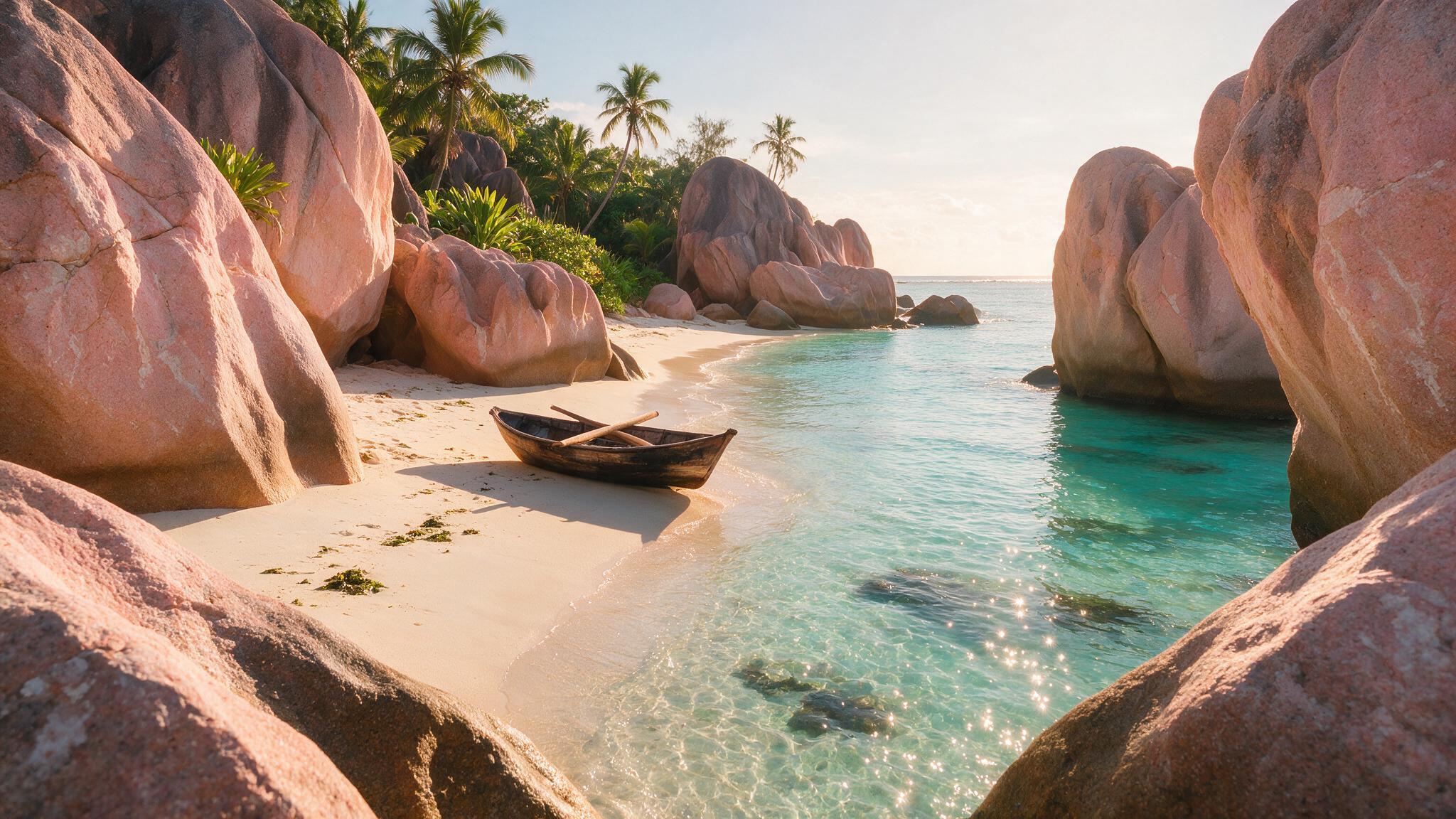
La Digue has no cars to speak of — you get around by bicycle or ox-cart, and the pace drops instantly. Anse Source d’Argent, with its house-sized pink granite boulders framing the water, is the single most photographed beach in the country for good reason. Two nights minimum, and honestly, this is the island people wish they’d given more time to.
A 7-day itinerary that works
Days 1-2 — Mahé. Land, settle in, don’t overplan day one. Day two: Victoria in the morning (the clock tower, the market, a proper look at the smallest capital going), then the Sans Souci mountain road up into the national park and down to the west-coast beaches for sunset.
Day 3 — Mahé to Praslin. Morning Cat Cocos ferry (75 minutes), check in, spend the afternoon at Anse Lazio.
Day 4 — Praslin. Vallée de Mai in the morning before the day-trip crowds from Mahé arrive — go before 9am if you can. Afternoon boat trip to Curieuse Island to see the giant tortoises.
Day 5 — Praslin to La Digue. Short ferry hop (15 minutes), rent a bike the moment you land, and just ride.
Day 6 — La Digue. Anse Source d’Argent at sunrise, before the day-trippers from Praslin show up around 10am — this is the single best piece of advice in this whole guide. Spend the rest of the day cycling to the smaller, near-empty beaches on the east side.
Day 7 — Back to Mahé, fly home. Build in a buffer here; ferry schedules are reliable but not immune to weather delays, and you don’t want a rough sea day between you and your flight home.
Where to stay
Seychelles doesn’t really do budget — this isn’t a backpacker archipelago, and Get Tripped wouldn’t send you there for that anyway — but there’s a real range between “comfortable” and “once-in-a-lifetime.”
For a genuinely special honeymoon stay, Six Senses Zil Pasyon on Félicité Island is about as private as it gets — private-pool villas, a boat transfer to reach it, butler service, the works. Constance Lemuria on Praslin, five minutes from the airport, sits across three beaches with a genuinely excellent spa and golf course, which is unusual for an island this small. For total seclusion, Four Seasons Resort Seychelles at Desroches Island puts you on a 14km coral island most guests never share with anyone outside their own resort.
If you want boutique rather than sprawling, L’Orangeraie on La Digue is close to Anse Source d’Argent, set in gardens, and consistently the best-reviewed option on the island. For a well-priced, still genuinely comfortable stay on Mahé, Avani+ Barbarons on Barbarons Beach covers multiple restaurants, water sports, and a solid spa without the four-figure nightly rate of the ultra-luxury properties.
Getting around: the ferry system
Cat Cocos runs the fast ferries between all three islands, and this is genuinely the backbone of a Seychelles trip — there’s no bridge, no domestic flight worth the hassle for this itinerary. Mahé-Praslin runs about 75 minutes and starts around €56 one-way in the main cabin (plus a small port fee); Mahé-La Digue is about 105 minutes from roughly €66 one-way; Praslin-La Digue is a quick 15-minute hop. Business class, if you want the upgrade, adds about €15-21 each way and gets you a better seat and less engine noise — worth it on the longer Mahé legs, unnecessary for the short Praslin-La Digue crossing.
Book ferry tickets a few days ahead in peak season (July-August, December-January); they do sell out, and there usually aren’t more than two or three sailings a day per route.
On Mahé, renting a car for a day or two is genuinely useful — the island’s bigger than people expect and taxis add up fast. On La Digue, skip the car entirely; bicycles are how everyone gets around, including most of the actual residents.
What it actually costs
Seychelles isn’t a cheap trip, and there’s no version of this guide that pretends otherwise — but it’s not automatically pricier than a good Maldives trip either, and it gives you more to actually do with your days.
Rough daily budgets per couple, excluding flights:
- Mid-range: ₹18,000-₹28,000/day — a solid 4-star or boutique guesthouse, mixing self-catering breakfasts with a couple of restaurant meals, local buses and the odd taxi
- Upscale: ₹35,000-₹55,000/day — proper resort stays like Avani+ Barbarons or L’Orangeraie, rental car days, most meals out
- Ultra-luxury: ₹70,000-₹1,50,000+/day — Six Senses, Constance Lemuria, Four Seasons Desroches territory, private transfers, spa days built in
Add ferry costs (roughly ₹5,500-₹6,500 one-way per person per inter-island leg at current exchange rates) and flights (₹40,000-₹1,20,000 round trip per person depending on season and route) on top of daily spend.
Food: Creole cooking, not resort buffets
Seychellois food is its own thing — Creole cooking built on African, French, Indian, and Chinese threads, and genuinely one of the more underrated food cultures in the Indian Ocean. The dish to actually seek out is kari koko — fish or chicken curry in coconut milk, milder and more layered than it sounds, closer to a Kerala fish curry than a Thai one. Grilled fish (tuna, trevally, marlin depending on the catch) comes with rice, chutney, and usually a fiery Creole chili sauce served on the side, which is worth asking for separately rather than pre-mixed in if you’re not used to Seychellois heat levels.
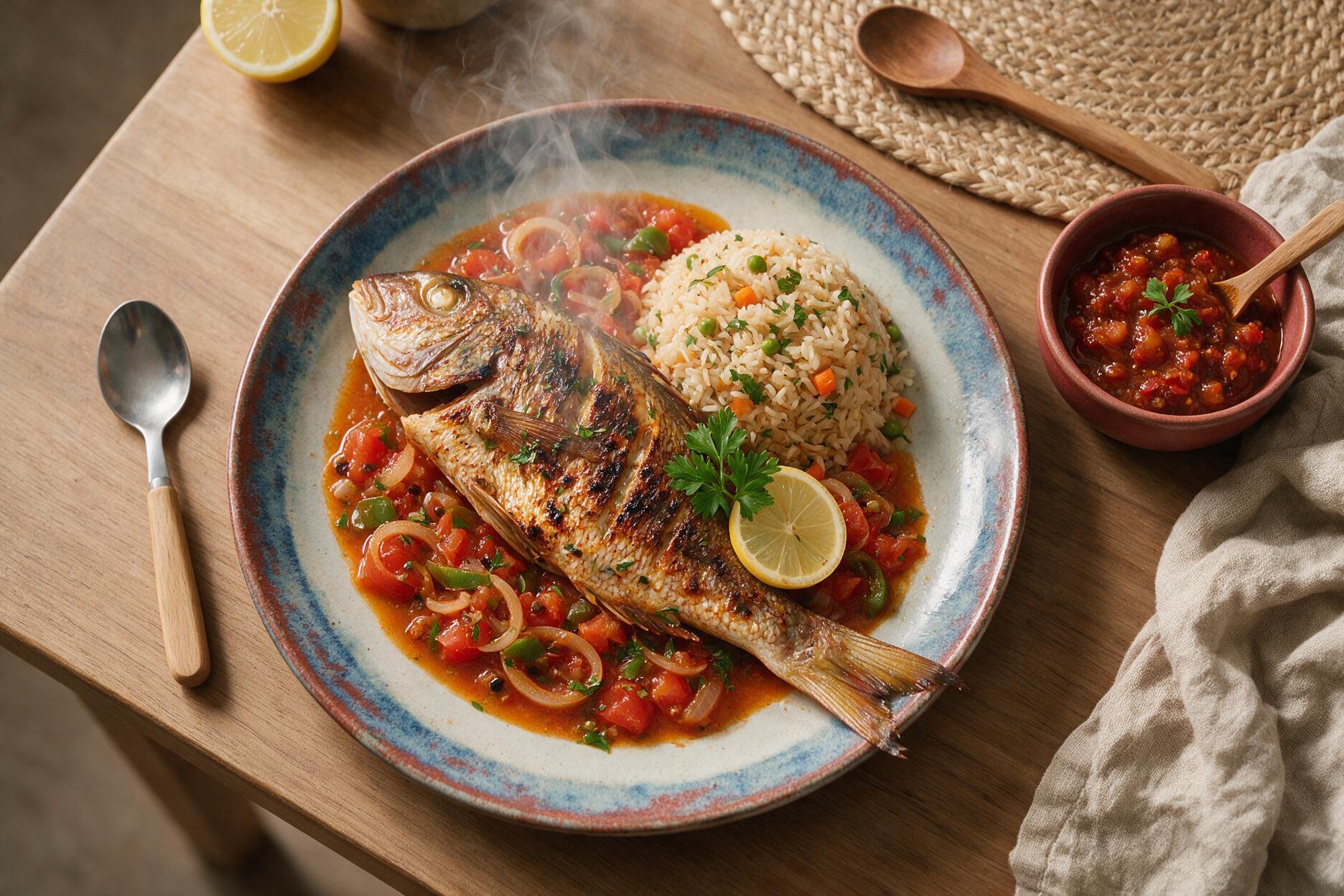
Resort buffets are fine and often genuinely good, but the better meals are in Victoria’s small local restaurants and at the Sunday food stalls near Beau Vallon — don’t let three straight days of hotel breakfast be the only Seychellois food you eat.
Money, SIM cards, and practical odds and ends
The currency is the Seychellois Rupee (SCR). Cards — Visa and Mastercard mainly, Amex mostly only at the big international chains — are accepted at resorts and most restaurants, and contactless is increasingly normal. But carry some cash for smaller islands, local markets, and the odd taxi driver who’d rather not deal with a card machine. ATMs are reliable at the airport and in Mahé, Praslin, and La Digue’s main areas, though each withdrawal usually carries a fee of 50-150 SCR from the local bank side, separate from whatever your Indian bank charges.
For connectivity, an eSIM is genuinely the easiest option — Airtel Seychelles is the main network supporting international eSIM plans, and it works reliably across all three tourist islands. If you’d rather have a physical SIM, Airtel or Cable & Wireless kiosks are right in the arrivals area at Mahé airport, and a starter pack runs around SCR 100 (roughly ₹600). Either way, download offline Google Maps for all three islands before you land — signal gets patchy on La Digue’s quieter roads and inside the national park trails on Mahé.
Culture, etiquette, and one mistake to avoid
Seychellois culture is relaxed rather than formal — meals are social, conversation runs long, and there’s no strict dress code for dining beyond what you’d expect at any beach destination (cover up a bit more in Victoria’s town center out of basic respect, less in resort areas). Meals are typically eaten fork-in-left-hand, knife-in-right, though grilled dishes often come out meant to be eaten by hand, and nobody will blink if you do.
The mistake to actually avoid: treating Vallée de Mai and Anse Source d’Argent like quick photo stops on a group day-trip itinerary, which is how most cruise passengers and rushed day-trippers experience them — and it shows in how crowded both spots get by mid-morning. If you’re staying on the island rather than passing through, go at opening time. The difference between Anse Source d’Argent at 8am and Anse Source d’Argent at noon, when three tour boats have just landed, is the difference between the postcard and a parking-lot-adjacent beach.
Who Seychelles is actually for
Honeymooners get the strongest case here — private-villa resorts, genuinely romantic beaches, and none of the party-island energy some other Indian Ocean spots carry. Couples celebrating a milestone anniversary fit the same profile. Families can absolutely make it work, especially on Mahé where there’s more to do beyond the beach — but Seychelles skews adult and quiet rather than kid-activity-packed, so it suits families with older children better than toddlers. For solo travelers, it’s workable but expensive relative to the experience — Seychelles rewards having someone to split a resort room and a rental car with, so this isn’t naturally a solo backpacking stop, and honestly shouldn’t be marketed as one.
FAQs
Do Indians need a visa for Seychelles? No traditional visa — you get a free Visitor’s Permit on arrival, typically for up to 30 days. You do need to apply online for a Tourist Authorization before you travel, which is a separate, mandatory step.
Is there a direct flight from India to Seychelles? Yes, one route: Mumbai to Mahé on Air Seychelles, around four times a week, roughly 4 hours 30 minutes. All other Indian cities connect through hubs like Abu Dhabi, Dubai, or Colombo.
How many days do you need in Seychelles? Seven is the realistic minimum to properly cover Mahé, Praslin, and La Digue without feeling rushed. Five works if you’re willing to drop one island.
Is Seychelles more expensive than the Maldives? Roughly comparable at similar tiers of hotel, though Seychelles gives you more to do outside the resort — hiking, a real town, inter-island travel — which can make the cost feel more justified depending on what you want from the trip.
What’s the best island to stay on in Seychelles? There isn’t one “best” — split your time. Mahé for infrastructure and hiking, Praslin for the Vallée de Mai and beaches, La Digue for the slow, car-free pace and Anse Source d’Argent.
Is Seychelles safe for Indian tourists? Yes, generally very safe, with low crime rates and a tourism-dependent economy that treats visitors well. Normal precautions apply — don’t leave valuables unattended on beaches, use registered taxis and tour operators.
Do I need to carry cash in Seychelles? Some — cards work at resorts and most restaurants, but local markets, smaller cafés, and some taxi drivers prefer cash. ATMs are available on all three main islands.
Final word
Seychelles isn’t trying to be a bigger, showier Maldives, and that’s exactly the point. It’s granite boulders instead of sandbanks, a walkable capital instead of a resort-only itinerary, and a food culture that doesn’t need a buffet to be worth talking about. The tourism board is clearly betting that once more Indian travelers actually go, word of mouth does the rest of the work — and after a week split across Mahé, Praslin, and La Digue, it’s not hard to see why they’re confident.
Ready to actually plan it? Get Tripped puts together Seychelles itineraries built around the direct Mumbai flight, the right island split for your trip length, and resort picks that match your budget rather than a one-size package. Get in touch with our team to start building yours.