
Kandy Esala Perahera 2026: A Sri Lanka Festival Itinerary
What the Esala Perahera actually is
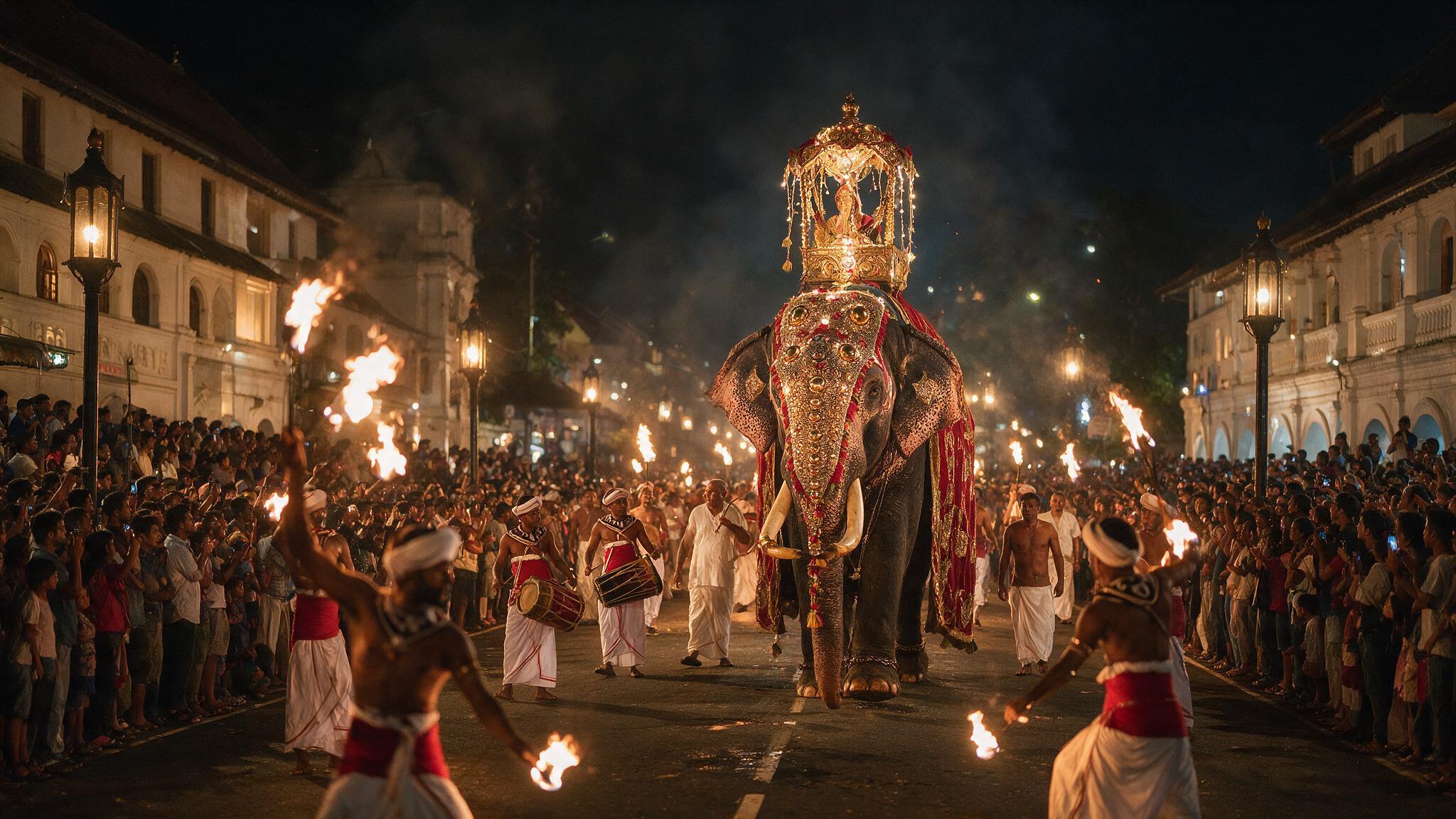
Most “top festivals in Asia” listicles mention the Esala Perahera in passing, usually next to a stock photo of an elephant in a light-up costume, and move on. That undersells it considerably. This is a ten-night procession honoring the Sacred Tooth Relic of the Buddha, housed at Kandy’s Temple of the Sacred Tooth Relic (Sri Dalada Maligawa), and it’s been observed in some form since roughly the 3rd century BC — which makes it one of the longest continuously running cultural events anywhere in the world, not just in Sri Lanka.
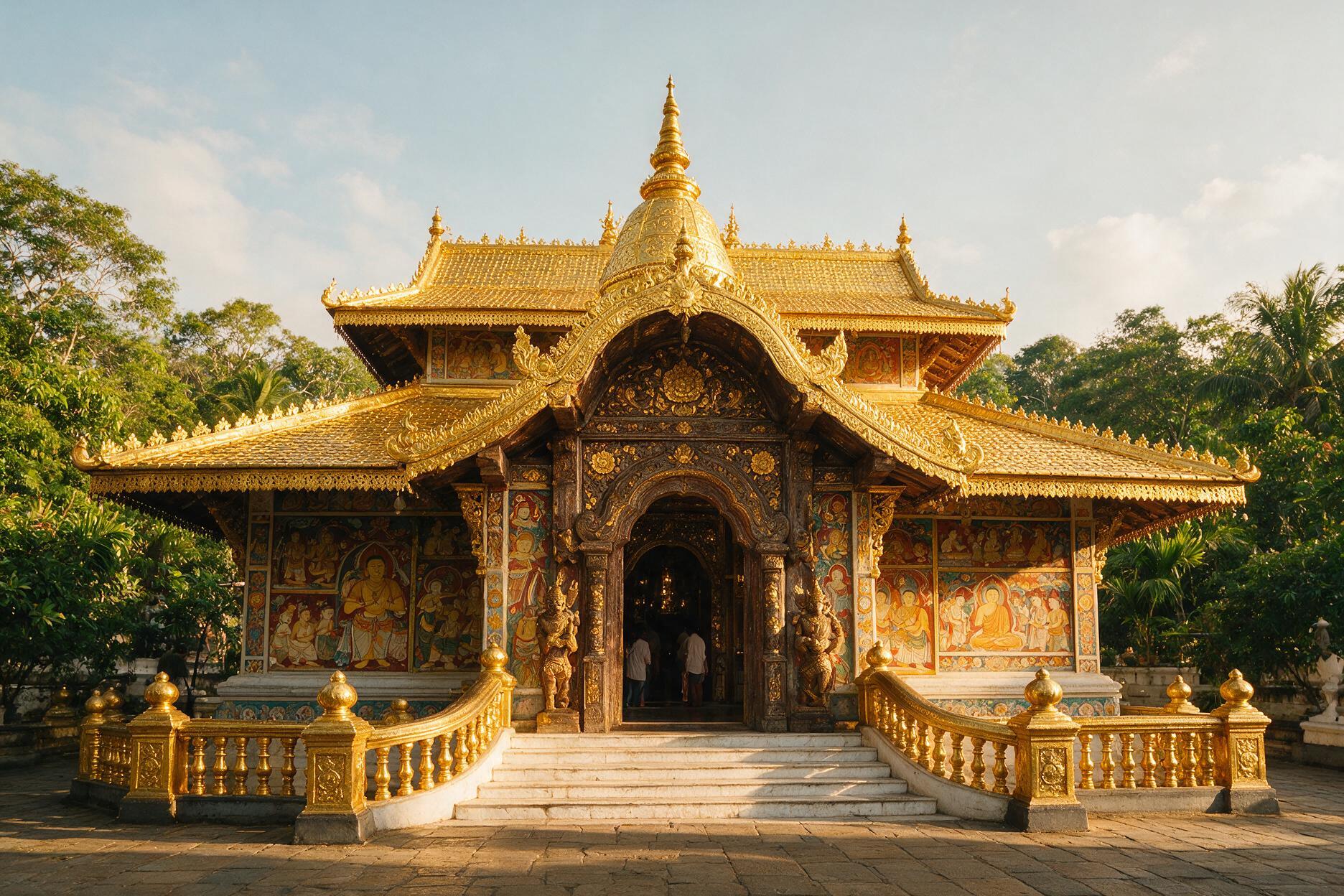
Each night, the streets of Kandy fill with Kandyan dancers, fire-dancers, whip-crackers, drummers, and a procession of elaborately dressed elephants — the lead elephant traditionally carries a replica of the relic casket, since the actual relic never leaves the temple. It builds across the ten nights, from smaller processions early in the festival to the full, enormous parade on the final nights. It is, without much exaggeration, one of the most visually overwhelming things you can see in South Asia, and it’s the kind of event that rewards planning ahead rather than showing up and hoping for the best — accommodation and good viewing spots both get scarce fast.
2026 dates and what happens each night
The Kandy Esala Perahera 2026 runs August 18–27, broken into three phases:
- Kumbal Perahera: August 18–22 — the earlier, smaller-scale nights, still impressive but a noticeably thinner crowd than the festival’s back half. If you want the spectacle with more breathing room, this is the window.
- Randoli Perahera: August 23–26 — the processions grow substantially larger and more elaborate each night, building toward the festival’s peak.
- Diya Kepeema (the water-cutting ceremony) and the Day Perahera: August 27 — held in the early hours, followed by a daytime procession through the streets, closing out the festival.
As of today, that’s roughly two weeks out — close enough that this is squarely the window to be finalizing accommodation and viewing arrangements, not just browsing.
Where to watch, and what it costs
Three approaches, depending on how much you want to spend and how much control you want over your view:
Ticketed seating, the most reliable option — spots along Dalada Veediya and Yatinuwara Veediya, the main procession streets, or a seat in a hotel corridor overlooking the route (Queens Hotel’s route-facing corridor is one of the more established ticketed vantage points, giving you an actual seat rather than a spot in a standing crowd). Prices range roughly €10–€50 (₹950–₹4,700), climbing the closer you get to the final nights and the best stretches of road.
Free standing viewing, along the procession route or near the Temple of the Sacred Tooth Relic itself — the most traditional way to watch, and free, but you’re competing with a genuinely large crowd for a sightline, especially in the festival’s final days. Arrive hours early if you’re going this route.
A note on timing your ticket purchase: festival packages and good hotel rooms are typically recommended six to nine months ahead for the best selection — which means at two weeks out, the best rooms and prime seats are likely already booked. This is exactly the situation where working with an operator who has existing relationships and allocations beats trying to book independently at the last minute.
Sri Lanka visa for Indian travelers
This part, at least, is straightforward and genuinely good news: as of May 25, 2026, Indian passport holders travel to Sri Lanka on a free 30-day tourist ETA (Electronic Travel Authorization) — no visa fee at all, following Sri Lanka’s extension of its fee-free ETA programme to 40 countries, India included.
- Apply at: eta.gov.lk — the only official portal. Third-party sites charging a “service fee” for something that’s free on the government site are common; avoid them.
- What you need: Passport number, travel dates, and accommodation address. No document uploads required for the standard tourist ETA application.
- Processing time: Typically 24–48 hours by email.
- Validity: 30 days from arrival, for tourism or short business visits.
- Passport validity requirement: Minimum 6 months from your arrival date.
Apply before you fly — it’s mandatory even though it’s free, and you’ll want the printed or digital approval on hand at immigration.
Getting there: flights and costs
From Chennai, this is about as easy as international travel gets — roughly 83 flights a week on the route, an average flight time of just 1 hour 22 minutes, and fares that regularly run ₹9,000–₹15,000 round-trip if booked with reasonable lead time. IndiGo, SriLankan Airlines, and Air India all fly it reliably. From Delhi, Mumbai, or Bengaluru, you’re looking at a longer connection, generally routed through Chennai or Colombo directly, with total travel time still comfortably under half a day door to door.
From Colombo’s Bandaranaike International Airport, Kandy is about 96 km (a roughly 3-hour drive) by car, or a scenic train journey that many travelers consider worth doing at least one-way for the views alone through the hill country.
How many days you need, and a route beyond Kandy
Six to eight days lets you build a proper trip around the festival rather than just flying in for one night. A workable structure:
Days 1–2: Colombo, as an arrival buffer and a chance to see Galle Face Green, the Dutch colonial quarter, and get oriented before heading up-country.
Days 3–5: Kandy, timed to your chosen festival nights — the Temple of the Sacred Tooth Relic itself, a walk around Kandy Lake at dawn before the day’s heat and crowds arrive, the Royal Botanical Gardens at Peradeniya, and at least one or two nights of the Perahera.
Days 6–8: Optional hill-country extension — Nuwara Eliya’s tea estates are a short journey from Kandy and a genuinely different Sri Lanka: cooler air, colonial-era architecture, and rolling green tea plantations that most first-time visitors don’t expect from a “beach and temples” country.
If your time is tighter, a focused 4-day Colombo–Kandy loop covers the festival and the essentials without the hill-country add-on.
Where to stay in Kandy during festival week
Book well ahead of the festival dates — rooms in Kandy during Perahera week fill up faster and cost noticeably more than any other time of year. Properties along or near Dalada Veediya put you within walking distance of the procession route, which matters more than usual this week given how packed the streets get. If those are sold out or priced beyond comfort by the time you’re booking, staying slightly further out (10–15 minutes by tuk-tuk) and combining it with a ticketed viewing spot is a reasonable trade-off.
Getting around
Tuk-tuks are the default way to get around Kandy itself — cheap, quick, and the standard mode of transport for short hops. For the Colombo–Kandy leg, a private driver gives you flexibility to stop along the way (spice gardens, viewpoints), while the train is the better choice if the hill-country scenery itself is part of what you want from the trip. During the festival’s final nights specifically, expect road closures along the procession route from early evening — plan your day’s movements around that rather than assuming normal traffic patterns.
What it costs, per day
For a comfortable mid-range trip — good hotels, a private driver for at least part of the trip, sit-down meals, and festival viewing tickets — budget roughly ₹6,000–₹10,000 per person per day, excluding festival week itself, when Kandy hotel rates spike noticeably above that range. Add the festival viewing ticket (₹950–₹4,700 depending on how good a seat you want) as a separate line item for your Kandy nights specifically.
Food and where to eat
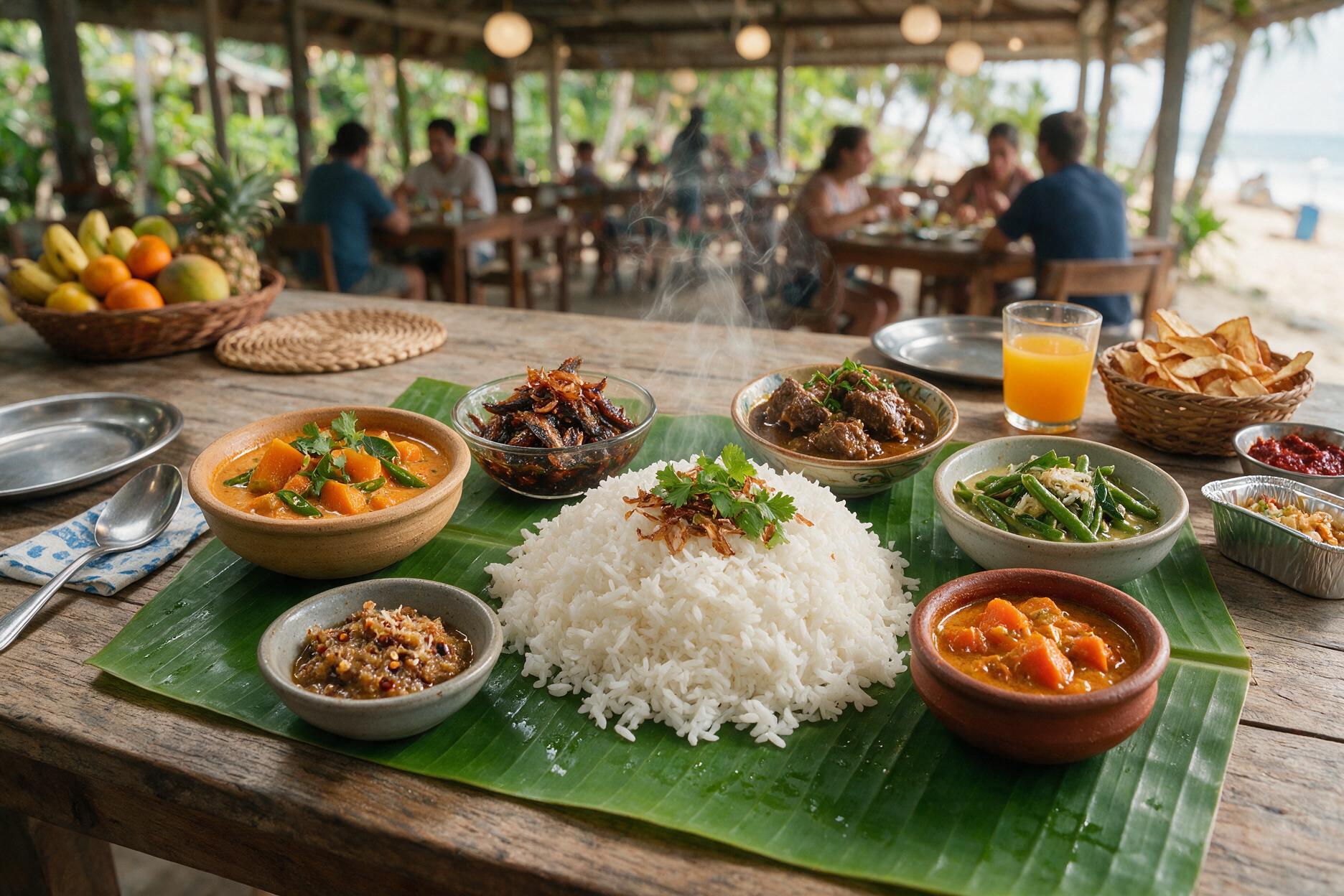
Sri Lankan food shares DNA with South Indian cooking but has its own clear identity — kottu roti (chopped flatbread stir-fried with vegetables, egg, or meat, cooked with a distinctive rhythmic chopping sound you’ll hear before you see it), rice and curry served with an array of small side dishes, and watalappam, a spiced coconut custard dessert, worth seeking out specifically rather than settling for whatever’s on a hotel dessert menu. Kandy’s food scene is less about destination restaurants and more about small, unpretentious places doing rice and curry well — ask your driver or hotel for their actual daily lunch spot rather than the place at the top of review sites.
Places worth the detour
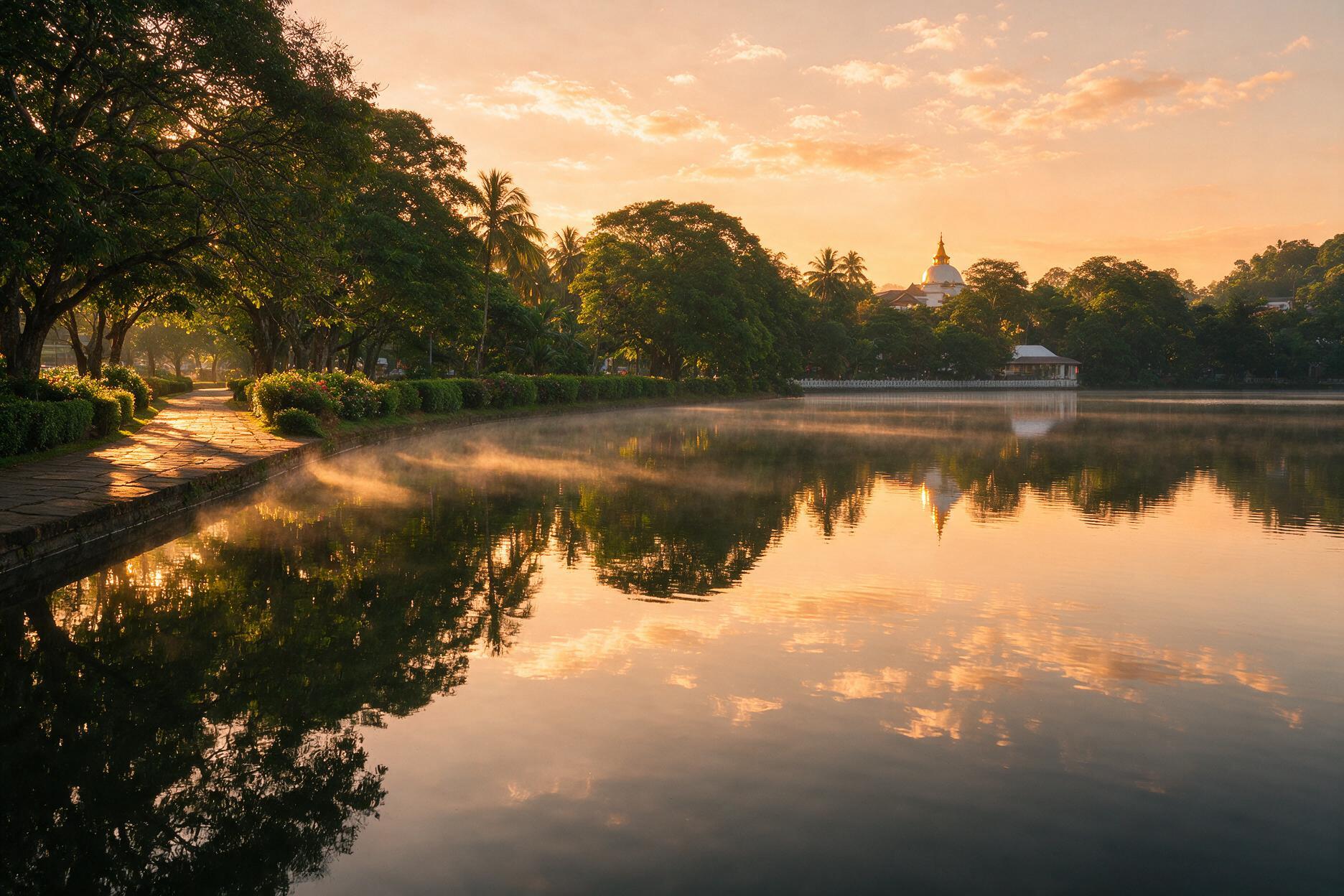
- Kandy Lake at dawn, before the day’s heat, crowds, and festival traffic build up — a genuinely different, quieter version of the same lake you’ll see packed with people that evening.
- Lankatilaka Temple, one of several lesser-known temples around Kandy that most festival visitors never make time for, since the Perahera understandably dominates the itinerary.
- The Royal Botanical Gardens at Peradeniya, a short drive from central Kandy — worth a half-day even for travelers who don’t usually seek out botanical gardens, given the scale and the giant fig tree avenue.
- Nuwara Eliya’s tea estates, if your itinerary stretches beyond the festival days — a cooler, greener side of Sri Lanka that contrasts sharply with Kandy’s festival energy.
Temple etiquette and a mistake to avoid
Visiting the Temple of the Sacred Tooth Relic, or any temple during festival week, requires covering knees and shoulders — shorts and sleeveless tops aren’t allowed, and shoes come off before entering. Carrying a light sarong or shawl solves this if you’re not sure your outfit will pass, since rental options at the door can queue up fast during festival week specifically. Keep noise down inside the temple itself; it’s an active place of worship, not a photo backdrop, even during the one week of the year when it’s also hosting the country’s biggest festival.
The mistake worth flagging clearly: booking Kandy accommodation or festival tickets at the last minute and assuming something will be available. This isn’t a quiet week to wing it — hotel rates in Kandy during Perahera can run several times their normal rate for whatever’s left close to the dates, and the best viewing spots are genuinely gone well before the festival starts. Two weeks out, as of today, is late but not impossible — booking through an operator with existing allocations is a meaningfully better bet than trying to find availability independently at this point.
Money, SIM cards, and connectivity
Sri Lanka runs on the Sri Lankan Rupee (LKR). It’s still a largely cash-based society outside Colombo and the bigger hotels — cards work at upscale hotels and chain restaurants, but tuk-tuks, street food, temple donations, and small guesthouses expect cash. Carry a mix of smaller notes (Rs. 100, 500, 1,000), since breaking a Rs. 5,000 note at a tuk-tuk or small stall is often genuinely difficult. ATMs are reliable in Kandy and Colombo but can be sparser once you’re further into the hill country.
For connectivity, Dialog’s tourist SIM is generally considered the best network in the country — around 1,399 LKR (roughly ₹390) for 30GB valid a month, available at the airport or official stores in Colombo. eSIM options ($7–$15) are the simpler choice if your phone supports it, letting you skip the SIM-hunting entirely on arrival.
Safety notes
Sri Lanka is genuinely one of the safer countries in the region for tourists — low crime rate, and a well-established tourism infrastructure that’s used to handling large international crowds, festival week included. The realistic precautions are ordinary ones: keep valuables secure in dense festival crowds (exactly the environment where pickpocketing happens anywhere in the world), agree on tuk-tuk fares before getting in rather than after, and expect significant crowd density and slow-moving traffic around the procession route on festival nights specifically — build extra time into any plans that need you somewhere by a set hour that evening.
FAQs
What are the Kandy Esala Perahera 2026 dates? August 18–27, 2026 — Kumbal Perahera (Aug 18–22), Randoli Perahera (Aug 23–26), and the water-cutting ceremony with Day Perahera on August 27.
Do Indians need a visa for Sri Lanka? Indian passport holders travel on a free 30-day tourist ETA, applied for at the official eta.gov.lk portal — no visa fee, since May 25, 2026.
How do I get a good viewing spot for the Perahera? Ticketed seating along Dalada Veediya or Yatinuwara Veediya, or a hotel corridor view, runs roughly €10–€50. Free standing spots exist along the route and near the temple but require arriving hours early, especially on the festival’s final nights.
How far is Kandy from Colombo? About 96 km, roughly a 3-hour drive, or a scenic train journey through Sri Lanka’s hill country.
Is it too late to book for the 2026 festival? Not impossible, but tight — two weeks out is later than the recommended six-to-nine-month booking window for the best rooms and seats. Working with an operator with existing hotel and ticket allocations is a stronger bet than independent last-minute booking at this point.
What should I wear to watch the Perahera or visit the temple? Shoulders and knees covered, no shorts or sleeveless tops, shoes off before entering the temple itself. A light sarong or shawl is a safe backup if you’re unsure.
Final word
The Esala Perahera is one of those events that photographs well but genuinely doesn’t need the photos to justify the trip — the drumming, the scale of the procession, and ten centuries of continuous tradition happening in front of you land differently in person. With the festival two weeks out, this is the window to lock in Kandy accommodation and a viewing spot before both disappear, and to build a few extra days around Colombo or the hill country so the trip isn’t just one very good night sandwiched between two travel days.
Want to build a Sri Lanka trip around the Perahera? Get Tripped can secure Kandy accommodation and festival viewing access even this close to the dates, apply for your ETA, and route in Colombo or Nuwara Eliya on either side. Get in touch to start planning.