
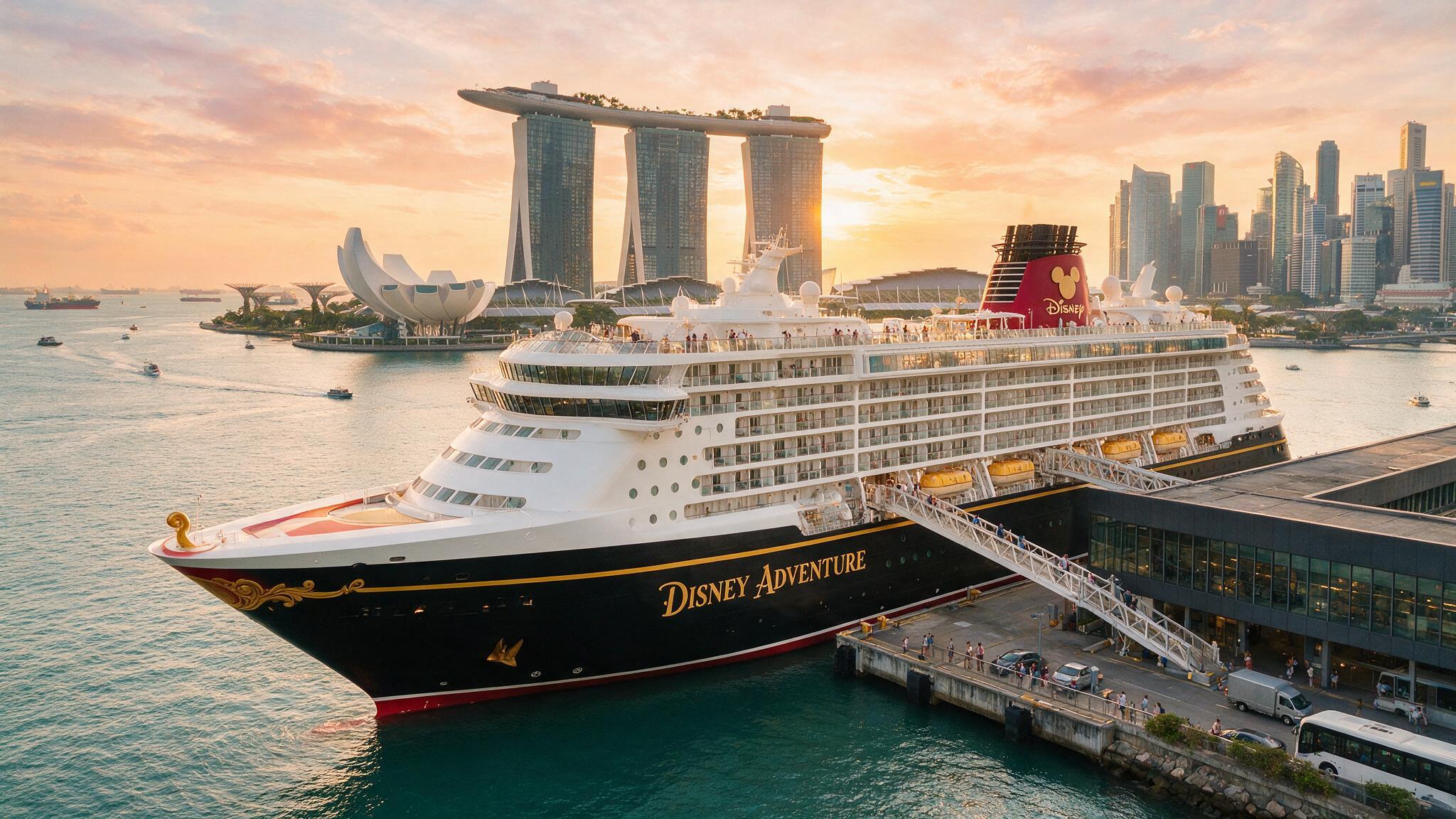
There’s a stat buzzing around the cruise industry right now that’s worth sitting with: when Disney Cruise Line surveyed interest in its new Singapore-based ship, Indian travelers came out as the single most enthusiastic nationality in the world. Not American. Not Chinese. Indian. And when you look at what Disney actually built into this ship — a dedicated quick-service counter serving proper vegetarian and halal-friendly Indian food, not a token curry station — it’s clear this wasn’t an accident.
Disney Adventure homeported in Singapore on March 10, 2026, after a construction delay pushed it back from its original December 2025 date. It’s the first Disney ship based permanently in Asia, sailing short 3 and 4-night round trips out of Marina Bay Cruise Centre with no other ports of call — what the industry calls a “cruise to nowhere,” which sounds like a downgrade until you realize the ship itself is the destination. For Indian families who’ve never quite figured out how to fit a full 7-night Caribbean Disney cruise into a work calendar, that short format is the actual unlock.
Why This Ship, Why Now
Singapore signed a five-year memorandum of understanding with Disney Cruise Line to homeport this ship through at least 2031, so this isn’t a one-season novelty — it’s meant to become a fixture. What makes it different from “just another cruise” is the format: seven fully themed zones on board (Marvel Landing, Pixar Place, and a Disney Imagination Garden among them), a Broadway-scale original production called Remember, and character experiences layered through the day rather than concentrated into one meet-and-greet hour.
The honest comparison point for Indian travelers is a long-haul Disney cruise out of Florida or a Mediterranean sailing out of Barcelona — both of which involve a 15+ hour flight before you’ve even boarded. This one is a 5-6 hour flight from most major Indian cities. That distance difference is the whole pitch.
What a 3 or 4-Night Sailing Actually Looks Like
Because there are no ports of call, every day is a full day on the ship — which sounds thin until you look at what’s packed into it. Reviewers who’ve sailed it describe upward of 40 distinct entertainment experiences across the voyage: stage shows, a poolside performance built around Moana, character meet-and-greets that rotate rather than repeat, and interactive stations where kids design something (a rollercoaster, in one case) and watch it play out on a screen later that day.
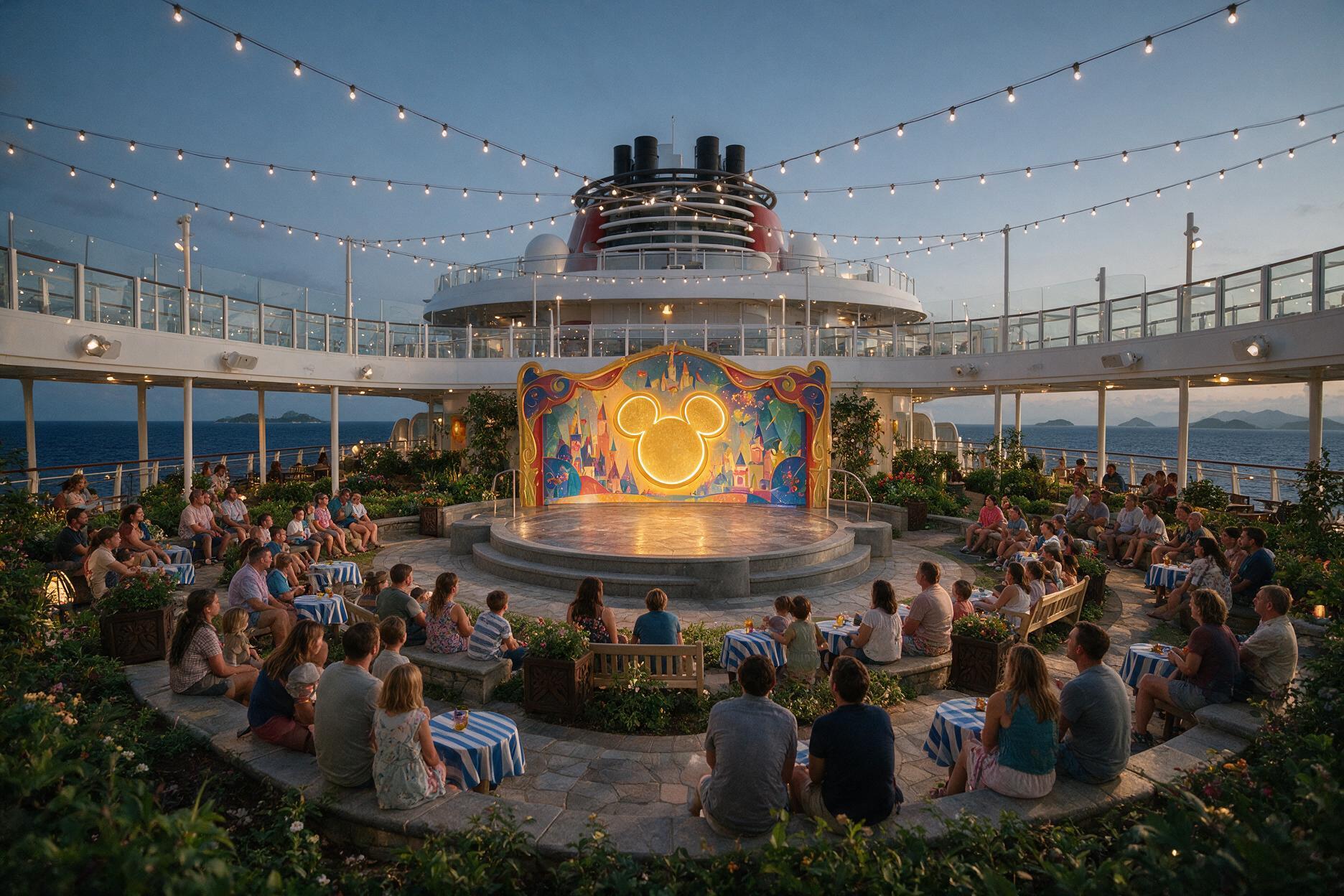
The ship’s social spine runs through Disney Imagination Garden on Deck 10 — an open-air courtyard with a live stage flanked by quick-service spots — and Disney Discovery Reef, an outdoor promenade clustering more casual dining and bars. San Fransokyo Street on Deck 7, themed after Big Hero 6, is where the tween and teen crowd tends to disappear to, arcade and all.
Three nights is enough to get a real taste of it. Four nights gives you a noticeably less rushed pace, particularly if you’re traveling with grandparents who don’t want to sprint between activities.
Cabins and What They Cost
Pricing swings a lot by season and cabin category, so treat these as a starting-point range rather than a quote:
- Inside Stateroom: from around USD 958 for two guests on a 3-night sailing
- Oceanview Room: from roughly SGD 1,765 per cabin
- Verandah Room: from roughly SGD 1,925 per cabin
- Concierge Stateroom: from roughly SGD 4,416, climbing sharply during peak weeks
December and June sailings are consistently the most expensive — concierge cabins during Christmas week have been listed as high as USD 7,798 for a 4-night sailing for two guests. If budget is a real constraint, an off-peak sailing in a standard oceanview or verandah room gets you the full experience at close to half that peak-week price. Fares cover all meals across the rotational dining venues, the Remember production, character experiences, and supervised kids’ clubs for ages 3 to 17 — so the sticker price is closer to all-inclusive than a typical hotel stay.
Getting to Singapore from India
This is where the “easy weekend Disney trip” argument actually holds up. Direct flight times from major Indian cities:
- Chennai to Singapore: around 3 hours 50 minutes
- Bengaluru to Singapore: around 4 hours 15 minutes
- Hyderabad to Singapore: around 4 hours 20 minutes
- Mumbai to Singapore: around 5 hours 40 minutes
- Delhi to Singapore: Singapore Airlines runs a daily direct service, around 5-6 hours
Air India and Singapore Airlines both fly these routes daily out of most metros, with one-way fares from around ₹18,000 depending on how far ahead you book. Because the cruise itself is only 3-4 nights, most families are looking at a 5-6 day trip total once you add a couple of pre- or post-cruise nights in Singapore — genuinely manageable against a long weekend plus a couple of leave days, not a full two-week commitment.
Visa Requirements for Indian Passport Holders
Here’s the one piece of friction worth planning around early: Indian passport holders cannot get a Singapore visa on arrival, and this applies for any purpose, including a cruise that departs from Singaporean soil. You’ll need to apply in advance.
What that involves, as of current requirements: a passport valid for at least 6 months beyond your travel dates, proof of funds (typically SGD 2,000-5,000 equivalent), a confirmed return ticket, a completed Form 14A, and a recent passport photo. Processing takes 5-10 working days, with a visa fee of SGD 30 plus a service fee of roughly ₹650. The visit pass, once granted, is valid for 30 days.
Build in at least two to three weeks of buffer before your travel dates to apply — this isn’t a same-week visa, and cutting it close is the single most common way this trip goes sideways for first-timers. Always confirm current requirements on the Singapore High Commission’s official site before applying, since rules do shift.
Best Time to Sail
Singapore doesn’t have a dramatic seasonal swing the way, say, Japan or Vietnam does — it’s tropical and warm year-round, with a wetter monsoon stretch roughly November through January. That means the ship itself is a reasonably weather-safe bet most months, since a lot of the experience happens indoors or under cover anyway.
Where seasonality matters more is price and crowding: December and June sailings coincide with Indian school holidays and command the highest fares and fullest ships. If your family has flexibility — say, a sailing during the Indian school term rather than peak vacation weeks — you’ll get a noticeably calmer ship and a better rate for the same cabin category.
Kids Clubs, By Age Group
This is genuinely one of the stronger arguments for choosing this over a generic beach resort, and it’s worth breaking down by age because the experience differs a lot:
Ages 3-10 (Oceaneer Club): Large, elaborately themed spaces built around Toy Story, Frozen, and Marvel, with climbing structures, slides, and creative stations. Reviewers consistently flag it as feeling like a mini theme park rather than daycare — kids have reportedly designed their own rollercoaster and watched a simulated version play out on screen.
Tweens and teens: Their own dedicated clubs on San Fransokyo Street, anchored by a Big Hero 6-themed arcade — deliberately separated from the younger kids’ zones so a 14-year-old isn’t stuck in a space built for toddlers.
Supervised care runs for ages 3-17, which means parents genuinely get evening time to themselves at one of the adult-leaning bars or restaurants — not a small thing on a family trip where that almost never happens otherwise.
Dining Onboard (Including the Indian Food)
Dining is baked into the entertainment rather than sitting apart from it — kids’ drawings have reportedly shown up animated on screens during a rotational dinner service, which is the kind of detail that actually lands with a 7-year-old far more than a fancy plate does.
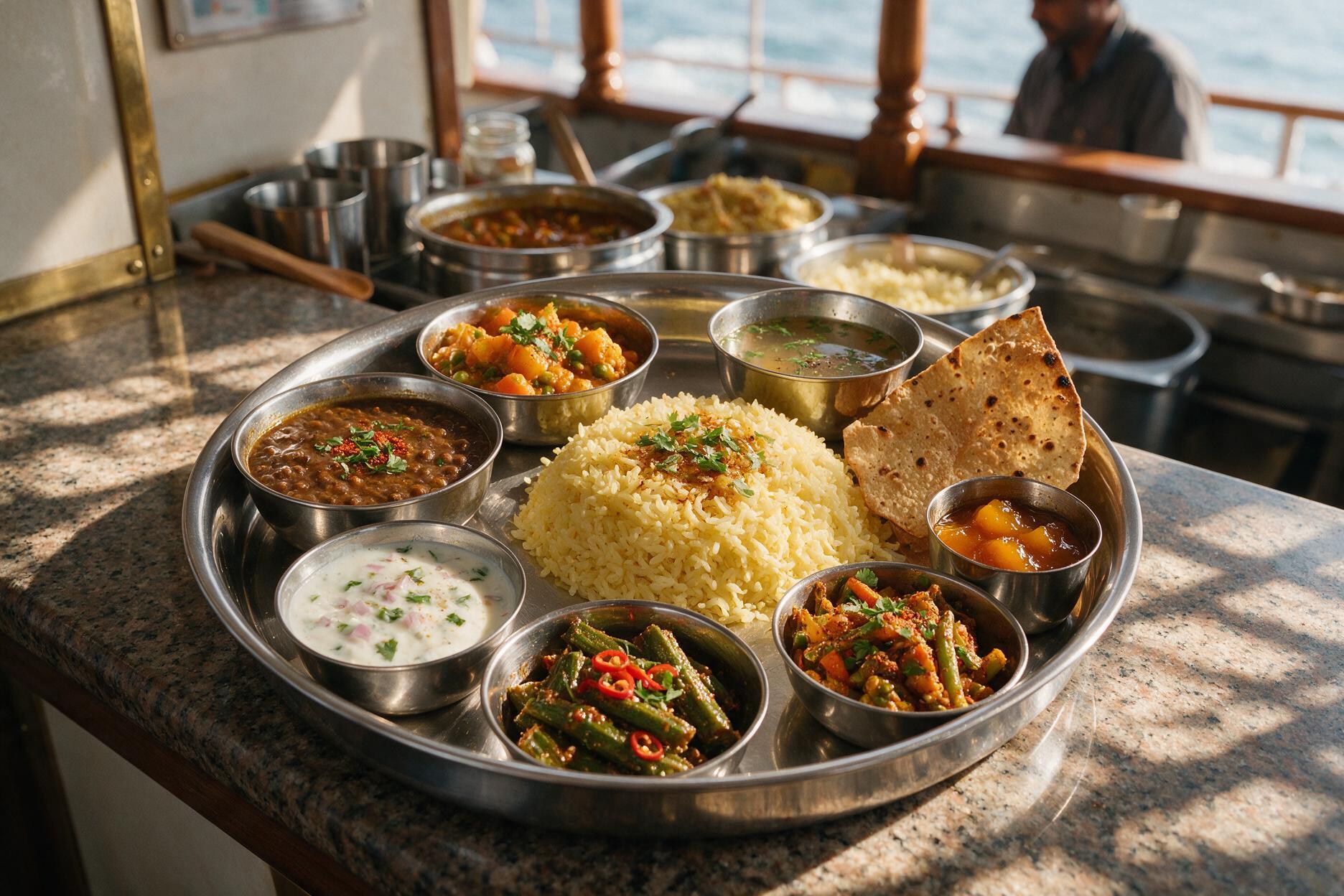
The detail that matters most for Indian travelers specifically: Mowgli’s Eatery, one of the ship’s quick-service counters, serves proper vegetarian and halal-friendly Indian dishes — not a buffet afterthought, but a dedicated venue. Gramma Tala’s Kitchen covers Pacific-Asian food including a well-reviewed Hainanese chicken rice, useful if part of your group wants something lighter. Between the two, a vegetarian family shouldn’t need to survive on pasta and naan for four days, which has historically been the real friction point on Western cruise lines.
Building a Full Singapore Trip Around It
Because the cruise itself only lasts 3-4 nights and doesn’t stop anywhere, most families are better served pairing it with 2-3 nights in Singapore before or after sailing, rather than treating the cruise as the entire trip. A few ways that tends to work well:
- Pre-cruise: land in Singapore, spend a day at Gardens by the Bay and a night walking Clarke Quay, then embark from Marina Bay Cruise Centre rested rather than jet-lagged.
- Post-cruise: disembark and use the extra days for Universal Studios Singapore or Jurong Bird Park — good if the kids want a second, different kind of theme-park day rather than repeating the ship’s activities.
- Split: a night on each side, which works best if you’re also trying to see Merlion Park, the Marina Bay Sands SkyPark, or do a proper hawker-centre food crawl through Maxwell or Lau Pa Sat without rushing it.
Marina Bay Cruise Centre itself is about a 20-minute taxi ride from most central Singapore hotels, and Grab (Southeast Asia’s ride-hailing app) works reliably for the transfer — no need to prebook a private car unless you’re traveling with a lot of luggage or an early-morning embarkation.
A Mistake to Avoid
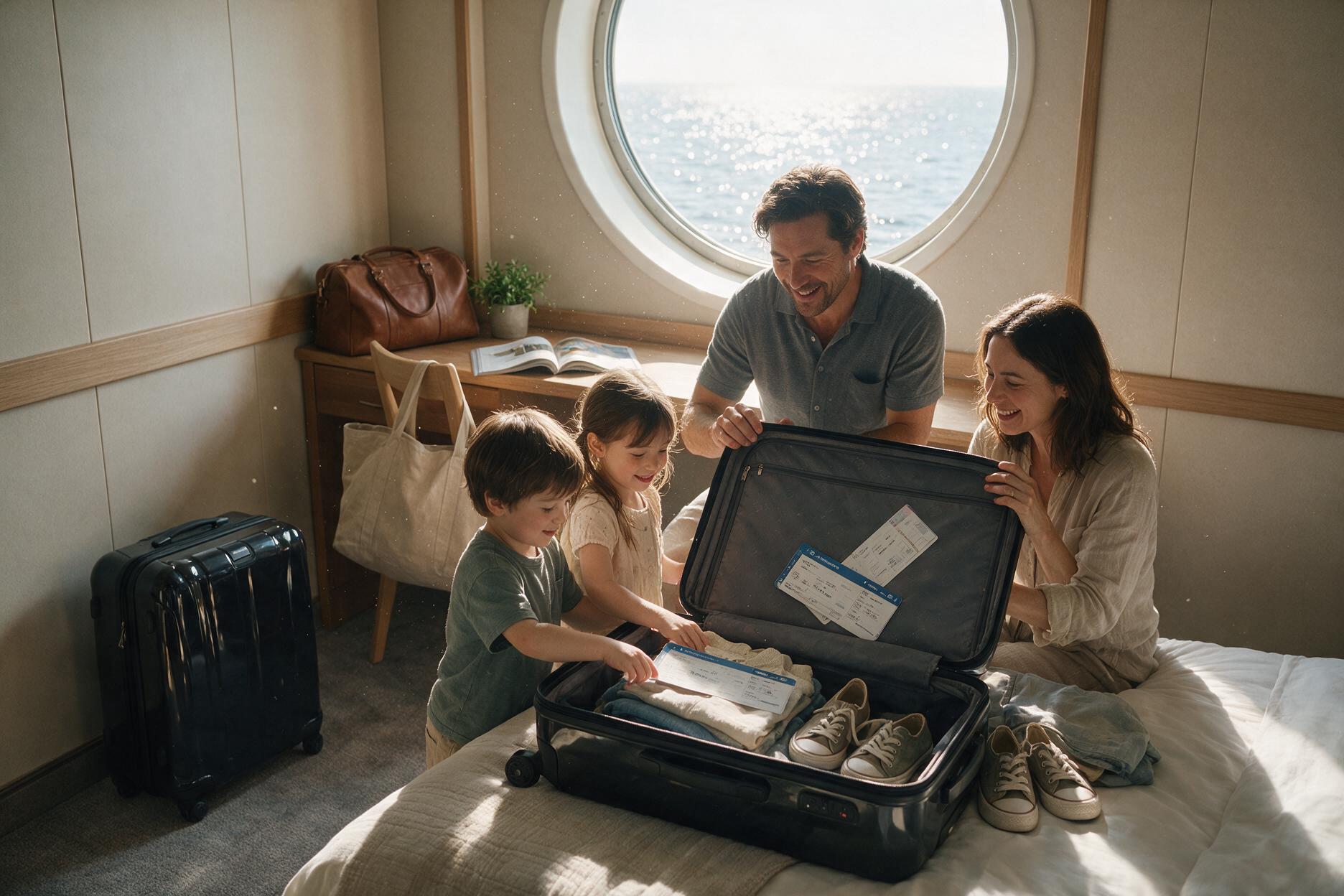
Don’t book the cheapest inside stateroom assuming you’ll barely be in the room. On a 3-night sailing packed with activity, that’s mostly true during the day — but early boarding and pre-dinner downtime add up, and an interior cabin with a virtual porthole is a real downgrade from an oceanview room if you’re traveling with young kids who nap or need a quiet reset mid-afternoon. The price jump from inside to oceanview is usually smaller than people expect; it’s worth checking before defaulting to the cheapest tier.
Costs Beyond the Cabin
The cabin fare covers meals, entertainment, and kids’ clubs, but a few things sit outside it: alcoholic drinks and specialty dining upcharges, spa treatments, WiFi packages (onboard internet is available but priced separately and can be slow), and any shore-based add-ons if Disney later introduces port stops. Budget roughly SGD 50-100 per adult per day beyond the base fare if you want a couple of specialty dinners and drinks included — families who stick to the included rotational dining and skip alcohol can come in well under that.
FAQs
Is Disney Adventure the only Disney ship sailing from Asia? Yes, currently — it’s the first Disney Cruise Line ship permanently based in Asia, homeported in Singapore under a five-year agreement with the Singapore Tourism Board.
Do I need a visa to board the ship if I’m not spending time in Singapore itself? Yes. Since you’re entering Singapore to embark, standard Singapore visa requirements apply to Indian passport holders regardless of how much time you spend in the city itself.
How far in advance should I book? Popular sailings — especially December and June, which overlap Indian school holidays — sell out cabin categories months ahead. Six months out is a safe target if you want a specific cabin type or sailing date.
Is this trip suitable for a joint family with grandparents? Yes, and it’s arguably one of the better formats for it — supervised kids’ clubs free up time for grandparents to relax rather than actively entertain young kids, and the ship has slower-paced spaces (Disney Imagination Garden, quieter lounges) alongside the high-energy zones.
What’s the best sailing length for a first trip — 3 nights or 4? If it’s your first Disney cruise and you’re not sure how your kids will respond to the format, 3 nights is a lower-commitment way to test it. Families who know they love the Disney cruise format tend to prefer 4 nights for the extra breathing room.
Can vegetarians eat well on this ship? Better than on most Western cruise lines, thanks to Mowgli’s Eatery’s dedicated vegetarian and halal-friendly Indian menu — this was clearly a deliberate design choice given the ship’s target audience, not an afterthought.
Final Thoughts
What makes this trip worth writing about isn’t just that Disney built a new ship — it’s that they built this specific one with an Indian audience in mind, and the flight math from India actually backs up the pitch. A short-haul, short-duration cruise that still delivers the full Disney production value is a genuinely new category for Indian family travel, not a repackaged version of something that already existed. If you’ve been putting off a Disney cruise because the Florida or Mediterranean versions felt like too much flight time for too short a trip, this is the version built to solve exactly that problem.
Get Tripped can put together the full arc — flights, Singapore hotel nights on either side of the sailing, cabin category, and visa guidance — so you’re not managing five separate bookings for one trip. Reach out and we’ll build the itinerary around your dates.