
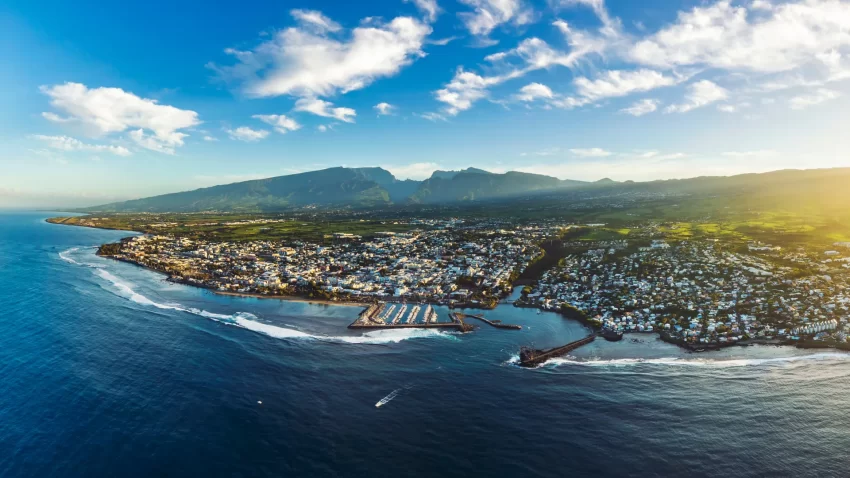
Chennai to Réunion Island Flight: Why August 2026 Is the Time to Go
Réunion Island has a Tamil temple built by indentured labourers who arrived in the 1860s, and today roughly a third of its 900,000 residents trace their roots to India. Despite that, getting there from India has always meant a layover — Mauritius, Paris, Abu Dhabi, sometimes two connections and a full day lost. That changed on April 29, 2026, when IndiGo started flying an Airbus A320 direct from Chennai to Réunion Island, three times a week, no stopover. IndiGo is now the only Indian airline flying nonstop to the island.
The timing matters beyond the airline’s schedule. Réunion is in its dry season right now — the stretch of the year when the volcano trails are open, the cirques aren’t buried in cloud, and the lagoon crossing is calm enough for a slow morning with a paddleboard instead of a wetsuit. If you’ve been putting off this French Indian Ocean island because the journey felt like a project, that excuse is gone.
In This Guide
- Why Now: A New Flight Meets the Right Season
- The New Chennai to Réunion Island Flight
- Visa and Entry Rules for Indian Passport Holders
- Best Time to Visit Réunion Island From India
- Getting Around the Island
- Where to Stay
- What to Do: Volcano, Cirques, Lagoons, and Food
- What It Actually Costs
- Safety Notes, Sharks Included
- SIM, eSIM, and Staying Connected
- Who This Trip Is Actually For
- FAQs
- Final Word
Why Now: A New Flight Meets the Right Season
Two things lined up this year, and neither is permanent. First, the flight — a new nonstop route this early in its life usually comes with launch fares, and IndiGo is already advertising one-way fares from Chennai starting around ₹31,268, before the route matures and pricing normalizes upward. Second, the season. Réunion runs on the austral calendar, so its winter — dry, cooler, less humid — falls roughly April through November. December to March is cyclone season: hot, wet, and the time locals themselves avoid the high-altitude trails. Right now, in August, you get clear cirque views, safer hiking conditions, and a genuinely active volcano to go look at. That combination — new nonstop access plus the best season to use it — is the actual news hook here, not just “a new flight exists.”
The New Chennai to Réunion Island Flight: Route Details
IndiGo flies 6E 1871/1872 between Chennai and Réunion’s Roland Garros Airport (RUN) in Saint-Denis, three times a week — Wednesday, Friday, Sunday — on an Airbus A320.
| Route | Departs | Arrives | Duration |
|---|---|---|---|
| Chennai (MAA) → Réunion (RUN) | 12:20 | 17:10 (same day) | Approx. 4h 50m |
| Réunion (RUN) → Chennai (MAA) | 18:10 | 02:10 (next day) | Approx. 8h, including time zone shift |
Réunion runs four and a half hours ahead of IST, which is why the return leg looks longer on paper than the outbound — it’s the same flight time, just crossing time zones the other way. A useful, less obvious point: this route also serves the roughly 300,000 residents of Indian origin on the island, many with family in Tamil Nadu, so expect the flight itself to carry a mix of holidaymakers and people going home. That’s not a small thing — it means better odds of finding a fellow passenger who actually knows the island, not just a tour brochure’s version of it.
Visa and Entry Rules for Indian Passport Holders
This is the part people get wrong, so read it carefully. Réunion is a French overseas department, which means it uses the euro and sits inside the EU — but it is not part of the Schengen Area. A standard Schengen visa for mainland Europe does not get you into Réunion. This trips up a lot of Indian travelers who assume “French territory” automatically means “Schengen visa works here.”
There are three real routes in:
- Visa waiver (up to 15 days): Indian nationals can enter without a separate visa if the entire trip is booked through a travel agency registered with ATOUT France (France’s official tourism accreditation body). The agency arranges your flights, accommodation, and often activities, submits your details to the Border Police roughly a week before arrival, and issues you a voucher or authorization letter. You show that letter and your passport at immigration in Saint-Denis. Travelers on Tripadvisor’s Réunion forum note a rough practical threshold too — agencies typically want you to book at least around €500 worth of accommodation or activities through them to qualify, which is worth confirming directly with whichever agency you use.
- Standard short-stay visa (up to 90 days in 180): Apply through france-visas.gouv.fr and submit documents at a VFS Global centre (New Delhi, Mumbai, Bengaluru, Chennai, Kolkata all handle it). Processing typically runs 5-15 business days for short-stay applications.
- Multi-entry “circulation” visa: If you already hold a French multi-entry visa valid for 6 months to 5 years that specifically covers Réunion, you can use it — but a run-of-the-mill mainland Schengen visa does not qualify. Check the visa sticker’s territorial validity before you assume it works.
Whichever route you take, you’ll need a passport valid at least 6 months beyond your stay with blank pages, a confirmed return ticket, proof of accommodation, proof of funds, and — this one catches people out — travel insurance covering at least €30,000 in medical and repatriation costs. Buy this before you fly, not on arrival.
The mistake to avoid: booking your own flights and hotel independently, then trying to retroactively get the visa waiver. The waiver specifically requires an ATOUT France-registered agency to arrange the trip and vouch for you — it’s not something you can back into after the fact. Decide your visa route before you book anything else.
Best Time to Visit Réunion Island From India
April to November is Réunion’s dry season — the island calls it “l’hiver austral,” the austral winter, even though daytime temperatures on the coast still sit comfortably in the low-to-mid 20s Celsius. Humidity drops, rain thins out, and the cirques — the three collapsed volcanic amphitheatres that make up the island’s interior — actually stay visible instead of vanishing into cloud by 10am. August specifically sits in the coolest, driest stretch, which is exactly why it’s good hiking weather and exactly why it’s also whale-watching season offshore (humpbacks pass by roughly July through September).
December through March is cyclone season. It’s hot, humid, and the interior trails close intermittently for safety. Skip that window unless you’re chasing off-season hotel rates and don’t mind rerouting your itinerary around weather — locals themselves plan differently in those months.
Getting Around the Island
You can do a coastal-only trip without a car — the Car Jaune bus network runs along the coast connecting the main towns, with regional operators like Kar’Ouest and Citalis running local routes for around €1.50-2 a ride. But the moment your plans include the volcano, a cirque hike, or an early-morning departure, a rental car stops being optional. Public buses stop running by 7-8pm and don’t reliably serve the high-altitude access points. Rentals run roughly €25-80 a day depending on season and vehicle — budget the higher end in August, since it’s peak local demand.
One genuine local tip: don’t trust GPS timing in the highlands. A drive that Google Maps says takes 40 minutes through the switchbacks up to Cilaos or Bourg-Murat can easily take an hour longer once you’re behind a delivery truck on a one-lane mountain road. Build in slack, especially if you’re timing a sunrise hike.
Where to Stay
Saint-Denis, the capital, is workmanlike rather than resort-pretty — good for one night to break up a long itinerary, useful if you land late and want to sleep before driving anywhere, but it’s not where you base a beach holiday.
Saint-Gilles-les-Bains and neighbouring L’Hermitage-les-Bains are the resort belt on the west coast, built around a reef-protected lagoon that’s calm enough for children and beginner snorkelers. This is where Réunion’s only 5-star property, LUX* Saint Gilles, sits — right on the lagoon, with a wood-fired-curry restaurant on-site and rates that put it firmly in upscale rather than mid-range territory (expect experience packages priced from a few hundred euros per person up to several thousand for the more elaborate ones). Mid-range guesthouses and 4-star beachfront hotels nearby run roughly €75-150 a night, a more realistic anchor for most itineraries.
Saint-Leu, a little further south, is quieter and has a serious diving and surf culture — good for a couple of nights if you want fewer crowds and don’t need nightlife. For the cirques, staying overnight is part of the experience rather than a compromise: gîtes (mountain guesthouses) in Cilaos and inside Mafate itself are simple, often cash-only, and need to be booked well ahead in dry season since they fill fast with French mainland hikers doing the GR trails.
What to Do: Volcano, Cirques, Lagoons, and Food
Piton de la Fournaise: An Active Volcano You Can Actually See
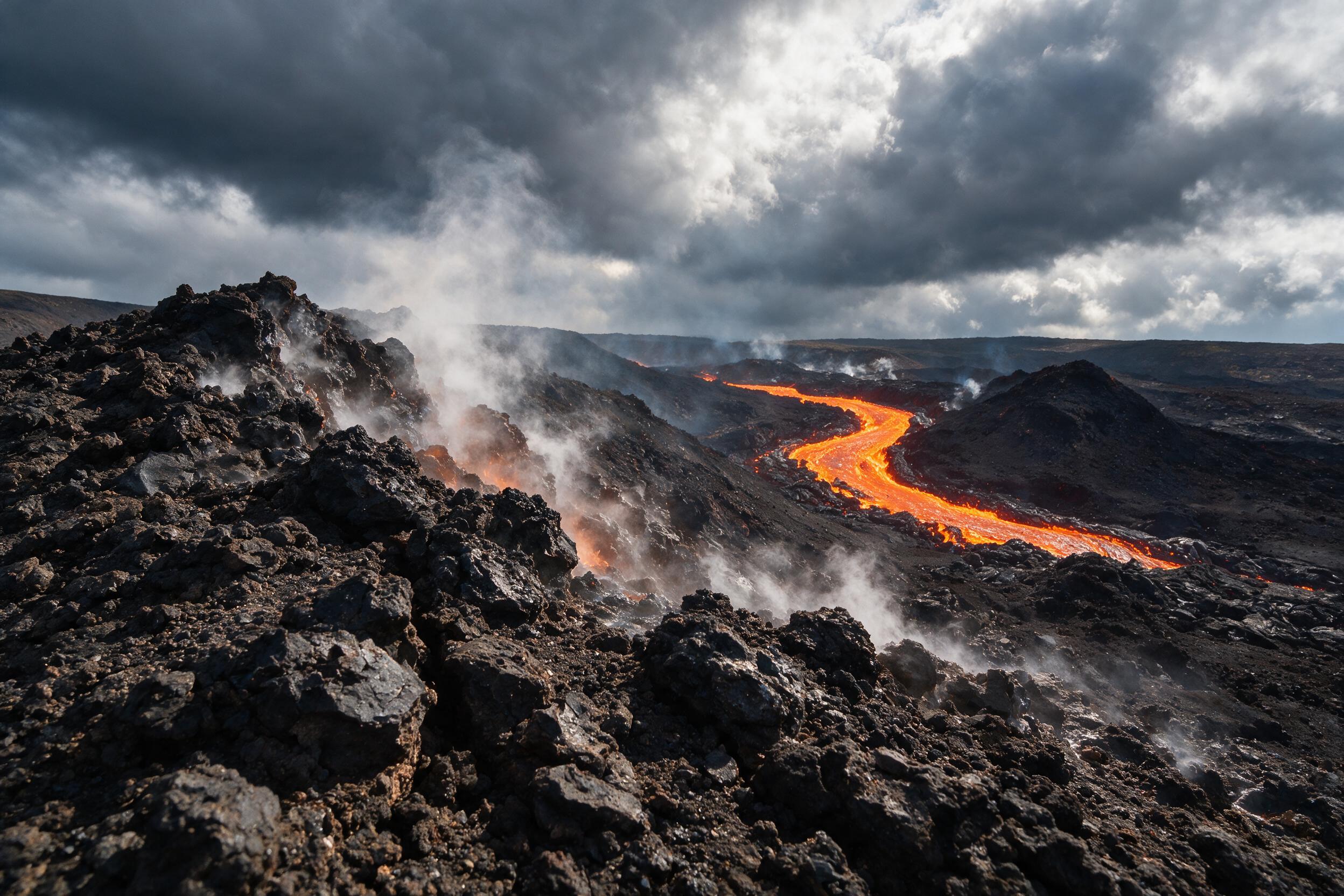
Piton de la Fournaise is one of the most active volcanoes on Earth, and it’s not being metaphorical when travel writers say that — it erupts, on average, more than once a year. As of the most recent monitoring reports from the Global Volcanism Program, the volcano has been actively erupting since February 13, 2026, with lava flows moving down its southeastern flank. That’s genuinely good news for a visit: when it’s active but stable (monitored at a moderate alert level), the standard viewing area near Pas de Bellecombe often stays open to the public even while the crater floor itself is closed off. The honest caveat: eruption status changes week to week, and access rules change with it. Check with the Observatoire Volcanologique du Piton de la Fournaise or your local guide the day before you plan to go, not weeks in advance — don’t build your whole itinerary around a fixed volcano day without a backup plan.
Hiking the Cirques
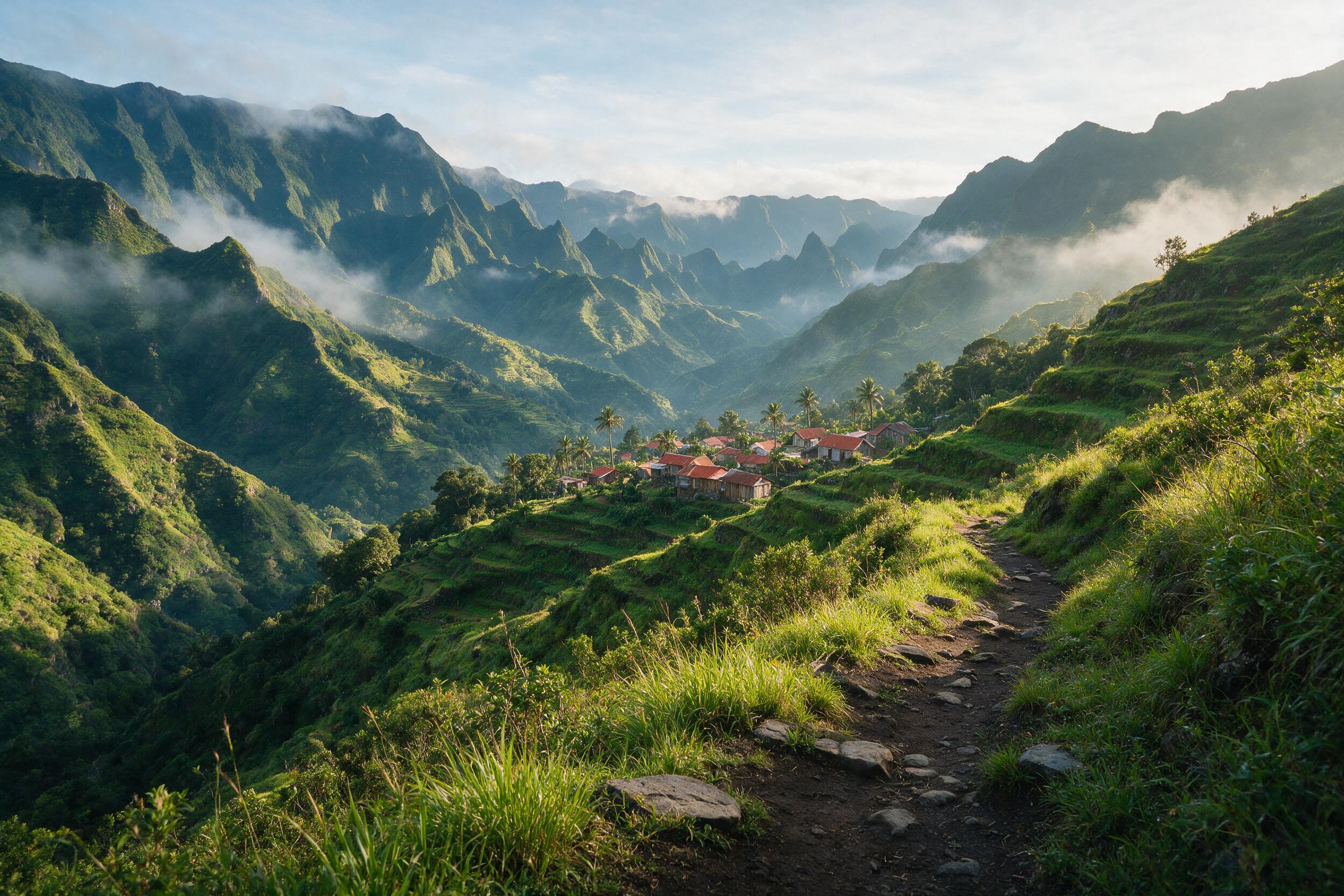
Réunion’s interior is built around three cirques — Mafate, Cilaos, and Salazie — each a collapsed volcanic basin ringed by cliffs.
- Cirque de Mafate has no road access at all — you reach villages like La Nouvelle and Îlet à Bourse entirely on foot or by helicopter. This is a multi-day trekking destination, not a day trip, and it’s the one that separates casual visitors from people who actually plan a Réunion trip around hiking.
- Piton des Neiges, Réunion’s highest point at just over 3,000 metres, is reached from Cilaos: a hard 7.3km route with about 1,660m of elevation gain. Most hikers split it over two days, sleeping at the Caverne Dufour refuge to catch sunrise from the summit — book that refuge well in advance, it fills up fast in dry season. Doing it in a single day is possible but demands real fitness; the final stretch is loose volcanic rock, cold, and windy even when the coast is warm.
- Cirque de Salazie is the greenest of the three and home to the Trou de Fer waterfall viewpoint — a moderate walk to a lookout over a multi-tiered waterfall dropping into a gorge, one of the more photogenic and less strenuous highlights on the island.
A mistake to avoid: relying on mobile signal for navigation once you’re inside the cirques. Coverage gets patchy fast in the highlands and disappears almost entirely in parts of Mafate. Download offline maps and carry a paper trail map as backup — French hiking clubs still do, and there’s a reason for that.
Lagoons and Beaches
The west coast lagoon at L’Hermitage and Saint-Gilles is the safest and calmest swimming water on the island, protected by a coral reef and, in the main swimming zones, netted against sharks. Boucan Canot is the postcard beach — white sand, coral reef, genuinely one of the best sunset spots on the island — but swim inside the flagged zone only; open water beyond the reef here carries real shark risk, which is why lifeguards actively enforce the limits. Étang-Salé and Roches Noires give you Réunion’s volcanic side: black basalt sand beaches, striking to photograph, worth a stop even if you don’t plan to swim there.
Creole Food
Réunion’s food culture runs on cari — the local curry, built on turmeric, ginger, garlic, and chilli, made with chicken, pork, or seafood and eaten with rice, lentils, and a side of rougail (a spicy tomato-onion condiment). Rougail saucisse — smoked Creole sausage simmered with tomatoes and ginger — shows up at almost every family gathering and is the dish locals will tell you to order if you only try one. Bouchons, small steamed dumplings with Chinese roots from the island’s indentured-labour history, make a good snack between hikes. A local tip that doesn’t make the top-10 lists: ask for rhum arrangé at a roadside stand rather than a hotel bar — it’s rum infused with local fruit and spices, made by small producers, and every family seems to have its own recipe they’ll argue is the best on the island.
What It Actually Costs
Réunion isn’t a bargain-hunting destination, and that’s not really the point of going there. Mid-range accommodation runs €75-150 a night; a beachfront 4-star or the island’s one 5-star will run higher. Food averages €25-45 a day per person if you’re eating at proper Creole restaurants rather than self-catering — supermarket prices run high since much is imported, so eating out is often the better value anyway. Activities vary widely: a two-hour catamaran trip on the lagoon runs around €40, while a helicopter flight over the cirques — genuinely one of the best ways to see Mafate if you don’t have time for a multi-day trek — runs closer to €350 an hour. For two people over roughly two weeks, a comfortable mid-range trip lands somewhere around €4,000, with a fuller luxury version pushing past €6,000 before flights.
Safety Notes, Sharks Included
Réunion had a real shark problem in the 2010s — 30 attacks and 11 fatalities between 2011 and 2019, concentrated on the west coast, enough that the island accounted for close to a fifth of shark fatalities worldwide during that period. The last fatal attack was in May 2019, at Saint-Leu, and that stretch of coast still carries closed or restricted zones. The response since has been serious: netted and monitored swimming zones (Hermitage and Saint-Gilles are the reliable ones), mandatory anti-shark devices for surfers competing in the area, and active lifeguard enforcement of swim limits. The honest takeaway: this isn’t a reason to skip the island, but it is a reason to swim inside flagged, netted zones and skip the temptation to paddle out past the reef at Boucan Canot or Saint-Leu just because the water looks calm.
Beyond that, Réunion is low-crime and genuinely welcoming — French-administered infrastructure, reliable emergency services (dial 112), and no notable political instability. The bigger practical risks are altitude and weather in the cirques (temperature swings, fast-moving fog, loose rock) and, right now, keeping half an eye on volcano advisories if you’re planning a Piton de la Fournaise day.
SIM, eSIM, and Staying Connected
Orange covers about 98% of the population and has the widest reach on the island, with SFR and Free Mobile close behind in urban areas. Tourist SIM and eSIM plans run roughly €10-40 for 5-20GB, and eSIM options let you activate before you land, which saves the airport-counter scramble. Coverage thins out fast once you’re in the highlands — Cirque de Mafate and the Plaine des Sables near the volcano have patchy to nonexistent signal, so treat connectivity there as a bonus, not a given.
On payments: cards are widely accepted in Saint-Denis, Saint-Gilles, and Saint-Pierre, including at hotels and most restaurants. Carry cash for the cirque gîtes, roadside creole food stalls, and local markets, where card machines are the exception rather than the rule. ATMs are common on the coast and essentially nonexistent once you’re inside Mafate.
Who This Trip Is Actually For
Couples get a genuinely romantic version of this island — sunset at Boucan Canot, a private cirque helicopter transfer, a room at LUX* Saint Gilles looking straight over the lagoon. It reads as a strong alternative to the more obvious Mauritius or Seychelles honeymoon circuit, with more actual terrain to explore beyond the beach.
Solo travelers who hike will find Réunion unusually rewarding — the GR trails through the cirques are well marked, gîte culture makes it easy to meet other trekkers, and the island rewards people willing to spend a few days off the coast rather than parked at a resort.
Families do well based at Hermitage or Saint-Gilles, where the netted lagoon is calm enough for kids and day trips to the volcano viewpoint or a waterfall lookout don’t require serious trekking fitness.
Luxury seekers should treat the volcano and cirques as the differentiator, not the beach — a helicopter tour over Mafate, a private Creole cooking session, and a stay at the island’s one true 5-star property make for a trip that doesn’t read like every other Indian Ocean island package.
FAQs
Do Indians need a visa for Réunion Island?
Yes, in almost all cases. There’s a visa waiver for stays up to 15 days, but only if your entire trip is booked through a travel agency registered with ATOUT France. Without that, you need a standard short-stay visa through france-visas.gouv.fr and VFS Global.
Can I use my Schengen visa to enter Réunion Island?
Not a standard mainland Schengen visa — Réunion isn’t part of the Schengen Area. Only a French multi-entry “circulation” visa that specifically lists Réunion in its territorial validity works here.
How long is the Chennai to Réunion Island flight?
About 4 hours 50 minutes outbound (Chennai to Réunion), and roughly 8 hours on the return including the time zone shift, since Réunion runs 4.5 hours ahead of IST.
Is Réunion Island expensive for Indian travelers?
It runs on euros and mid-range European pricing — figure roughly €4,000 for two people over two weeks at a comfortable mid-range level, more for a luxury stay. It’s not a budget destination, but it’s also not out of line with a Mauritius or Seychelles trip.
Is Réunion Island safe, especially with sharks?
The island had a serious shark-attack problem through the 2010s, mostly on the west coast. Since then, swimming has concentrated in netted, monitored lagoon zones like Hermitage and Saint-Gilles, which are genuinely safe. Stick to flagged swimming areas and you’re fine.
Do I need to rent a car in Réunion Island?
Not for a coastal-only trip — buses cover the main towns. You’ll want one for the volcano, the cirques, and any early-morning hike, since public transport doesn’t reliably reach those access points.
What’s the best time to visit Réunion Island from India?
April through November, the dry season. August specifically is cool, dry, and good for both hiking and volcano viewing. Avoid December to March, which is cyclone season.
Is Piton de la Fournaise erupting right now, and can I see it?
It’s been actively erupting since February 2026, and it’s one of the most active volcanoes in the world, so eruptions here aren’t rare events. Viewing access depends on current activity levels — check with local guides or the volcano observatory close to your travel date rather than assuming access weeks in advance.
Final Word
A new nonstop route doesn’t come along for the Indian Ocean often, and this one lands at a genuinely good time to use it — dry season, an active volcano, calm lagoons, and cirque trails that are actually walkable instead of buried in cloud. The Chennai to Réunion Island flight cuts out the layover that’s kept this island off most Indian travelers’ radar for years. What’s left is the harder part: getting the visa route right, picking a base that matches what you actually want out of the trip, and building in enough slack for mountain roads and volcano-status checks. Get that right, and Réunion delivers something genuinely different from the usual Indian Ocean island shortlist.
If you’d rather not sort out ATOUT France agency requirements, gîte bookings, and volcano-access timing on your own, that’s exactly the kind of itinerary a Get Tripped travel expert puts together — talk to us about building a Réunion Island trip around the season, the hikes, and the stay that actually suits how you travel.