Jordan Beyond Petra: Hidden Gems Worth the Detour
By 9:30 in the morning, the Siq — the narrow, kilometre-long canyon that funnels every visitor toward Petra’s Treasury — is a slow shuffle of tour groups, selfie sticks, and horse carts trying to squeeze past each other in a gap barely three metres wide. It’s still worth doing. The moment the Treasury’s façade appears through the rock walls is genuinely one of those travel experiences that lives up to the hype. But most people fly home having seen exactly that: one monument, one canyon, one morning, and then a bus straight back to Amman airport.
That’s the gap this piece is written for. Jordan beyond Petra is a country of candlelit eco-lodges run by Bedouin families, a hillside Amman neighbourhood with more galleries than souvenir stalls, a quieter cousin of Petra that most tour buses skip entirely, and stretches of Wadi Rum where the loudest sound at night is a dog barking somewhere across the valley. None of it requires giving up comfort. It just requires rerouting.
Table of Contents
- Why Jordan Is More Than One Ruin
- Amman’s Real Neighbourhood: Jabal Amman and Rainbow Street
- Dana Biosphere Reserve and Feynan Ecolodge
- Little Petra (Siq al-Barid): The Quiet Version
- Ajloun Forest Reserve
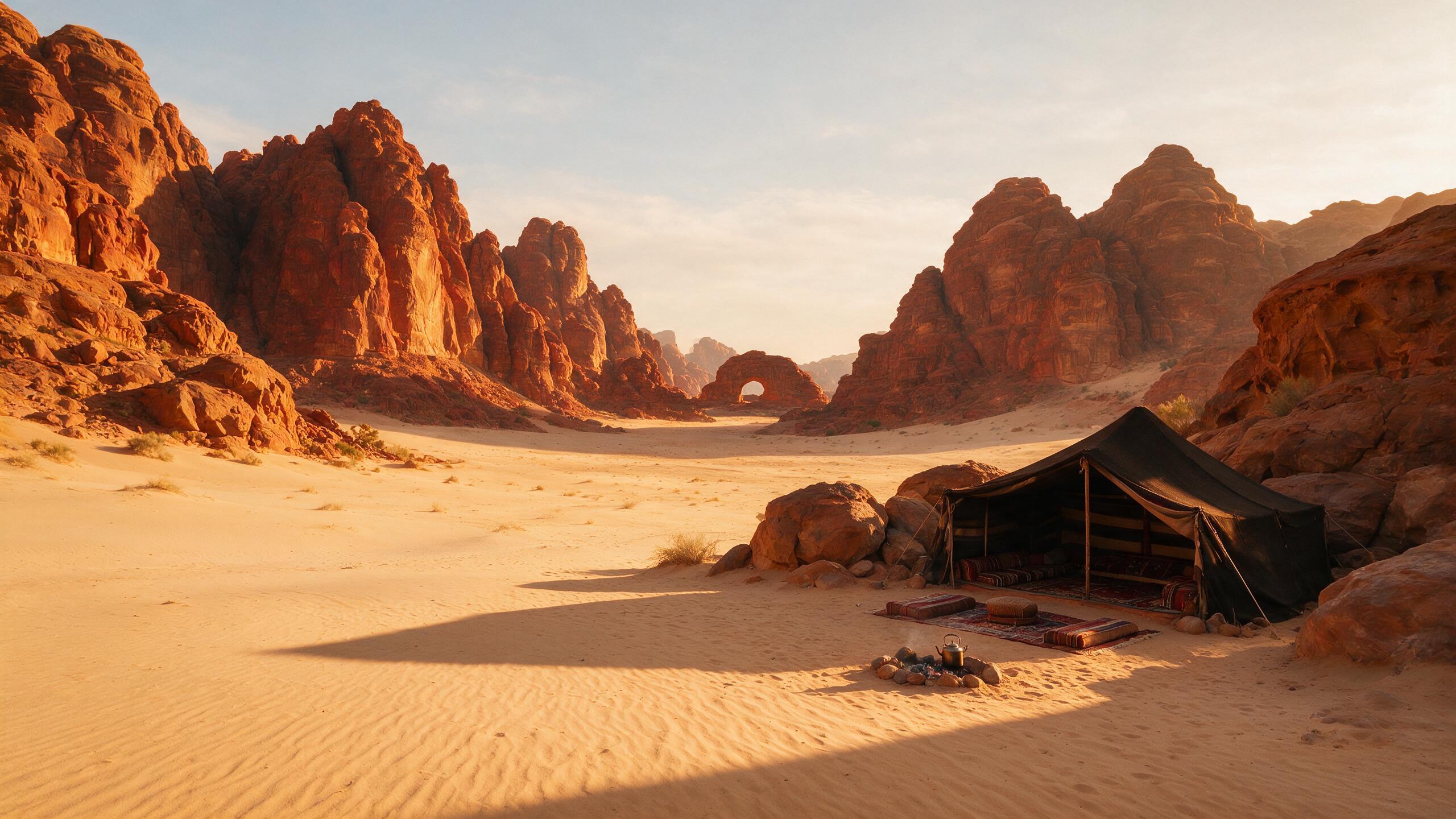
- Wadi Rum, Away From the Tour Buses
- Visa and Entry for Indian Travellers
- Getting There From India
- Best Time to Visit Jordan
- What It Actually Costs
- Food Worth Seeking Out
- Safety Notes
- A Suggested Route
- FAQs
Why Jordan Is More Than One Ruin
Jordan is roughly the size of Portugal, and Petra sits in its southern third — which means there’s an entire country north, west, and east of it that most itineraries skip because they’re built around a single UNESCO checkbox. Amman has a genuine, lived-in arts district. The Dana Biosphere Reserve is Jordan’s largest nature reserve, running from pine-forested highlands down to desert lowlands, and it’s home to a lodge that regularly gets called one of the best eco-hotels on the planet. Little Petra sits ten minutes from the main site and gets a fraction of the footfall. Ajloun’s oak forests look nothing like the desert postcards everyone associates with Jordan. And Wadi Rum — the red-sand valley where Lawrence of Arabia and The Martian were filmed — is far bigger than the cluster of camps closest to the entrance gate.
The honest pitch here isn’t “skip Petra.” It’s: give Petra a focused half-day at the Treasury and the Monastery, then spend the rest of your trip in the places built around slowness — a Bedouin-run eco-lodge with no Wi-Fi, a canyon nobody’s rushing you through, a forest reserve where the loudest thing is birdsong. That’s where a premium Jordan trip actually earns the word premium — not more stops, better ones.
Amman’s Real Neighbourhood: Jabal Amman and Rainbow Street
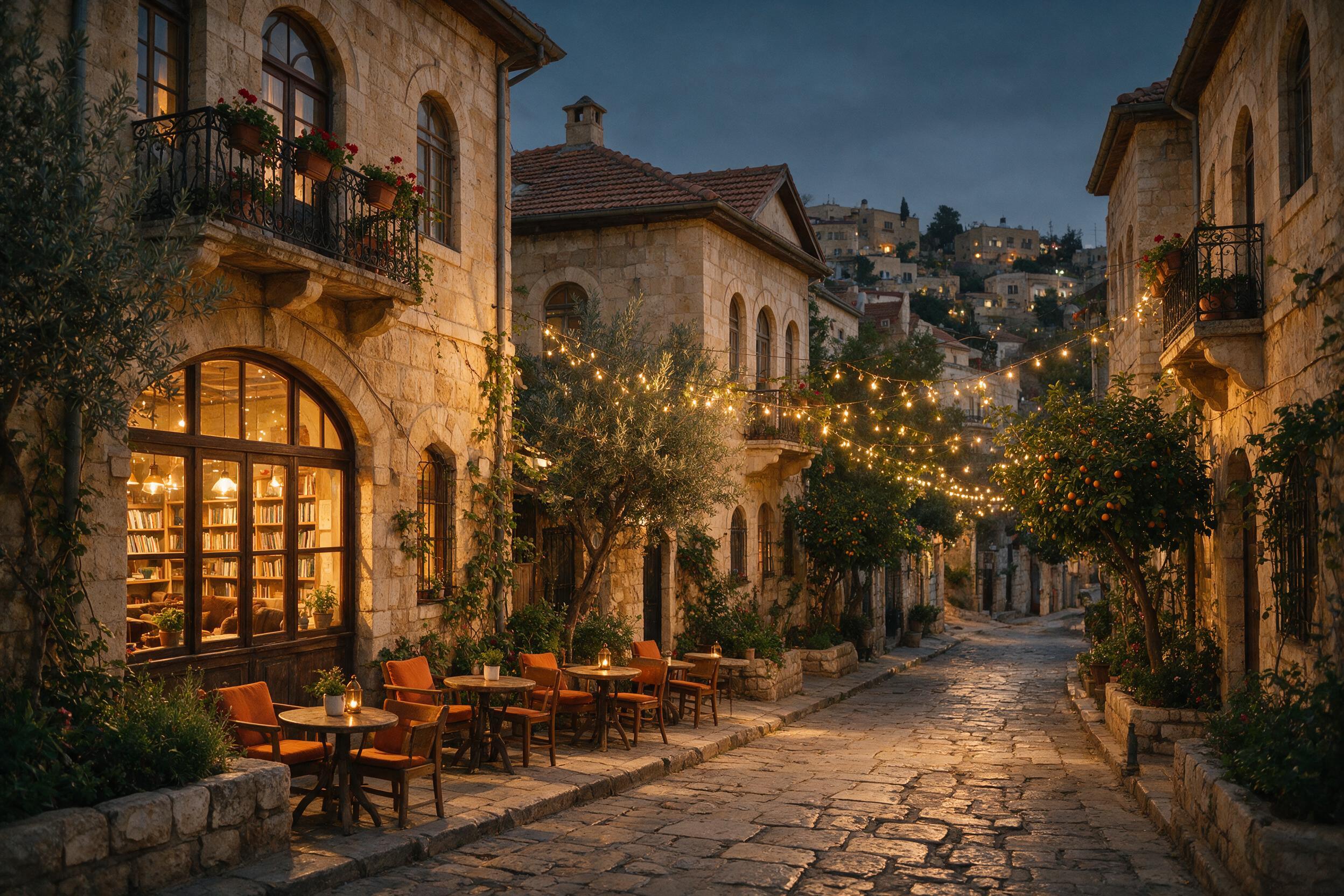
Most first-day itineraries in Amman point straight at the Citadel hill and the Roman Theatre downtown — both worth an hour, neither worth building your whole day around. The neighbourhood that actually rewards slow walking is Jabal Amman, one of the city’s original seven hills, and specifically the stretch around Rainbow Street that connects First Circle down toward downtown.
This is a residential quarter first, tourist attraction second, which is exactly why it works. The side streets off Rainbow Street are still lined with stone villas from the 1920s and ’30s, many with the wrought-iron balconies typical of early Amman architecture, now converted into cafés, small design shops, and apartments. Books@Café, tucked into a converted old house just off the main strip, has been Amman’s go-to bookshop-café-bar for over two decades — order Arabic coffee or a glass of wine, take a table on the terrace, and you’ve got one of the better people-watching perches in the city. Wild Jordan, run by the Royal Society for the Conservation of Nature (RSCN — the same organisation behind Dana and Feynan, more on that below), operates a small nature centre with a café terrace that has one of the best skyline views in Amman, and it doubles as a useful stop for booking reserve visits directly. For art, Nabad Gallery is one of the city’s more established contemporary spaces, and craft shops like Jordan River Designs and Bani Hamida sell handwoven textiles made by women’s cooperatives around the country — a genuinely better souvenir than anything in the Petra gift shops.
The honest tip: go in the late afternoon, not midday. Rainbow Street wakes up slowly and peaks after sunset, when the cafés fill with young Ammanis rather than tour groups. A common mistake is treating this like a 45-minute photo stop between the Citadel and lunch — it’s a two-to-three-hour wander, best done on foot, with no fixed agenda. For couples, it’s an easy, relaxed evening; for solo travellers, it’s one of the few parts of Amman where sitting alone at a café table for an hour feels completely normal rather than conspicuous.
Dana Biosphere Reserve and Feynan Ecolodge
Dana is Jordan’s largest nature reserve, stretching from a 1,200-metre-high Ottoman-era stone village down through a dramatic wadi to near sea level in the desert lowlands near Wadi Araba. Dana Village itself — a cluster of restored stone houses along a cliff edge — is worth a night on its own, with guesthouses run through the RSCN and a handful of independent operators.
The reason to actually plan around this reserve, though, is the walk out of it: the Dana-to-Feynan trail, roughly 14 kilometres, dropping about 1,200 metres in elevation over four to six hours through a canyon that shifts from juniper and wild pistachio at the top to bare red rock and acacia scrub near the bottom. It’s a guided trek (arranged through the RSCN or an established trekking outfit), moderate-to-challenging rather than technical, and almost all of it is downhill — most travellers walk it in one direction and arrange a vehicle back up rather than reversing it.
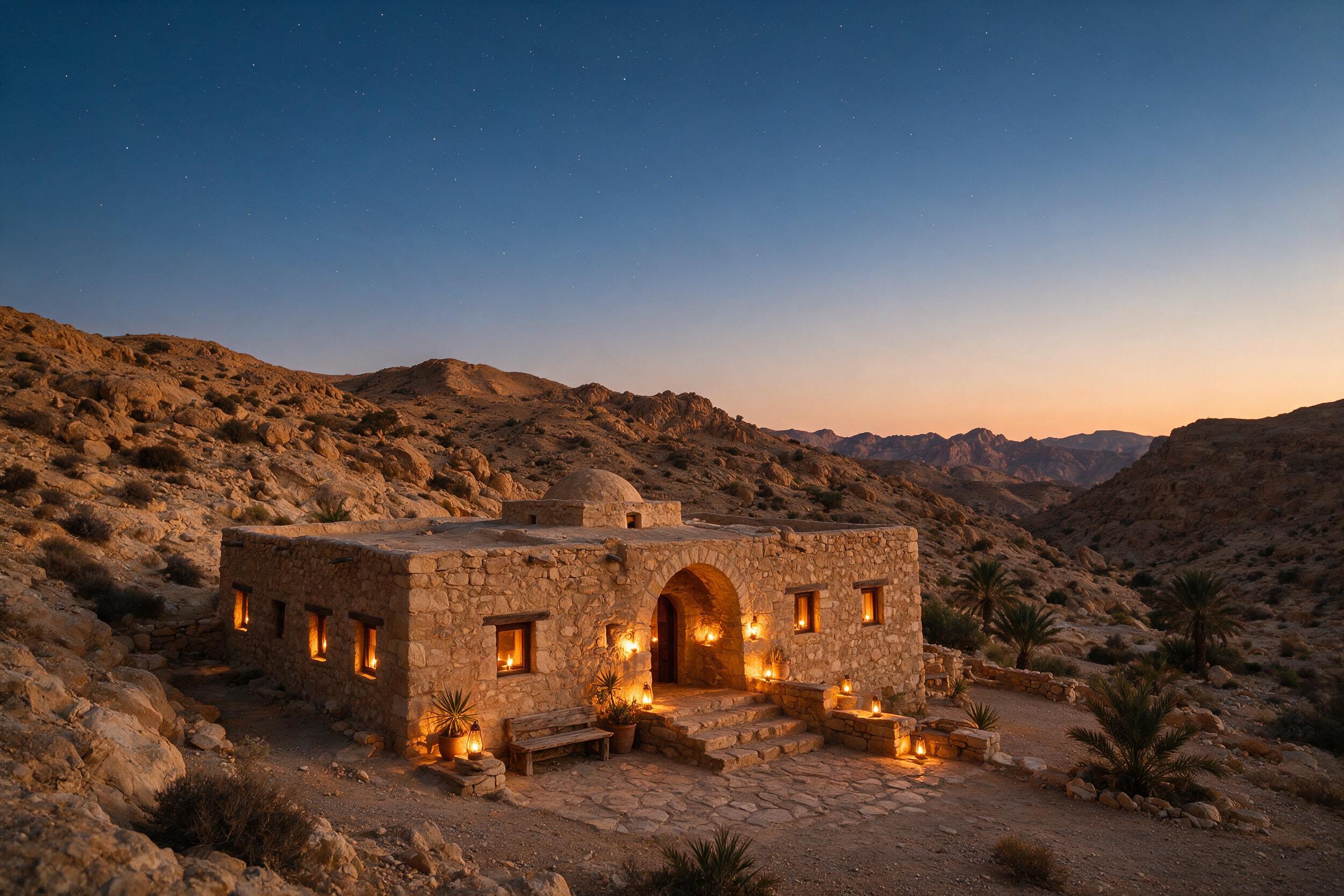
It ends at Feynan Ecolodge, and this is the part of the itinerary that tends to stick with people longest. The lodge runs entirely off-grid: solar power by day, candlelight after dark, no Wi-Fi anywhere on the property. It was opened by the RSCN in partnership with the local Bedouin community, and much of the staff — from the guides who lead night hikes to the cooks in the kitchen — come from nearby villages like Greigra. National Geographic Traveler named it one of the best 25 eco-lodges in the world, which is the kind of claim that usually oversells a place; this one mostly delivers. The 26 rooms range from simple economy twins to deluxe rooms with private balconies over the wadi, and the lodge runs its own activity calendar — guided hikes, a visit to nearby archaeological remains, and a stargazing session that, with zero light pollution for miles, is genuinely one of the best night skies you’ll see in the Middle East.
The honest caveat: this is not a hotel you drift into. It’s reached via a rugged track and typically a 4WD transfer arranged through the lodge, and there’s no casual “pop by for dinner” option — you book ahead, and the experience is built around staying one to three nights, not passing through. For luxury travellers used to full connectivity, that’s the point, not a flaw — it forces the kind of disconnection most premium trips only pay lip service to. Book directly through the lodge’s own reservation system well ahead of a peak-season trip, since the room count is small and it does sell out.
Little Petra (Siq al-Barid): The Quiet Version
Ten kilometres north of Wadi Musa, just off the King’s Highway, is Siq al-Barid — “the cold canyon” — known to most as Little Petra. It’s a miniature version of the same Nabataean rock-cut architecture: temples, triclinia (carved dining halls), and, in one chamber known as the Painted House, faded but still visible ceiling frescoes that are among the only surviving Nabataean paintings anywhere. The canyon itself is shorter and narrower than Petra’s Siq, which is part of the appeal — you can walk the whole thing in 60 to 90 minutes without ever standing in a queue.
Two facts worth knowing before you go: entry is free (no ticket, no Jordan Pass needed), and it opens at 6am, which means you can genuinely have it to yourself if you arrive early. It’s an easy add-on to a Petra day — 15 to 20 minutes by taxi from Wadi Musa, or a straightforward stop if you’re driving the King’s Highway. A fun fact that surprises most first-timers: historians believe Little Petra functioned as a suburb of the main city, a staging post where Nabataean traders rested camels and negotiated deals before continuing into Petra proper along the ancient incense and spice routes.
For the more adventurous, there’s a back-door hiking trail from Little Petra to Petra’s Monastery — around 6 kilometres through open desert and past Bedouin tea tents — that arrives at the Monastery from behind, skipping the main Siq and the crowd at the Treasury entrance entirely. It requires a licensed guide (the terrain is unmarked and easy to misjudge in the heat), but it’s the single best way we know of to see Petra’s second-most-famous monument without the crowd that gathers at its base by mid-morning.
Ajloun Forest Reserve
Ajloun sits about 65 kilometres north of Amman — a little over an hour by car — in the greener, hillier part of Jordan that most visitors never see because it’s nowhere near the Petra-Wadi Rum-Dead Sea circuit. The reserve covers roughly 13 square kilometres of open oak and pistachio woodland, and in spring it’s genuinely startling how little it resembles the desert imagery every Jordan brochure leads with — wildflowers, birdsong, a hiking trail (the Soap House Trail) that climbs to a lookout point called Eagle’s View at around 1,100 metres.
The RSCN manages the reserve and runs several trail options: a short circular walk from the campsite good for spotting roe deer, guided routes through nearby artisan villages where local families still make olive-oil soap and traditional biscuits, and a longer loop through Orjan village past old orchards. It’s a genuinely good half-day or overnight add-on if you’re doing the northern loop through Jerash and Ajloun Castle — a 12th-century Ayyubid fortress a short drive away, built by Saladin’s nephew to watch the Crusader roads. Best season is spring, when the wildflowers are out and the heat hasn’t set in yet; it’s a comfortable reserve to visit even in early autumn, unlike the desert sites further south, which is a point worth remembering if your trip dates land in the shoulder months.
Wadi Rum, Away From the Tour Buses
Wadi Rum is a genuinely enormous protected desert — over 700 square kilometres — but the vast majority of day-trip jeep tours and camp clusters sit within a few kilometres of the main visitor entrance near Rum village, circling the same handful of landmarks: the Seven Pillars of Wisdom rock formation, the Um Frouth rock bridge, and a stretch of red dunes right off the main track. It’s beautiful, and also, by late afternoon, full of identical convoys of 4x4s kicking up the same dust.
The fix isn’t avoiding Wadi Rum — it’s booking further in. Camps sited deeper into the reserve, toward Barrah Canyon or near Jebel Khazali’s slot canyons, see a fraction of the traffic, and the drive out to them (usually the last leg of your jeep tour rather than a separate trip) tends to be the most memorable part of the day regardless. The honest tip here: when you’re comparing Wadi Rum camps, ask directly how far the camp sits from the main entrance and whether it’s run by a specific Bedouin family rather than a large multi-camp operator — smaller, family-run camps tend to sit further from the crowd by necessity, since they don’t have the pull to hold a premium plot near the gate. Get Tripped works with private guides who can build a route through the quieter canyons and arrange an overnight at one of these smaller camps rather than defaulting to whichever camp shows up first in a search.
A mistake worth avoiding: booking a Wadi Rum overnight without checking whether dinner and the campfire evening are shared with other groups or private to yours. Most standard camps run communal dinners, which is a lovely, sociable experience for solo travellers and small groups — but couples looking for a quieter, more romantic desert night should specifically ask for a private tent setup, which most camps offer at a modest premium.
Visa and Entry for Indian Travellers
Indian passport holders can get a Visa on Arrival at Queen Alia International Airport in Amman, as well as at the Sheikh Hussein Bridge and Wadi Araba land crossings — it is not available at the King Hussein (Allenby) Bridge crossing from Israel, so plan your entry point accordingly. The fee is 40 JOD (roughly ₹4,480 at current rates), and processing typically takes between 15 minutes and two hours depending on how busy the counter is.
Alternatively, you can apply for an e-Visa online through Jordan’s Ministry of Interior portal before you travel — same 40 JOD fee, 3-5 business days processing, and it must be issued before you land. A Jordanian embassy visa is also available through the Embassy of Jordan in New Delhi, taking 5-10 business days, with a multiple-entry option available for 60 JOD.
Whichever route you take, carry a confirmed return ticket, your hotel booking, and proof of funds — the Indian Embassy in Amman advises around USD 1,000 in accessible funds as a safe benchmark, alongside a passport photo and a completed arrival card. Your passport needs at least six months of validity remaining and two blank pages. Standard entry allows a 30-day stay, extendable by up to 60 further days at a local police station for another 40 JOD; if you’re staying longer than 14 days, you’re required to register with local authorities, and skipping this carries a 200 JOD fine on exit.
Here’s the genuinely useful bit for a trip that goes beyond a Petra day-trip: if you’re staying two nights or more, buy a Jordan Pass before you fly, through the official jordanpass.jo site. It waives the 40 JOD visa fee entirely and bundles entry to more than 40 attractions — including Petra — into one of three tiers (Wanderer at 70 JOD, Explorer at 75 JOD, Expert at 80 JOD, the difference being how many days of Petra access you want). For a longer, multi-region Jordan itinerary like the one this piece is describing, it’s close to a no-brainer — not because it’s the cheapest option, but because it’s simply better value for a trip built around seeing more than one site.
Getting There From India
Royal Jordanian operates non-stop flights between Mumbai and Amman, with visa-on-arrival facilities set up specifically for Indian passengers, and inflight service that includes both Middle Eastern and Indian meal options — a small but appreciated detail on a five-to-six-hour flight. Frequency and exact timings shift seasonally, so it’s worth checking the current schedule on rj.com before booking rather than assuming last year’s timetable still holds; one-way economy fares are frequently advertised from around ₹14,000-18,000 (taxes extra, and highly seasonal), with round trips more typically landing in the ₹35,000-55,000 range depending on how far ahead you book.
If a direct flight doesn’t line up with your dates, one-stop connections via Dubai (Emirates), Doha (Qatar Airways), or Abu Dhabi (Etihad) run regularly from most major Indian cities and are worth comparing on total travel time and fare — sometimes a connection beats a direct flight on price without adding much to the journey.
Best Time to Visit Jordan
Since this is publishing in August, it’s worth being straightforward about summer: July and August are genuinely hard months to travel Jordan comfortably. Average highs sit around 30°C, with the Jordan Valley and Aqaba coast regularly pushing past 40°C, sometimes touching 45°C at the peak. Wadi Rum’s open desert offers almost no shade, and there’s rarely a breeze strong enough to offset it. Petra actually gets quieter in summer because of the heat — an upside if you’re determined to travel now — but you’ll want to do any walking (Petra, Little Petra, the Dana trail) at first light and treat midday as strictly indoor or shaded time.
The better windows are spring (March to May) and autumn (September to November), when daytime temperatures sit in a much more comfortable 18-28°C range. Spring brings wildflowers to Dana and Ajloun and is the better choice if hiking is a priority for your trip. Autumn, particularly October, brings cooler nights that make Wadi Rum camping genuinely pleasant rather than an endurance test. If your trip has any flexibility, shifting it toward late September through November — or March through early May — will change the experience more than almost any other single decision you make.
What It Actually Costs
Jordan isn’t a cheap destination relative to its regional neighbours, and it doesn’t need to be — the value here is in fewer, better-chosen experiences rather than volume. A well-run mid-range to upscale trip, built around private guides, boutique hotels in Amman, and a night at somewhere like Feynan or a well-sited Wadi Rum camp, comfortably runs in the premium travel bracket once flights are added. The Jordan Pass, as noted above, is the single best lever for getting more value without cutting corners — it turns a stack of individual entry fees (Petra alone runs into the tens of dollars per day) into one upfront cost that also removes the visa fee. Private guides for the Dana-Feynan trek, Little Petra’s back trail, or a custom Wadi Rum route cost more than joining a shared group tour, but for a couple or a small family travelling together, the per-person difference is often smaller than people expect — and the experience is considerably better.
Food Worth Seeking Out
Amman’s food scene has moved well past hummus-and-falafel tourist fare, especially around Jabal Amman and Rainbow Street, where a newer generation of Jordanian chefs is reworking Levantine staples — mansaf (Jordan’s national dish, lamb cooked in fermented dried yogurt over rice, traditionally eaten by hand) shows up on menus in both its traditional form and reinvented small-plate versions. In Dana Village and at Feynan, meals are set, communal, and built around what’s local — flatbread, foraged herbs, lentils, and whatever vegetables the season allows, often served on a shared platter around a low table. It’s simple food, but it’s some of the most memorable eating you’ll do on the trip precisely because of where and how it’s served. A small tip: Bedouin tea, served strong and sweet with sage or mint, is offered constantly on desert routes — it’s genuinely rude to refuse it outright, and one of the easier, low-effort ways to connect with a guide or host.
Safety Notes
Jordan remains one of the more politically stable countries in its immediate region and is a well-established route for Indian and international travellers, but it does share borders with Syria, Iraq, and the West Bank, so it’s worth checking current travel advisories from the Indian Ministry of External Affairs and Jordan’s own updates before you finalise dates, particularly for any itinerary near the northern or eastern border areas. Tourist zones — Amman, Petra, Wadi Rum, the Dead Sea, Aqaba — see a heavy, established tourism infrastructure and are generally very safe for solo travellers, including women travelling alone, though the usual sensible precautions (modest dress outside resort areas, avoiding isolated areas late at night) apply as they would anywhere. Tap water is chlorinated and generally safe in cities but bottled water is the norm and easy to find everywhere, including at remote camps.
A Suggested Route
A realistic 8-10 day version of this trip, if you want to actually experience the places above rather than skim them: two nights in Amman split between the Citadel/downtown essentials and unhurried time on Jabal Amman and Rainbow Street; a day trip north to Ajloun Forest Reserve and Ajloun Castle; a drive south along the King’s Highway with a night in Dana Village followed by the guided trek down to Feynan Ecolodge for one or two nights off-grid; on to Wadi Musa for a focused day at Petra’s Treasury and Monastery, plus an early-morning stop at Little Petra; and finally two to three nights in Wadi Rum, with at least one of them at a camp well away from the main entrance. Add the Dead Sea or Aqaba at either end if your dates allow — both work as an easy, low-effort bookend to a route that’s otherwise fairly active.
FAQs
Do I need a visa to visit Jordan from India?
Yes. Indian citizens can get a Visa on Arrival at Queen Alia International Airport, Sheikh Hussein Bridge, and Wadi Araba (not at the King Hussein/Allenby Bridge), or apply for an e-Visa online in advance. The fee is 40 JOD either way, unless you buy a Jordan Pass, which waives it for stays of two nights or more.
Is Petra worth visiting if I’ve heard it’s crowded?
Yes — the crowding is real but manageable if you go early (the site opens at 6am in summer, later in winter) and treat it as a focused half-day rather than trying to see everything. Pairing it with Little Petra, which is free and far quieter, rounds out the experience without adding much time.
How many days do I need for a Jordan trip that goes beyond Petra?
Eight to ten days lets you cover Amman, Dana/Feynan, Little Petra, Petra, and Wadi Rum properly without rushing. A shorter five-to-six-day trip can still work if you prioritise two or three of these regions rather than trying to fit everything in.
Is Feynan Ecolodge suitable if I don’t consider myself an outdoorsy traveller?
Yes, though it helps to know what you’re signing up for — no Wi-Fi, candlelit rooms, and a genuinely off-grid setting. It’s less about roughing it and more about a deliberate slow-down; most guests describe it as one of the most memorable parts of their trip precisely because it’s so different from a standard hotel stay.
What’s the best time of year to visit Jordan?
Spring (March-May) and autumn (September-November) offer the most comfortable weather across both the desert and highland regions. Summer (June-August) brings intense heat, especially in Wadi Rum and the Jordan Valley, so plan around early mornings and shaded midday hours if you’re travelling then.
Do I need cash, or do cards work in Jordan?
Cards are widely accepted at hotels, mid-range restaurants, and larger shops in Amman and tourist areas, but smaller eateries, taxis, Bedouin camps, and most entrance fees are cash-only. Carry a buffer of 50-100 JOD in cash at any given time, and use ATMs (widely available in Amman, Wadi Musa, and Aqaba) rather than hotel currency desks for a better exchange rate.
Can I get an eSIM or local SIM easily in Jordan?
Yes — international eSIMs covering Jordan are widely available and easy to activate before you land, and physical SIM cards from local carriers (Zain, Orange, Umniah) are sold at Queen Alia Airport on arrival. Coverage is reliable in cities and most tourist areas, though it thins out in remote parts of Wadi Rum and at Feynan Ecolodge, which runs Wi-Fi-free by design.
Is Wadi Rum safe and comfortable for a couple’s trip, not just backpackers?
Very much so — this is one of the areas where booking smart makes the biggest difference. Requesting a private tent (rather than a shared communal setup) and a camp further from the main entrance turns what can be a crowded, transactional desert night into a genuinely romantic, quiet one.
Petra will always be the headline, and it should be — it’s one of the great human-built sights on earth. But a trip that stops there is only telling half the story of a country that has a real capital neighbourhood worth wandering, a nature reserve most visitors have never heard of, a candlelit lodge run with the people who actually live there, and a desert far bigger than the part everyone photographs. That’s the version of Jordan beyond Petra worth planning a trip around.
At Get Tripped, we build Jordan itineraries around exactly this — not a one-day Petra dash bolted onto a Dead Sea package, but a route that actually uses the country: Amman’s real neighbourhoods, Dana and Feynan, Little Petra, Ajloun, and a Wadi Rum stay picked for quiet rather than proximity to the gate. If you’re ready to plan a Jordan trip that goes past the obvious, get in touch and we’ll build the route with you.