
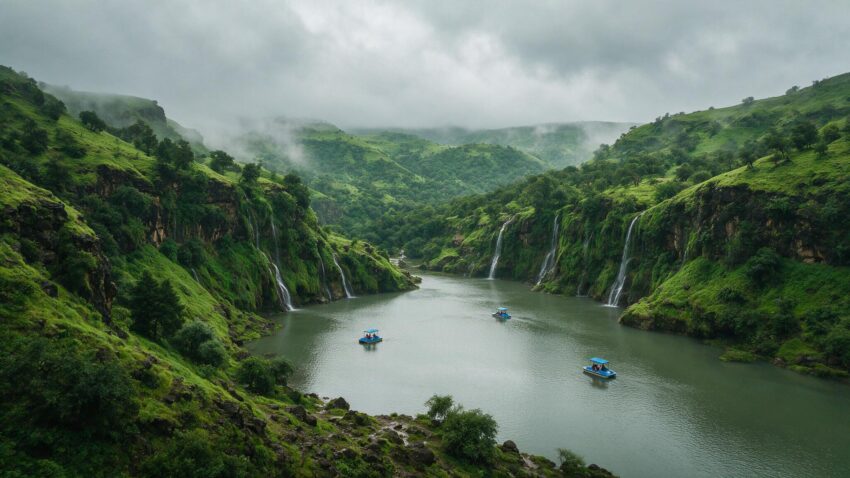
Every August, a strange thing happens to a corner of Oman that looks nothing like the rest of the Gulf. While Dubai and Muscat are sitting under a punishing 40°C-plus sun, the hills around Salalah turn the kind of green you’d expect in Munnar or the Western Ghats — waterfalls appear out of cliffs that are bone-dry the other nine months of the year, fog rolls low over coastal roads, and locals pull out light jackets in a country most people associate with desert heat. It’s called Khareef, and if you haven’t heard of it, that’s mostly because Indian travel content has spent years pointing at Dubai and Abu Dhabi and calling it a day on “Gulf travel.”
In this guide:
- What Khareef actually is (and why it’s not like anywhere else you’ve been in the Gulf)
- Getting there from India — and yes, you’ll likely connect through Muscat
- Where the Khareef magic actually happens
- A mistake worth avoiding
- Where to stay and what it costs
- A photography note and a currency one
- Who this trip suits
- Frequently Asked Questions
- The window is closing
That’s starting to change, and not just because word is getting out. Oman Air and SalamAir have both added meaningful capacity into Salalah for Khareef 2026 — more daily flights, a new Dubai–Salalah route, thousands of extra seats — which is the kind of infrastructure move airlines only make when demand is already climbing. The season itself runs from around June 21 to September 21, 2026, but the real spectacle — the waterfalls at full flow, the valleys at their greenest — sits in that mid-July to early-September window. Which means, as of when we’re writing this in mid-August, you’ve got roughly three to four weeks left before Salalah dries back out and goes quiet until next year.
What Khareef actually is (and why it’s not like anywhere else you’ve been in the Gulf)
Khareef is the Arabic word for autumn, but in Dhofar — the southern Omani province where Salalah sits — it’s come to mean the monsoon season specifically. The Indian Ocean monsoon that soaks Kerala and coastal Karnataka every summer clips this one stretch of the Arabian Peninsula too, and the Dhofar mountains catch just enough of it to flip the entire landscape. Daytime temperatures during Khareef sit at a genuinely pleasant 20–27°C, which after a Delhi or Mumbai summer will feel less like a monsoon and more like a long, cool exhale. Don’t expect the tropical downpours you’d get in Kerala, though — this is drizzle, fog, and low cloud, more Munnar-in-October than Goa-in-July.
What you get instead of rain is water in motion everywhere else: cliffs that spend most of the year as bare rock start pouring in thin, silvery curtains, valley floors flood into shallow lakes locals paddle across on rented boats, and limestone springs that are dry crevices in April turn into strings of pools deep enough to wade in. It’s a landscape doing something it only does for about ten weeks a year, and Omanis from Muscat and further north treat it the way we treat a hill station in peak season — it’s their own domestic monsoon getaway, and now it’s opening up to a lot more of the region than it used to.
Getting there from India — and yes, you’ll likely connect through Muscat
There’s no direct India–Salalah route yet, so plan on flying into Muscat first and connecting onward — Oman Air runs this internal leg heavily during Khareef, with up to 13 daily Muscat–Salalah flights at peak season, which is genuinely reassuring if your connection gets tight. From the Indian side, Oman Air and IndiGo both fly Mumbai and Delhi into Muscat, with fares in the ₹11,000–16,000 one-way range depending on how far out you book — expect that to climb 20–40% during peak Khareef weeks in late July and August, same as hotel rates, so this isn’t really a last-minute trip if you want reasonable prices. Total journey time door-to-door, including the Muscat layover, usually lands somewhere around 7–9 hours.
A quick and important honesty check here: Oman announced a new free 14-day tourist visa in early August 2026 (Royal Oman Police Decision No. 109/2026, effective August 3), and it’s genuinely exciting news — but Oman hasn’t yet published which nationalities qualify, and India isn’t confirmed on that list as of this writing. Don’t build a trip around assuming you’ll get in free. The visa that actually works right now, reliably, for Indian passport holders is the standard Oman eVisa: apply at evisa.rop.gov.om, budget around ₹4,300–5,500, expect 24–72 hours processing (though we’d still apply 3–4 weeks out to be safe), and have your return ticket, hotel booking, and basic financial proof ready when you submit. If the free-visa list changes before your trip, wonderful — but plan around the process that’s actually confirmed.
Where the Khareef magic actually happens
Wadi Darbat, about 40 kilometres east of Salalah town, is the one everyone’s Instagram feed will eventually show you, and it earns it — during peak Khareef the cliffs pour water into a valley that floods into a lake locals cross on pedal boats, with the surrounding hills gone fully green. Go early, before 9am if you can manage it; by late morning the parking area fills with tour buses from Muscat and the whole thing feels more like a fairground than a monsoon valley.
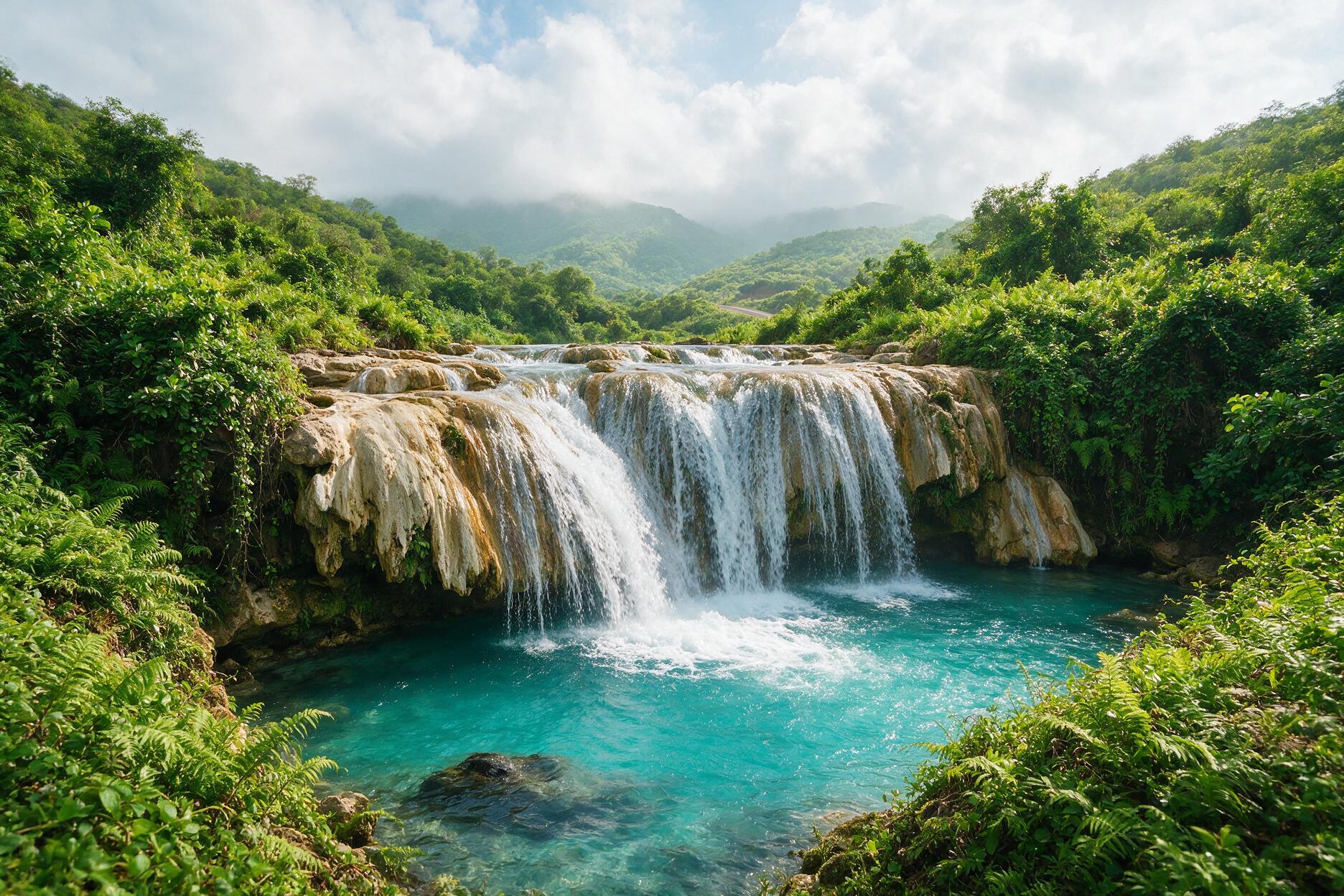
Less crowded, and honestly more atmospheric, are Ayn Athum and Ayn Khor — a run of natural springs where water spills over an oddly shaped limestone wall into aquamarine pools below. These don’t show up in every Khareef roundup the way Darbat does, and that alone makes them worth the detour. If you only have energy for one “spring” stop, make it this one over the more famous valley.
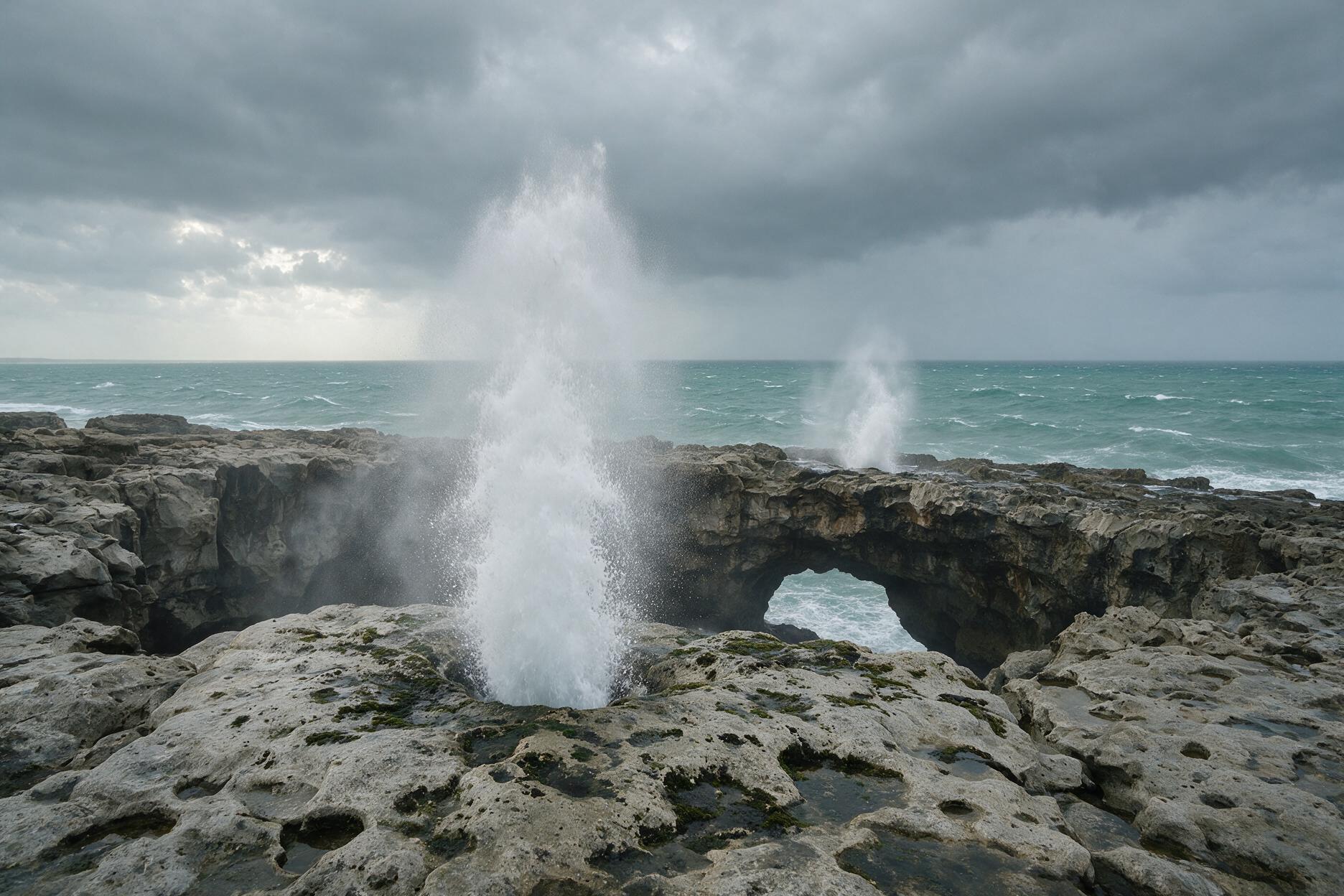
Al Mughsail Beach, west of the city, does something different from either of those — this is where the monsoon swell forces seawater up through cracks in the coastal rock and fires it skyward with a deep boom you feel as much as hear. It’s dramatic in a way that photographs poorly and experiences brilliantly; stand back from the blowholes on a rough-sea day and you’ll understand why locals warn you not to get close.
For something with more scale and less crowd, Tawi Attair — the “well of birds,” a sinkhole roughly 100 metres wide and over 200 metres deep — sits inland from the coastal circuit and rarely makes it onto rushed one-day itineraries, which is exactly why it’s worth the extra hour of driving.
A mistake worth avoiding
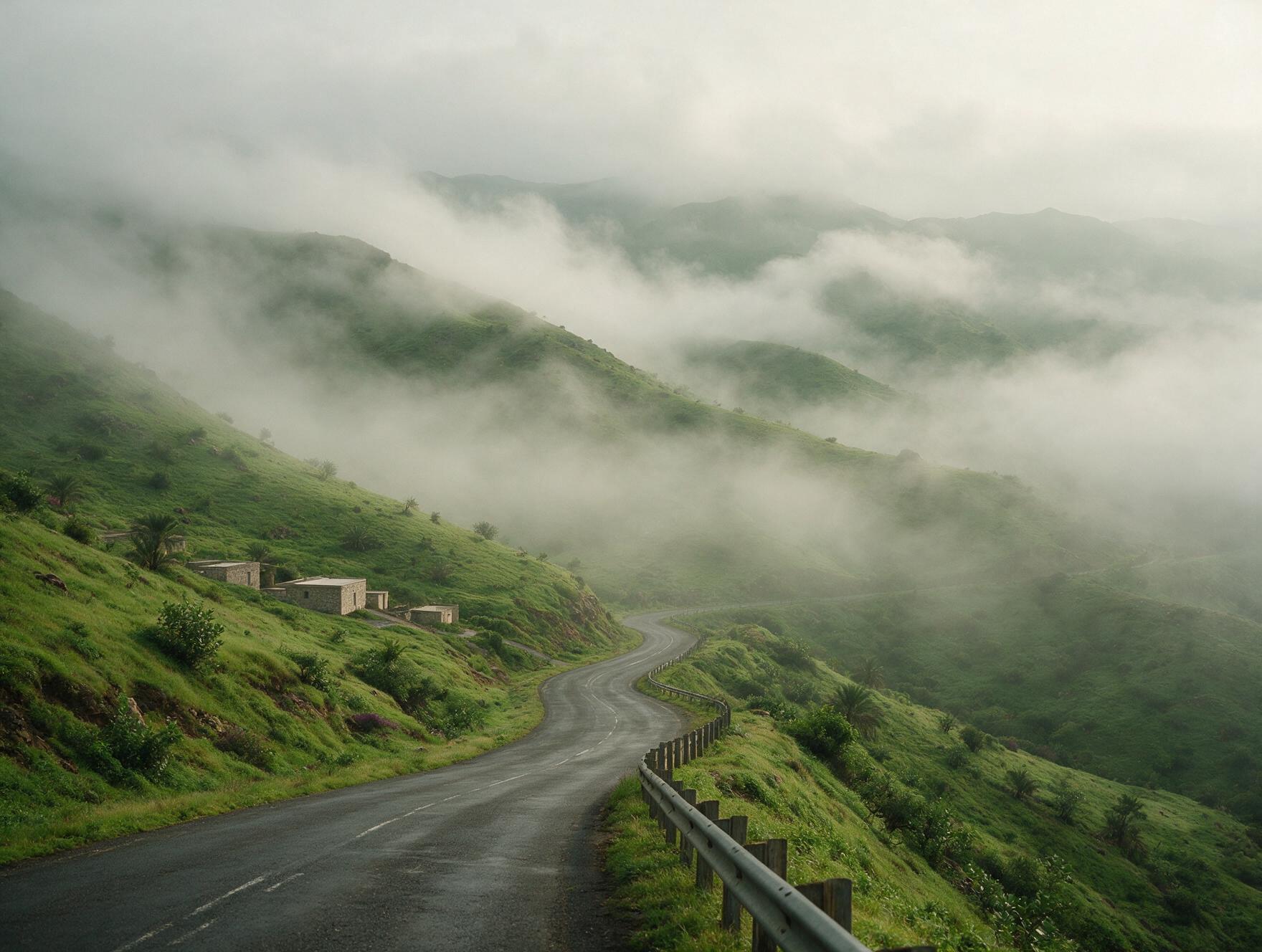
The single biggest planning error we see with Khareef trips is treating it like a beach holiday with a side of waterfalls. It isn’t. Fog rolls in fast on the mountain roads around Wadi Darbat and Ayn Athum, visibility can drop within minutes, and the coastal roads get genuinely slick. If you’re self-driving — which is easy and common in Oman — go slower than feels necessary on the Dhofar mountain roads, and don’t push through fog banks assuming they’ll clear in a hundred metres. They often don’t. Pack for this too: a light rain jacket and shoes with actual grip do more for you here than anything in your regular Gulf-holiday suitcase, since most people arrive dressed for desert heat and get caught out by drizzle and cool evenings.
Where to stay and what it costs
Salalah’s hotel scene skews well for a curated trip — the Al Baleed Resort Salalah by Anantara and the Hilton Salalah both sit right on the coast with easy access into the Khareef circuit, and mid-range business hotels through the city centre run considerably cheaper if you’re planning to spend most daylight hours out at the wadis anyway. Budget roughly OMR 35–70 (₹7,500–15,000) a night for a comfortable mid-range stay outside the absolute peak weeks, more once you’re deep into late July and August when demand from GCC travellers is at its highest and rooms fill up well in advance. Book earlier than you think you need to — this isn’t a market with much last-minute slack during Khareef.
Food leans heavily on fresh seafood given the coastal setting, alongside Omani classics like shuwa (slow-cooked marinated meat, traditionally an occasion dish) and fresh dates, which Dhofar grows extremely well. Frankincense is the other local specialty worth knowing about — Salalah’s frankincense trees and the old Land of Frankincense UNESCO sites around the region are a genuine point of pride, and the souk in town sells it in grades most visitors have never had reason to distinguish between until someone shows them how.
A photography note and a currency one
If you’re bringing a proper camera, the golden hour at Al Mughsail’s blowholes and the early-morning light at Ayn Athum are where the trip earns its keep — midday light during Khareef tends to be flat and grey under the cloud cover, which is atmospheric in person but forgettable in photos. Shoot early or shoot the drama of the blowholes at their most active on a rough-sea afternoon instead.
On money: Oman runs on the Omani Rial, and cards are widely accepted in Salalah’s hotels and restaurants, but carry cash for the smaller wadi-side stalls, parking fees, and rural attractions where card machines simply don’t exist. ATMs are easy to find in the city centre and at the airport.
Who this trip suits
Couples looking for something quieter than the standard Gulf city break will find Salalah genuinely romantic in a low-key way — think sunset at a coastal resort rather than a rooftop bar. Families do well here too, since the wadis and beaches give kids space to actually move rather than another mall or theme park, and the pace is unhurried by design. If you’re coming from a luxury mindset, the honest read is that Salalah isn’t trying to be a five-star showcase the way Muscat or Dubai can be — its appeal is the landscape itself, so pair a comfortable resort base with time genuinely spent outdoors rather than expecting the destination to dazzle you indoors.
Frequently Asked Questions
When exactly is Khareef season in Salalah in 2026?
The official season runs roughly June 21 to September 21, 2026, with peak conditions — the fullest waterfalls and greenest valleys — falling between mid-July and early September.
Can Indians get Oman’s new free 14-day visa?
Not confirmed yet. Oman announced the free visa on August 3, 2026, but hasn’t published the list of eligible nationalities. Indian travellers should apply for the standard Oman eVisa instead, which is a well-established, reliable process.
Is there a direct flight from India to Salalah?
No — you’ll fly into Muscat from Mumbai or Delhi and connect onward. Oman Air runs frequent Muscat–Salalah flights, especially during Khareef season, so the connection is generally smooth.
Do I need to rent a car in Salalah?
It makes the trip significantly easier since the main Khareef attractions — Wadi Darbat, Ayn Athum, Al Mughsail, Tawi Attair — are spread across the region and not well served by public transport. Self-driving is straightforward and common among visitors, but go cautiously on mountain roads when fog rolls in.
Is Khareef season crowded?
Yes, particularly with GCC visitors from late July through August, and particularly at Wadi Darbat. Visit popular spots early morning to beat the crowds, and prioritise less-known stops like Ayn Athum and Tawi Attair if you want a quieter experience.
What should I pack that I wouldn’t normally bring to Oman?
A light rain jacket, shoes with real grip for wet limestone and muddy trails, and a layer for cooler evenings — most people pack for Gulf desert heat and are caught off guard by Khareef’s actual conditions.
The window is closing
Khareef isn’t a year-round pitch, and that’s part of what makes it worth writing about now rather than in a generic “best of Oman” roundup — you’ve got a few weeks left before the fog lifts, the waterfalls dry up, and Salalah goes back to being just another warm Gulf city until next June. If a slower, greener, genuinely different Gulf trip has been sitting on your list, this is the actual trigger to move on it rather than let it become next year’s plan again.
Get Tripped can put together a Salalah Khareef itinerary that handles the Muscat connection, the eVisa timeline, and a driver or rental so you’re not white-knuckling mountain roads in fog on your first Gulf monsoon trip — reach out and we’ll build it around the dates you actually have.