
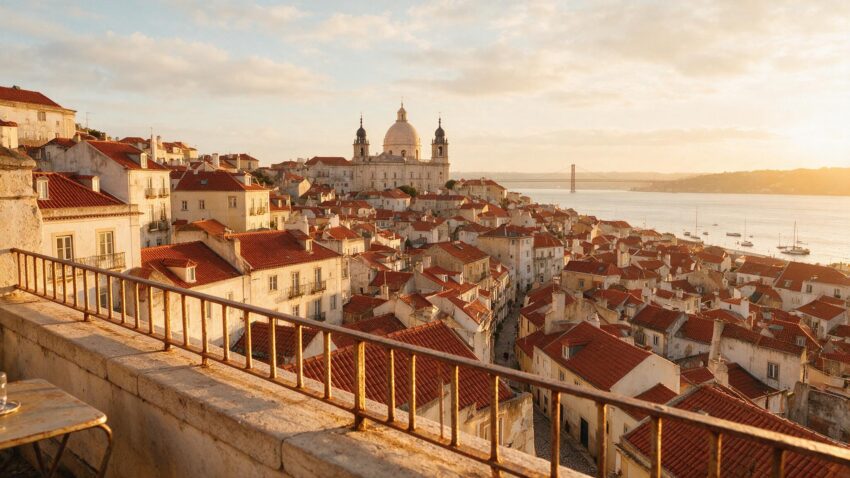
I got lost in Alfama on purpose the second time and by accident the first, and honestly the accidental version worked out better. Lisbon’s oldest neighbourhood was built before anyone thought to lay it out in straight lines — it survived the 1755 earthquake that flattened most of the rest of the city, which is the whole reason its tangle of medieval alleys, sudden staircases, and streets that dead-end into someone’s laundry line still exists. You don’t tour Alfama with a map so much as surrender to it. This is what one full day there, eaten and walked in roughly the right order, actually looks like.
In this guide:
- Start where the trams start, before the crowds catch up
- Breakfast, the way Alfama actually eats it
- Mid-morning: the streets that don’t make it onto postcards
- Lunch: fado’s home turf, minus the evening performance markup
- Afternoon: the flea market, if your timing lines up
- Golden hour: Castelo de São Jorge, timed properly
- Evening: dinner and fado, done properly
- A mistake worth avoiding, and a money note
- Getting to Lisbon from India, and what to sort before you land
- Who this day suits
- Frequently Asked Questions
- The takeaway
Start where the trams start, before the crowds catch up
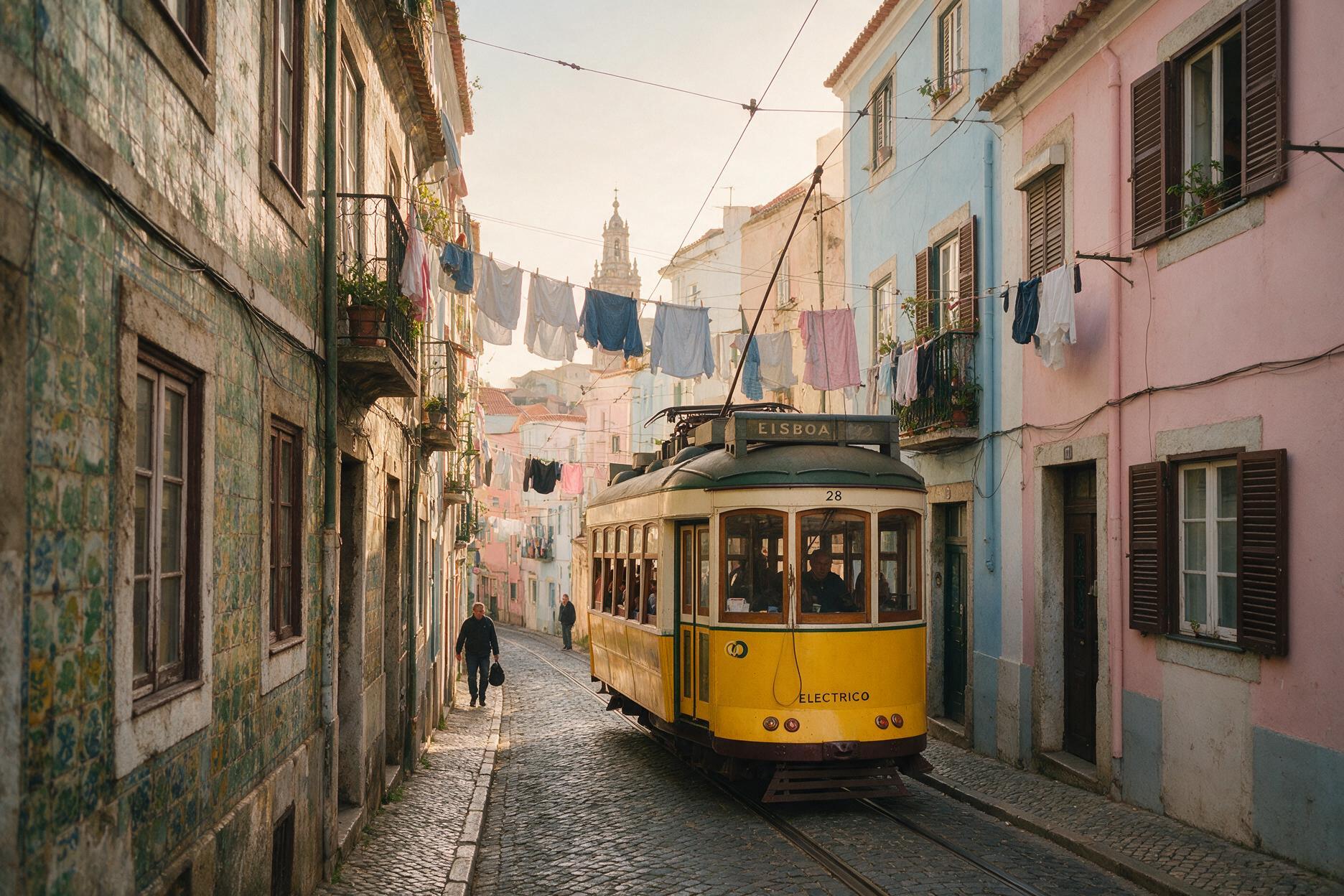
Tram 28 is the postcard version of getting into Alfama — the vintage yellow carriages rattling up impossibly steep, narrow streets — and it’s worth doing once, but only early. By mid-morning it’s standing-room-only with tourists and a magnet for pickpockets, which every local guide will tell you within the first five minutes of meeting you. Catch it at Martim Moniz around 8am instead, ride it up through the edge of Alfama, and hop off near Miradouro das Portas do Sol before the queues form. From here, everything else is on foot, and that’s the right way to do this neighbourhood anyway — it’s compact enough that a rental car would be a liability, not a convenience.
Portas do Sol is the view everyone photographs — red-tiled rooftops falling away toward the Tagus, the dome of São Vicente de Fora in the middle distance — and it earns the reputation. But walk two minutes further to Miradouro de Santa Luzia and you get almost the same view framed by bougainvillea and a set of azulejo tile panels depicting Lisbon before the earthquake destroyed it, which somehow makes the current view underneath feel more specific and less generic. Have your coffee here, not at Portas do Sol — there’s a small kiosk selling coffee and pastries right at Santa Luzia, and at 8:30am you’ll likely have the view mostly to yourself.
Breakfast, the way Alfama actually eats it
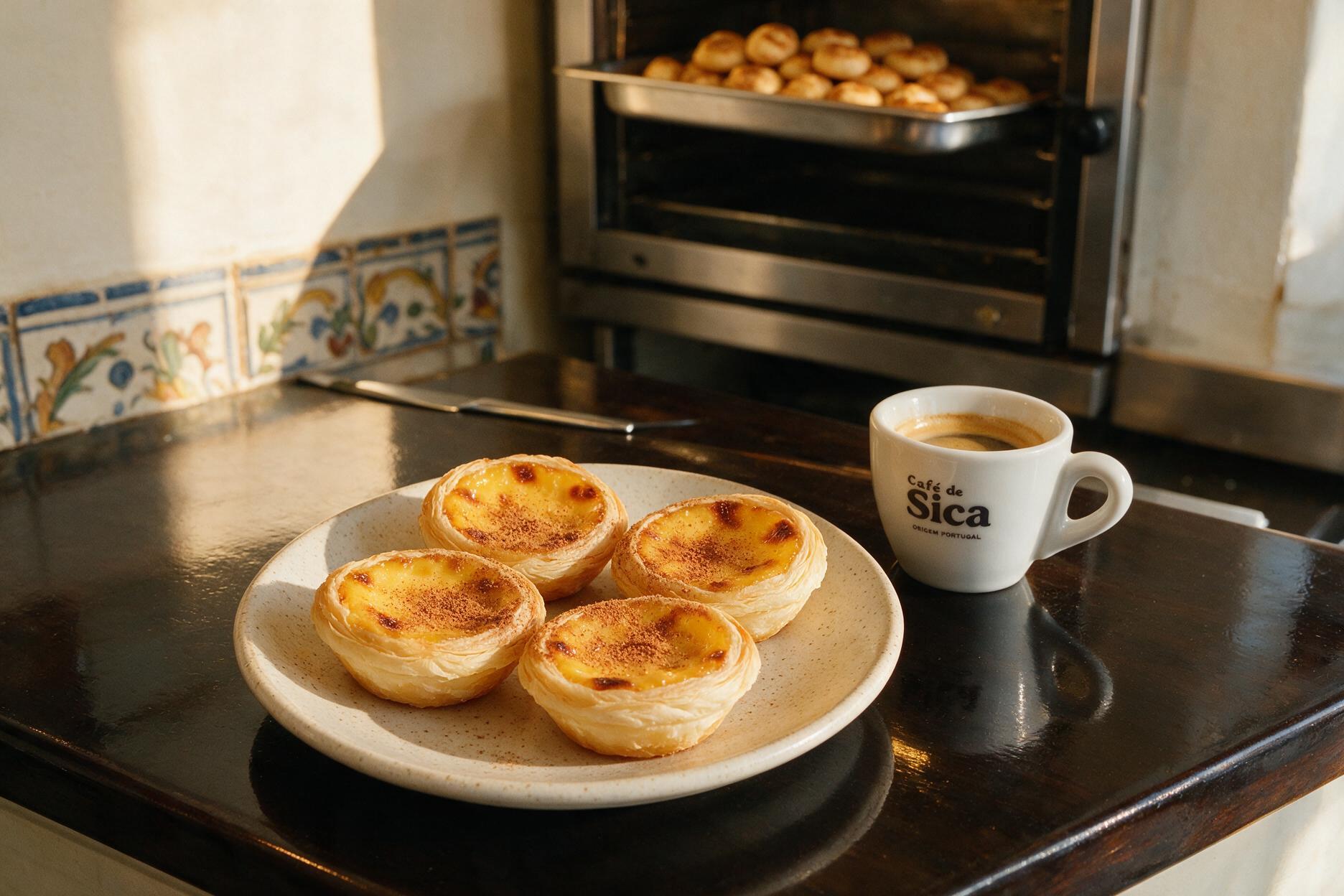
Skip the temptation to make a beeline for Belém and its famous pastelaria — that’s a 25-minute tram ride away and worth its own separate morning, not a rushed detour from Alfama. Instead, find a proper pastel de nata in the neighbourhood itself; the custard tart in Alfama tends to come from small, unglamorous bakeries that have been making them the same way for decades rather than the tourist-facing operations near the big monuments. Ask your hotel or guesthouse for their actual local spot rather than trusting the first “best pastel de nata in Lisbon” listicle you find — the honest truth is half of those lists are recycled from each other and miss the places locals go on a Tuesday morning.
Pair it with a bica — Lisbon’s version of an espresso, and ordering it by that name rather than “espresso” is a small thing that gets you treated less like a tourist and more like someone who’s done a bit of homework. It costs about €0.80–1.20 depending on where you sit, and standing at the counter rather than taking a table is both cheaper and more local.
Mid-morning: the streets that don’t make it onto postcards
This is where you let Alfama do what it does best, which is get you lost in the good way. Wander down from Santa Luzia through the maze below — steep stone stairs, laundry strung between buildings close enough to touch on both sides, the smell of someone’s lunch already cooking at 10am. You’ll pass Sé de Lisboa, the city’s oldest cathedral, built in 1147 on the site of a former mosque; entry to the cathedral itself is free, and the cloisters (€5) are worth it if you want the quieter, more atmospheric version of the same building without the tour groups clustering at the main entrance.
Keep descending toward Rua de São Pedro and the surrounding lanes, which is Alfama’s actual residential heart — fishmongers with the morning catch laid out on ice, elderly residents on plastic chairs outside their front doors who’ve clearly been doing this every morning for forty years, corner shops selling exactly the things a neighbourhood needs and nothing a tourist would think to buy. If you’re only going to take photos in one part of Alfama, this stretch is more honest than the miradouros — it’s the neighbourhood being itself rather than performing for a viewpoint.
Lunch: fado’s home turf, minus the evening performance markup
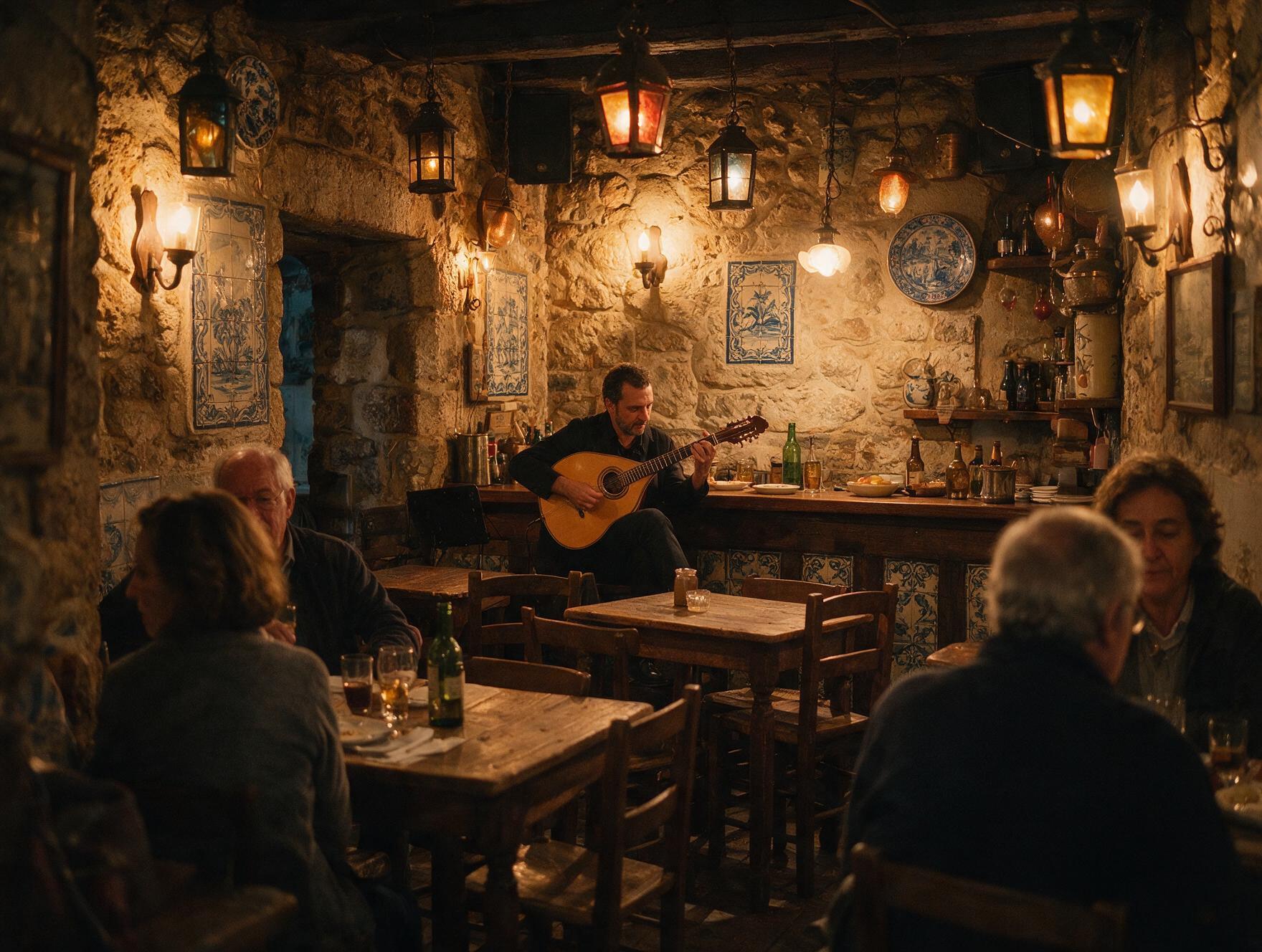
Alfama is where fado — Portugal’s melancholic, guitar-driven folk music, recognised by UNESCO as intangible cultural heritage — actually comes from, and the neighbourhood is dotted with small fado houses. Most only perform in the evening, and a proper fado dinner is worth building into your evening rather than your afternoon (more on that below). For lunch, go simple and local instead: a tasca — a small, family-run tavern — serving grilled sardines, bacalhau (salt cod, prepared what feels like a hundred different ways across Portugal), or a bifana, which is a simple pork sandwich that Alfama does unfussily and well at places that are cash-only and don’t have an English menu, which is generally a good sign rather than a bad one.
Honest caveat: the touristy restaurants clustered right around Portas do Sol and the main tram route mark up significantly and often coast on the view rather than the food. Walk three or four streets inland and the quality goes up while the price comes down — this pattern holds in nearly every old European neighbourhood that’s become a tourist draw, and Alfama is no exception.
Afternoon: the flea market, if your timing lines up
If your day in Alfama happens to fall on a Tuesday or Saturday, work Feira da Ladra into the afternoon — Lisbon’s long-running flea market at Campo de Santa Clara, a genuinely chaotic sprawl of antiques, old azulejo tiles pried from renovated buildings, vinyl records, and the kind of secondhand junk that occasionally turns out to be a find. It’s not curated for tourists the way some European flea markets have become, which is exactly its appeal. Go with cash, go with time to browse slowly, and don’t expect fixed prices — a bit of friendly negotiation is normal and expected.
If the timing doesn’t work out, this is also a good window for the Museu do Fado near the river — a small, well-done museum (€5 entry) that gives real context to the music you’ll likely hear that evening, with listening stations and instruments rather than just wall text. Twenty minutes here changes how you experience a fado performance later.
Golden hour: Castelo de São Jorge, timed properly
The hilltop castle overlooking Alfama and the wider city costs €15 to enter and is, by most measures, the most touristy single stop on this list — but the golden-hour view from the ramparts over the terracotta rooftops toward the river is genuinely one of the best in Lisbon, and worth the crowd if you time it for about 90 minutes before sunset rather than midday, when both the light and the heat are at their least forgiving. The peacocks that wander the castle grounds are an unexpected, slightly absurd bonus nobody mentions until they’re standing in front of one.
A smaller, less obvious alternative sits right nearby: the rooftop terrace at Igreja de São Vicente de Fora (€8), the baroque monastery a short walk from the castle, which has its own tile collection and a rooftop view that’s arguably as good with a fraction of the visitors. If the castle queue looks unreasonable, this is where I’d go instead.
Evening: dinner and fado, done properly
This is the one meal of the day worth booking ahead. Tasca do Chico, deep in Alfama’s alleys, is one of the more well-known spots for an authentic fado dinner — traditional Portuguese fare with performances starting around 9pm, and it fills up, so reserve rather than hope for a table. For something a step more modern without losing the neighbourhood feel, Taberna Sal Grosso does contemporary Portuguese cooking — the octopus salad and codfish croquettes are the dishes locals point newcomers toward — in a small, low-key room a few streets off the main tourist path.
Whichever you choose, order a glass of vinho verde or a proper Douro red rather than defaulting to sangria, which is more a tourist-menu staple than something you’ll see locals actually drinking with dinner. And do sit through a full fado set if you can — it runs long by design, the songs build on each other, and cutting out after two songs to catch an early night undersells what the genre is actually doing emotionally.
A mistake worth avoiding, and a money note
The mistake: trying to fit Belém’s monastery and pastelaria into the same day as a proper Alfama walk. They’re both worth full attention and roughly 30 minutes apart by tram — cramming both in means rushing one or both, and Alfama in particular rewards slowness in a way a packed itinerary works against. Give Belém its own morning on a different day.
On money: Portugal runs on the euro, and cards are near-universally accepted in Alfama’s restaurants and shops, but the smallest tascas and the flea market stalls are more comfortably cash — keep a reasonable amount of small notes on you rather than assuming every corner will take a card the way it might in Lisbon’s more modern districts.
Getting to Lisbon from India, and what to sort before you land
There’s no direct flight from India to Lisbon yet, so you’ll be connecting — TAP Air Portugal runs the most natural one-stop options via Lisbon’s own hub network, with fares from Mumbai and Delhi typically landing somewhere in the ₹55,000–75,000 round-trip range depending on season and how far ahead you book, though it’s worth comparing against a Gulf-carrier connection through Dubai or Doha, which can sometimes undercut it. Portugal is part of the Schengen area, so Indian travellers need a Schengen visa arranged through VFS Global — budget roughly ₹9,500–10,500 all-in for the visa fee and service charges, and apply at least six weeks ahead, since peak season (June–September) processing can stretch to three to five weeks rather than the standard one to fifteen days.
Who this day suits
Couples get an unreasonable amount of romance out of Alfama almost by accident — the golden-hour castle view, a fado dinner, the getting-lost-together nature of the alleys all do the work without anyone having to try. Solo travellers will find it one of the more comfortable old-town wanders in Europe precisely because it’s compact and safe to explore slowly with no itinerary pressure. Families with older kids do well here too, though the steep staircases and cobblestones make it a genuinely tougher day with a stroller or very young children than the flat grid of Lisbon’s Baixa district downhill.
Frequently Asked Questions
How many days do I need for Alfama specifically?
One full day covers the highlights at an unhurried pace, as laid out above. If you want to add the fado museum, a longer flea-market browse, and more wandering without any fixed stops, a second half-day is worth it — Alfama rewards slowness more than most Lisbon neighbourhoods.
Is Alfama safe to walk at night?
Generally yes, and it’s genuinely atmospheric after dark with the alleys lit and fado drifting out of small doorways. Standard city-travel sense applies — stick to the lit, populated lanes rather than the darkest side alleys, and you’ll be fine.
Do I need to book fado in advance?
For the well-known houses like Tasca do Chico, yes — they fill up, especially on weekends. Smaller, less-publicised fado spots sometimes have walk-in space, but don’t count on it if you have your heart set on a specific evening.
Is Tram 28 worth it if it’s always crowded?
Worth doing once, early morning, for a short stretch — it genuinely is a striking ride through the steepest parts of the old city. Skip it as a way to actually get around Alfama during the day; walking is faster and more pleasant once the crowds build.
What’s the best time of year for this itinerary?
Spring (April–June) and early autumn (September–October) give you comfortable walking temperatures and thinner crowds than peak summer. July and August are hot for this much uphill walking and considerably more crowded at every viewpoint.
The takeaway
Alfama isn’t a checklist neighbourhood — it’s the one part of Lisbon that rewards wandering more than planning, and the itinerary above works best treated as a loose sequence rather than a rigid schedule. Build in the slack to sit somewhere with a bica longer than you meant to, or follow a side street because the light looked good down it. That’s genuinely the point.
Get Tripped’s Portugal itineraries build proper time into Lisbon rather than rushing you through in a day and a half — talk to us about working a slow Alfama day, and a separate Belém morning, into a wider Portugal trip.