

By nine in the morning, the car park outside the Tegallalang rice terraces near Ubud is full, the swing operators are calling out prices in three languages, and the terraces themselves are hard to actually see behind the line of people waiting for a turn on the swing. This isn’t a complaint about Bali — the island earns most of its reputation honestly. It’s a complaint about a handful of specific spots that absorb nearly all the traffic while the rest of Bali, twenty minutes to two hours down the road, sits mostly empty.
Bali logged more than 6 million foreign arrivals in 2024, and most of them followed close to the same route: Ubud for the rice terraces and yoga studios, Canggu for the surf cafes, Seminyak for the beach clubs, Uluwatu for the clifftop sunset. None of that is wrong exactly — it’s just one version of Bali, repeated so often it’s started to crowd out the others. These are the actual Bali hidden gems people who live here part-time send friends to instead: not secret, just skipped, because they don’t fit into a four-day itinerary built around a single photo.
- Skip Ubud’s Rice Terraces, Go to Bangli’s Quiet Hills
- Skip Ubud Again: Sidemen Valley’s Slower Version of the Same View
- Skip the Kintamani Sunrise Crowd, Go to Munduk’s Waterfalls
- Skip Celuk’s Silver Shops, Go to Tenganan’s Weavers
- Skip Kelingking’s Selfie Line, Go to Amed’s Black Sand Coast
- The Temple Locals Actually Pray At: Pura Luhur Batukau
- Where to Eat Like You Actually Live There
- Getting to Bali From India: Visa, Flights, and When to Go
- What It Actually Costs
- Money, SIM Cards, and Getting Around
- Frequently Asked Questions
Skip Ubud’s Rice Terraces, Go to Bangli’s Quiet Hills
Bangli sits right next door to Ubud’s regency, Gianyar, close enough that you could drive between the two in under an hour, and yet it barely registers on most itineraries. Bali’s tourism board has been quietly pitching it as a rural and wellness alternative for a few years now — less resort development, more working villages and cooler hill terrain.
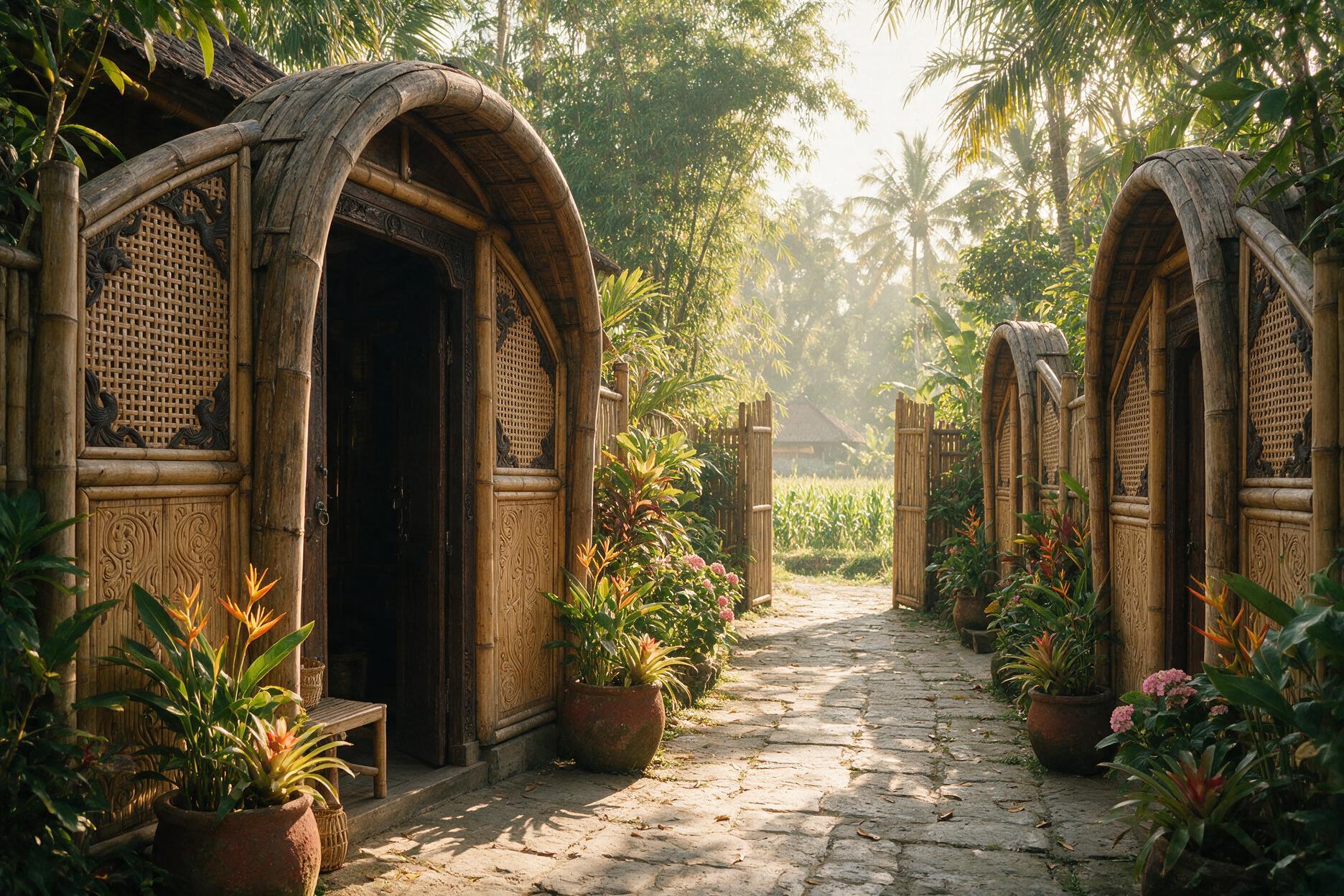
The best-known stop is Penglipuran, a traditional village built almost entirely from bamboo, with the same architectural layout preserved across generations and a bamboo forest on its edge that’s genuinely worth the walk. Here’s the honest caveat: Penglipuran isn’t really a secret anymore. It’s been written up often enough as one of the “cleanest villages in the world” that tour buses show up by mid-morning and the main lane can feel more like a market street than a residential village. Go right at opening, or better, treat it as one stop on a longer loop rather than the whole reason for the trip.
That longer loop is where Bangli gets interesting. Undisan, a short drive south, was named one of Indonesia’s top tourism villages in a 2022 national ranking and still runs almost entirely on community-based tourism — no big resorts, just homestays and farming families who’ll walk you through their fields if you ask. Up north near Lake Batur, Penelokan sits around 22°C with views over the lake and Mount Batur without the pre-dawn tour convoy that clogs the standard Kintamani sunrise viewpoint. Pinggan village, a little further along the crater rim, gets a similar silhouette of Batur at sunrise with a fraction of the crowd. And Toya Bungkah, down by the lakeshore, has natural sulfur hot springs that locals use for aches and joints — less polished than a resort spa, more like the real thing.
Who it’s for: families who want kids to actually run around rather than queue for a photo, and anyone burned out on being funneled through a gift shop at the end of every stop.
Skip Ubud Again: Sidemen Valley’s Slower Version of the Same View
If what you actually wanted from Ubud was the rice-terrace view and the sense of being somewhere green and quiet, Sidemen in Karangasem regency, East Bali, gives you that more honestly than Ubud does at this point. The valley is one of the island’s most productive rice-growing areas, framed by Mount Agung on clear mornings, with the Unda River running through it. Travel press has picked up on this over the past year, describing it as the destination “stealing the spotlight” from Ubud for travelers who want to slow down rather than tick off a bucket list.
Cooking classes here tend to start with an actual market run and a stop at a working rice farm, not a demo kitchen set up for tour groups. Accommodation ranges from simple family-run guesthouses to genuinely upscale properties — Wapa di Ume Sidemen is a five-star option built into the terraces, and Samanvaya is an adults-only luxury villa property aimed squarely at couples who want quiet over nightlife.
One honest warning: Sidemen sits close to two spots that have become their own kind of overtouristed — Tirta Gangga Water Palace and Pura Lempuyang, the so-called “Gate of Heaven” temple. Lempuyang in particular is worth knowing about before you go: the famous mirror-reflection photo isn’t natural, it’s created by a staff photographer holding a small mirror under the camera lens, and the queue for that exact shot can run past an hour. Visit for the temple and the mountain views if you want, just don’t build your whole day around getting that one image.
Who it’s for: couples and honeymooners who want the “green Bali” fantasy without sharing it with a tour group; anyone doing a slower, villa-based week rather than a checklist trip.
Skip the Kintamani Sunrise Crowd, Go to Munduk’s Waterfalls
North Bali runs on a completely different rhythm than the south, and Munduk is the clearest example. It sits around 1,200 meters up in Buleleng regency, misty and forested, with a noticeably cooler climate than the coast — bring a light jacket for the evenings, which surprises most first-time visitors to Bali. Instead of one headline attraction, Munduk spreads its appeal across several waterfalls (Munduk Falls, Melanting, Labuhan Kebo, and the Banyumala Twin Waterfall among them), coffee plantations you can actually walk through, and Lake Tamblingan, a smaller and quieter counterpart to Lake Batur, ringed by protected rainforest.
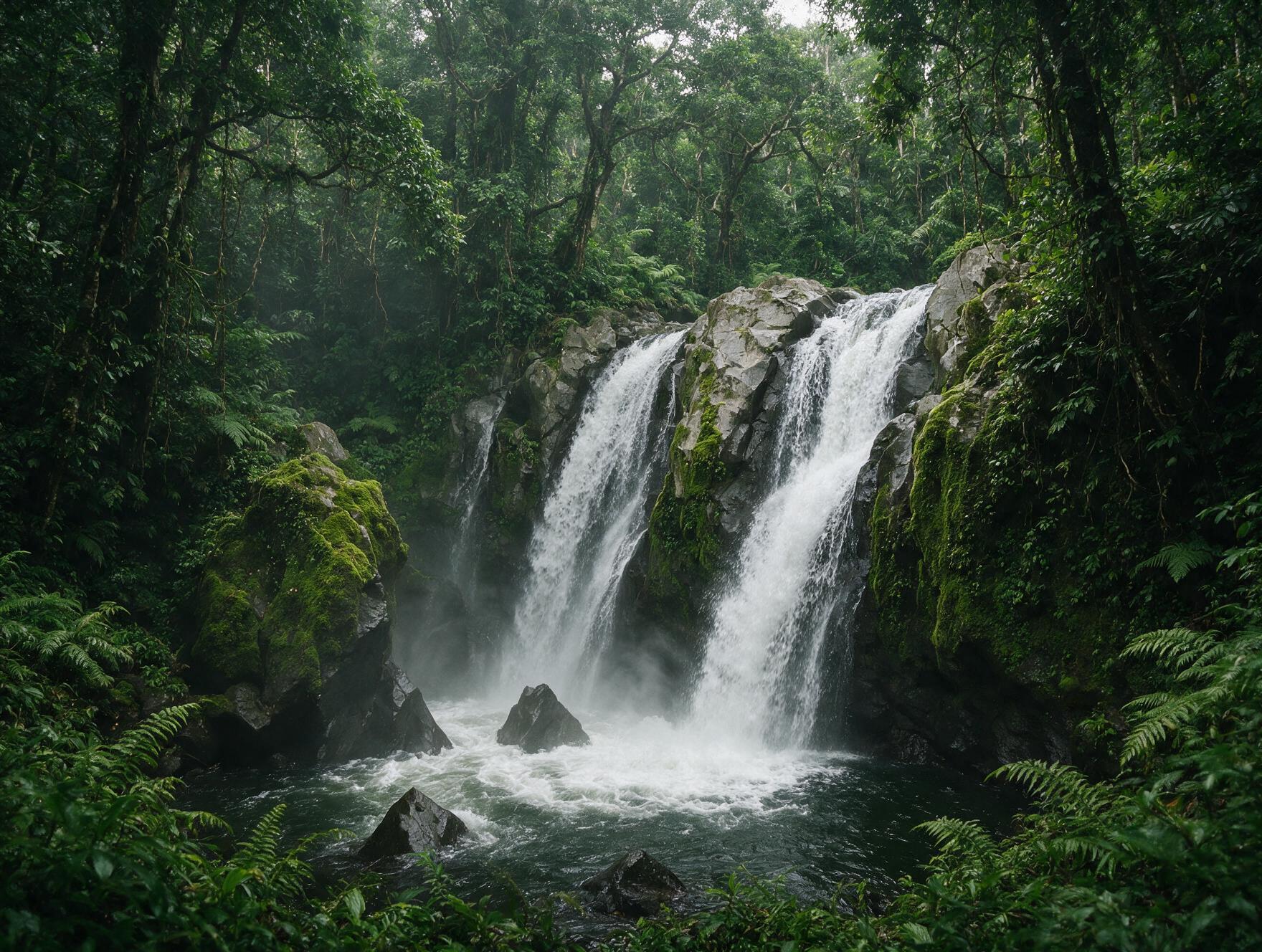
The contrast with Kintamani’s standard sunrise tour — hundreds of people at a single viewpoint before dawn, engines running for warmth, guides hustling everyone back into the van before the light’s even fully up — is sharp. Munduk doesn’t have one iconic viewpoint to rush; the landscape itself is the point, which makes it a better fit for people who’d rather hike two hours than photograph one.
Smart-spending tip: villas across Bali, including in Munduk and Sidemen, often discount 30 to 35% below peak-season rates if you travel outside July–August and the December holidays — which lines up nicely with the shoulder-season timing covered below.
Skip Celuk’s Silver Shops, Go to Tenganan’s Weavers
Celuk, near Ubud, is where most day tours stop for silver jewelry — pleasant enough, but built entirely around the tour-bus schedule, with fixed showroom stops and a well-worn sales pitch. Tenganan Pegringsingan, about an hour further east in Karangasem, is a different kind of craft village altogether. It’s a Bali Aga settlement — one of the island’s original pre-Hindu Balinese communities — and it’s one of only a small number of places in the world where the double ikat weaving technique called geringsing is still practiced.
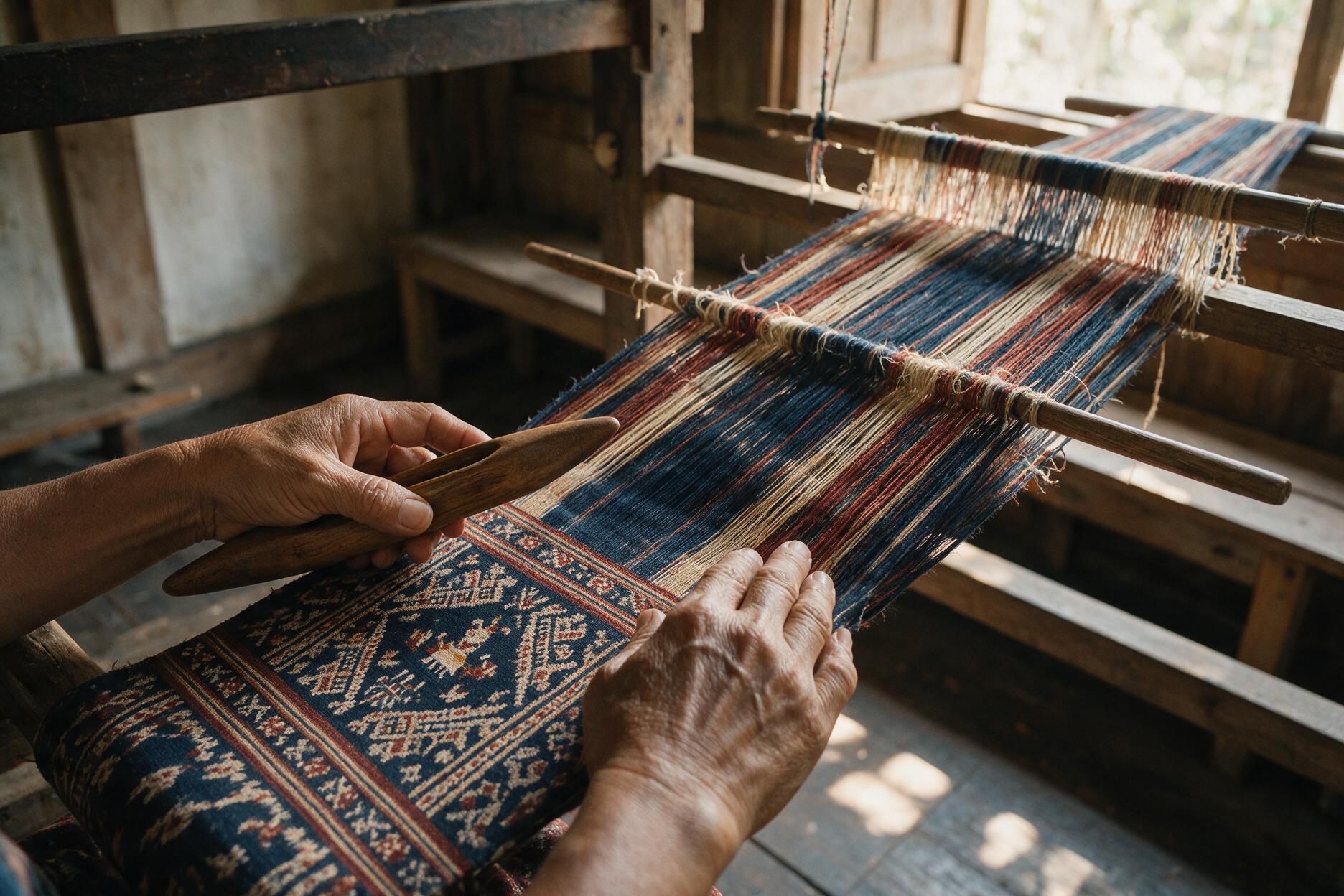
Fun fact: double ikat is unusually difficult because both the vertical and horizontal threads have to be dyed in a pre-planned pattern before weaving, so the design only fully appears once the two align on the loom. A single cloth can take months to finish, sometimes longer, and it’s traditionally believed to carry protective properties — geringsing roughly translates to “without sickness.” Watching a weaver work the loom in Tenganan, thread by pre-dyed thread, makes the appeal obvious in a way a shop display case doesn’t.
Who it’s for: anyone who wants a genuine craft souvenir rather than a mass-produced one, and travelers interested in Bali’s pre-Hindu roots rather than just its temples.
Skip Kelingking’s Selfie Line, Go to Amed’s Black Sand Coast
Kelingking Beach on Nusa Penida — the T-Rex-shaped cliff everyone’s seen on Instagram — has become something close to a cautionary tale about overtourism in Bali’s orbit: a single viewpoint, a genuinely risky cliffside path down to the beach, parking chaos, and long waits just to get to the edge for a photo. It’s beautiful. It’s also not a relaxing morning.
Mistake to avoid: if you do go to Kelingking, treat it as a 45-minute stop, not a beach day — the descent path has caused real injuries, and the beach itself has almost no shade or facilities. Go early or skip it and spend that day on Amed instead.
Amed, on Bali’s east coast, is a strip of small fishing villages with black volcanic sand beaches, traditional outrigger jukung boats pulled up on the shore, and a noticeably slower pace than the south’s beach-club scene. Snorkeling straight off the beach is decent in several spots, and the well-known Japanese shipwreck dive site at Tulamben is a short drive away. There’s no Canggu-style café row here — dinner is more likely to be fresh-caught fish grilled at a family-run warung than a plated brunch — which is exactly the point for travelers who came to Bali for the coast, not the scene.
Photography tip: if you’re chasing waterfall shots elsewhere in East Bali, Tukad Cepung — a narrow gorge waterfall reached by wading through a shallow river canyon — gets its best light beam through the cavern opening around mid-to-late morning, roughly 10–11am, once the sun is high enough to reach the gorge floor. Go before the afternoon tour groups arrive; the light window is short.
The Temple Locals Actually Pray At: Pura Luhur Batukau
Uluwatu and Tanah Lot get the sunset tour buses. Pura Luhur Batukau, tucked into rainforest on the slopes of Mount Batukaru in Tabanan regency, gets Balinese families coming to actually pray, on a schedule set by the temple calendar rather than the tour bus timetable. It’s one of Bali’s six directional temples, historically significant, and it sits in genuinely cool, misty forest that feels closer to a mountain retreat than a monument. It pairs naturally with a visit to the nearby Jatiluwih rice terraces — Bali’s UNESCO-listed terraces, and a far calmer alternative to Tegallalang’s crowds.
Honest caveat: the inner temple courtyard is closed to non-Hindu visitors, which is true of most Balinese temples but worth knowing before you go so it doesn’t feel like a surprise. You can still see and photograph the outer structures and grounds respectfully, sarong required.
Where to Eat Like You Actually Live There
The honest version of this section: we didn’t find one specific warung with a verified name worth sending you to sight unseen, and making one up would be worse than not having a recommendation. What’s more useful is the pattern. In Bangli, Sidemen, and Amed, look for warungs with a hand-written menu in Indonesian only, plastic stools, and a pot of nasi campur or babi guling that gets refilled through the lunch rush — those are cooking for the neighborhood, not for a tour group, and the price reflects it (often $3–7 a meal, a fraction of what the same dish costs in a Seminyak café). Ask your driver where they’d eat; in these regencies, drivers are usually locals themselves and have an actual answer, not a commission arrangement with a restaurant.
Getting to Bali From India: Visa, Flights, and When to Go
Visa: Indian passport holders cannot enter Indonesia visa-free. An electronic Visa on Arrival (e-VOA) is required, applied for online in advance through Indonesia’s official immigration portal. The fee is IDR 500,000 (roughly ₹2,700–₹3,000 depending on the exchange rate), and it covers a 30-day stay, extendable once for a further 30 days (60 days total) through an immigration office in Indonesia. You’ll need a passport valid at least 6 months beyond your arrival date, a passport-style photo, and proof of onward or return travel. Indonesia also requires an Electronic Customs Declaration, filed online within 48 hours of arrival, and Bali separately charges a one-time tourist levy of IDR 150,000 (about ₹800) — different from the visa fee, paid via the Love Bali system either online beforehand or on arrival.
Flights: Air India currently runs direct flights between Delhi and Denpasar — two flights daily, around 8 hours 5 minutes each way — which makes Delhi the easiest Indian gateway to Bali. From Mumbai, Bengaluru, and other major cities, expect a layover, typically through Singapore, Kuala Lumpur, or Jakarta, pushing total travel time to 10–15+ hours depending on the connection. Return economy fares generally run somewhere in the ₹35,000–₹75,000 range on the direct Delhi route, more during December–January and around Indian festival travel windows — fares move fast, so it’s worth checking a few weeks out rather than assuming last year’s price still holds.
Best time to go: for fewer crowds without gambling on the weather, aim for April–May or September–October. Both sit outside the July–August and December–January peaks, when Ubud’s main strip and the south coast are genuinely packed. April–May runs warm (around 27–29°C) as the rainy season tapers off into occasional rather than constant showers. September–October sits similarly around 27°C, with the wet season just starting to build but still delivering plenty of clear days. Neither month is risk-free for rain — this is a tropical island — but both are noticeably quieter and often cheaper on villas and flights than peak season.
What It Actually Costs
Get Tripped doesn’t plan budget or hostel-tier trips, so here’s what a mid-range to luxury week actually runs:
- Villas: a private 1–2 bedroom pool villa typically runs $185–$430 a night; a 3-bedroom villa for a group or family, $285–$715; larger 4–5 bedroom properties with full staff, $355–$860. Ultra-luxury estates go well beyond that. Shoulder-season and low-season rates can run 30–35% below peak.
- Private driver: roughly $20–$60 for a half or full day (8–10 hours), fuel included — genuinely good value for regency-hopping between Bangli, Sidemen, and Munduk, and safer than self-driving on the narrow, switchback mountain roads in those areas.
- Dining: upscale restaurants run $15–50 a meal per person; a proper warung meal is $3–7, useful context even if you’re not building the trip around it.
- Experiences: cooking classes, village walks, and driver-guided day routes through Bangli or Sidemen are easy to arrange through a villa concierge or a local operator, and cost noticeably less than the resort-branded version of the same experience — ask for current rates when booking, since these vary by group size and season.
Money, SIM Cards, and Getting Around
Indonesia uses the rupiah (IDR), and QRIS — the national QR payment standard — is now accepted almost everywhere, including small warungs, so a local e-wallet app or a bank app that supports QR scanning covers a lot of ground. Cards work at hotels, villas, and upscale restaurants; when paying by card, choose to be charged in IDR rather than your home currency, since the “pay in your currency” option usually carries a 5–7% conversion markup. Keep some cash for markets, temple donations, and rural warungs where card machines aren’t standard. For ATMs, stick to machines inside bank branches (BCA, Mandiri, and BNI are common and reliable) rather than freestanding ones in convenience stores, which carry more skimming risk. eSIM data plans from providers like Airalo or Sim Local can be installed before you land and activate on arrival, which is the simplest option if you don’t want to deal with a physical SIM swap — worth comparing current per-GB pricing at booking time since plans change.
For getting around outside the south-coast tourist strip, a private driver for the day is the practical choice over a rental scooter, especially in Bangli, Sidemen, and Munduk, where roads climb and switchback through hill terrain that catches out visitors unfamiliar with local traffic patterns.
Solo travelers: Amed in particular works well solo — dive shops and small guesthouses mean it’s easy to fall into a group for the day, and the pace is low-key enough that eating alone at a warung doesn’t feel conspicuous the way it can in a Seminyak restaurant built for couples and groups.
Frequently Asked Questions
Do Indians need a visa for Bali?
Yes. Indian passport holders need an e-VOA, applied for online before travel or on arrival, costing IDR 500,000 (about ₹2,700–₹3,000) and valid for 30 days, extendable once for a total of 60.
How many days do I need to see more than the tourist spots?
Seven to ten days gives you room to split time between a base (Sidemen or Ubud’s outskirts work well) and day trips or a couple of nights in Bangli, Munduk, or Amed, without rushing every stop into a single day.
Is Bangli safe, and do people speak English there?
Bangli is safe by any normal travel standard — it’s simply less set up for tourists than Ubud, so English is more limited outside the main village stops like Penglipuran. A driver or guide bridges that easily.
What’s the best area to stay if I want to avoid the crowds but still have good food and villas?
Sidemen is the strongest all-rounder — genuinely quiet, with villa options from comfortable to five-star, and close enough to East Bali’s other spots (Tenganan, Amed) for day trips.
Can I do this trip without renting a scooter?
Yes, and for the hill regions it’s the safer call — a private driver for $20–60 a day covers point-to-point transport between regencies without the risk of unfamiliar mountain roads.
Is Bali still worth visiting given how overtouristed parts of it are?
Yes, honestly — the crowding is real but it’s concentrated in a handful of specific spots. Most of the island, including everything in this guide, sees a fraction of that traffic.
When should I avoid visiting?
July–August and the December–January holiday window bring the heaviest crowds and highest prices across the whole island, hidden gems included, since domestic and international school holidays overlap.
Do I need to book villas and drivers in advance, or can I arrange things on arrival?
For villas, especially in Sidemen and Amed’s better properties, book ahead — good ones fill up even in shoulder season. Drivers can often be arranged a day or two out through your villa or a local operator.
Bali’s overtourism problem is real, but it’s a problem of concentration, not a problem with the island itself. The fix isn’t avoiding Bali — it’s routing around six or seven specific pinch points and letting the rest of the island, which is quieter, greener, and in places genuinely untouched by the tour-bus economy, do the work instead.
Ready to build a Bali trip around the parts most visitors skip? Get Tripped can put together a villa-based itinerary through Bangli, Sidemen, Munduk, and East Bali’s coast, handle the e-VOA and flight logistics from your home city, and line up private drivers and local guides who actually know these regions — reach out to start planning.