
A friend of mine has been to Dubai four times in three years. Great malls, an excellent brunch scene, a passport stamp she barely notices anymore. When I told her I was headed to Oman instead, her first question was, “Wait, is that safe?” Her second was, “What’s even there?”
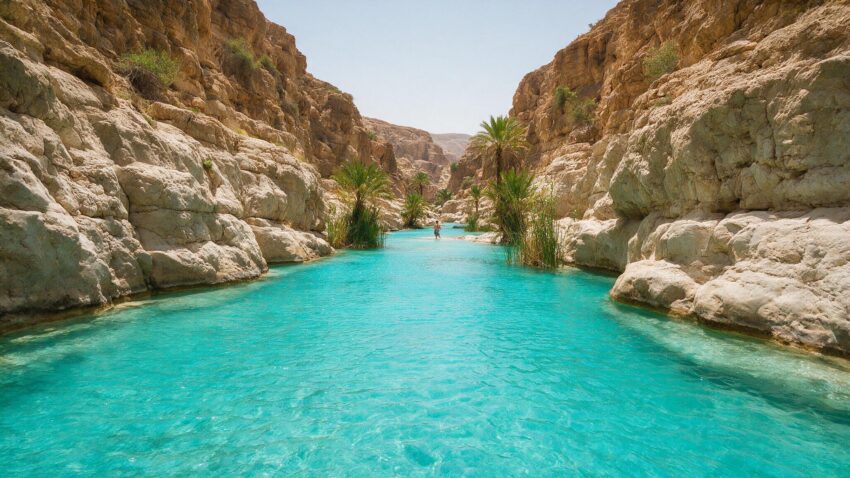
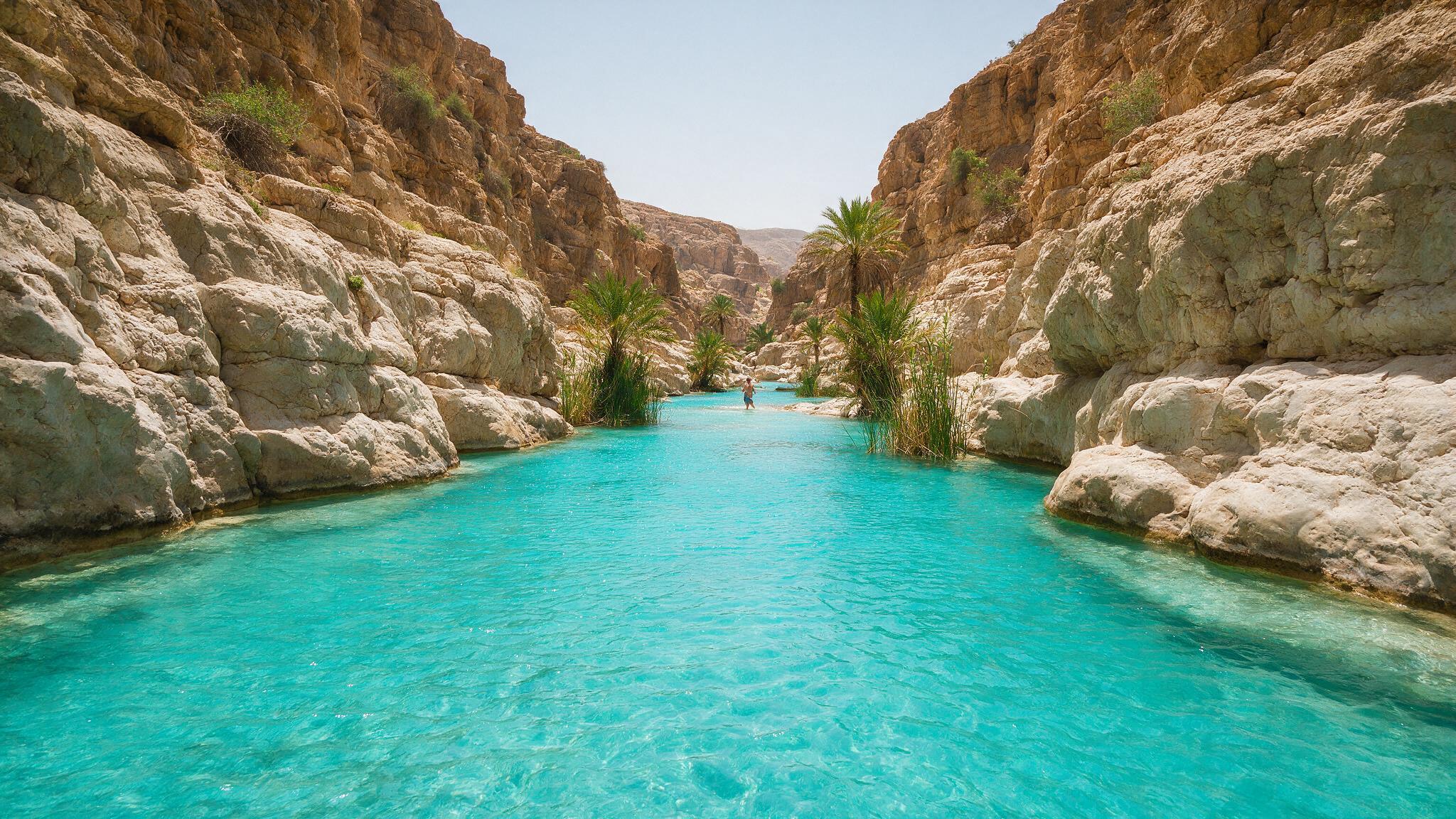
What’s there is a Friday goat market in Nizwa where deals aren’t struck in the trading ring at all — they’re closed at the edges, over a cup of karak tea, with a handshake and a number said out loud once. It’s a canyon locals call the Grand Canyon of Arabia, narrower and, in places, deeper than the original. It’s a turquoise pool you reach by a short boat paddle across a river mouth, followed by a swim through a pitch-dark cave to a waterfall nobody photographs well because your phone is in a dry bag and your hands are busy holding onto rock.
Oman shares a border and a language with the UAE, and gets a fraction of the Indian tourist numbers Dubai does — not because it’s less impressive, but because almost nobody has told you what’s actually there beyond Muscat’s Grand Mosque and the Mutrah souq. This guide covers the parts of Oman that don’t make the top-10 lists: the wadis, the mountains, the desert camps you reach by 4WD instead of a tour bus, and the coast where dhows are still built by hand.
Table of Contents
- Why Oman, Not Just Dubai
- Visa and Entry for Indian Travellers
- Best Time to Visit
- Getting There: Flights from India
- Getting Around: Why Self-Drive Wins
- Where to Stay, by Region
- The Hidden Gems, In Detail
- Food in Oman
- What It Actually Costs, Per Day
- Currency, Payments and SIM/eSIM
- A Mistake to Avoid
- Safety Notes
- Notes for Different Kinds of Travellers
- FAQs
- The Oman Trip Your Friends Haven’t Done
Why Oman, Not Just Dubai
This isn’t an anti-Dubai piece. Dubai does what it does extremely well, and there’s no shame in a long weekend of rooftop dinners and duty-free shopping. But if you’ve already done that trip, or you want your next Gulf holiday to feel different from the last one, Oman is the answer nobody in your friend group has tried yet.
The terrain is the real pitch. Oman has actual mountains — the Hajar range hits just over 3,000 metres, with terraced rose farms and canyon-rim resorts up top. It has a coastline where fishermen still build ocean-going dhows by hand. It has a desert that isn’t a stage set for quad-bike tourism; Bedouin families still live semi-nomadically in parts of the Wahiba Sands. None of it needs a filter or a caption explaining what you’re looking at.
It’s also, genuinely, one of the calmer, more courteous places to travel in the region — more on that later — which matters if you’re the one convincing parents or in-laws who ask a lot of “is it safe” questions before they’ll agree to go.
Visa and Entry for Indian Travellers
Here’s the part people get wrong most often: Oman does not offer visa-on-arrival to Indian passport holders the way some other Gulf countries do. Oman’s Ministry of Foreign Affairs lists India among nationalities that only qualify for visa-free entry if you separately hold a valid visa for, or residency in, the US, UK, Canada, Australia, a Schengen country, or Japan. Without one of those, you need an eVisa before you fly, full stop.
Apply through the official Royal Oman Police portal, evisa.rop.gov.om — not a similar-looking third-party agency site. The tourist eVisa costs around OMR 20 (roughly ₹4,600), is valid for a 30-day stay from entry, and can typically be extended once for a further 30 days. Processing is usually quoted at 24-72 hours, but apply 3-4 weeks before you fly anyway, for buffer if the portal is slow.
You’ll need: a passport valid 6 months beyond your travel dates, a return flight booking, confirmed accommodation for at least your first night, a recent digital photo, and a card to pay online. Keep a copy of the approved eVisa — check-in staff sometimes ask to see it.
Best Time to Visit
October to March: the interior’s sweet spot
For everything in this guide — Wadi Shab, the mountains, Nizwa, the desert — October through March is the window. Daytime temperatures sit around 20-28°C, mountain nights get properly cold (pack a jacket for Jebel Akhdar and Jebel Shams; people underestimate this), and the wadis run clean and cool rather than dry and dusty. Avoid May-September for anything hiking or midday-drive related — it’s simply too hot, and Wadi Shab is a bad idea in summer for reasons beyond comfort.
Khareef in Salalah: a different kind of insider timing
This is the detail most Indian travellers have never heard of. From roughly late June to 21 September each year, the monsoon reaches Oman’s southern Dhofar region around Salalah — locally called khareef — turning the hills green, wrapping the cliffs in mist, and setting dozens of waterfalls running, while the rest of the Gulf bakes at 45°C+. A strange, lovely contradiction: monsoon season in the Arabian desert.
If you’re reading this before the season wraps in late September, there’s still a small window to catch the tail end this year. Later than that, note it for next June — Salalah during khareef is a genuinely separate trip from the Muscat-and-interior route this guide focuses on.
Getting There: Flights from India
Connectivity is one of Oman’s underrated advantages. Oman Air, Air India, Air India Express, IndiGo, and SalamAir together run direct flights from Mumbai, Delhi, Kochi, Bengaluru, Hyderabad, Chennai, Kozhikode and Thiruvananthapuram to Muscat, several with multiple flights a day. IndiGo added Kochi and Mumbai to its Gulf network in mid-2025, with Hyderabad and Chennai following — so if you haven’t checked recently, the map has genuinely expanded.
Flight times are short: Mumbai to Muscat is around 2 hours 45 minutes, Delhi closer to 3.5 hours nonstop, Kochi similar to Mumbai. Round-trip economy fares vary by season and how far ahead you book, but ₹12,000-25,000 per person is a fair starting range — often close to what a Dubai flight costs from the same city.
Getting Around: Why Self-Drive Wins
Everything in this guide is genuinely better by self-drive. Oman’s highways are wide, well-signed, and in excellent condition — better maintained than a lot of roads back home, honestly. Rental counters are well stocked at Muscat airport: a standard 2WD saloon runs roughly OMR 8-10 a day, a 4WD (needed for the Jebel Akhdar climb and any real dune driving) runs OMR 30-60. Fuel is close to free by Indian standards, at around OMR 0.234 a litre.
Most rental desks accept a valid Indian driving licence for short tourist stays, but carry an International Driving Permit as backup and double-check with your specific company before you land — policies vary by counter, not just by country.
One thing that catches people off guard: Oman has an enormous number of speed cameras on the highways connecting major towns. They’re clearly marked, not hidden, but tourists still get caught doing 130 in a 120 zone without noticing the limit had dropped. Fines start around OMR 10 and climb fast.
Where to Stay, by Region
Muscat
Muscat is your arrival point and likely your first and last night. It has the country’s best concentration of five-star options — international chains with sea views, worth an evening before or after the road trip. Book near Muttrah or Qurum for walkable evenings.
Jebel Akhdar
This is where Oman’s accommodation gets genuinely special. Alila Jabal Akhdar sits directly on the canyon edge, with an infinity pool that appears to drop into the gorge — built as an adventure hotel first, resort second. Anantara Al Jabal Al Akhdar runs rose-harvest season programming, including a guided distillery tour and rose-themed spa treatment, worth timing between mid-March and May. Near Jebel Shams, Sama Heights Resort — reportedly Oman’s first eco-resort — has canyon-view chalets under genuinely dark skies. Book Jebel Akhdar well ahead; rooms are limited by geography, and the road up runs through a checkpoint.
Wahiba Sands
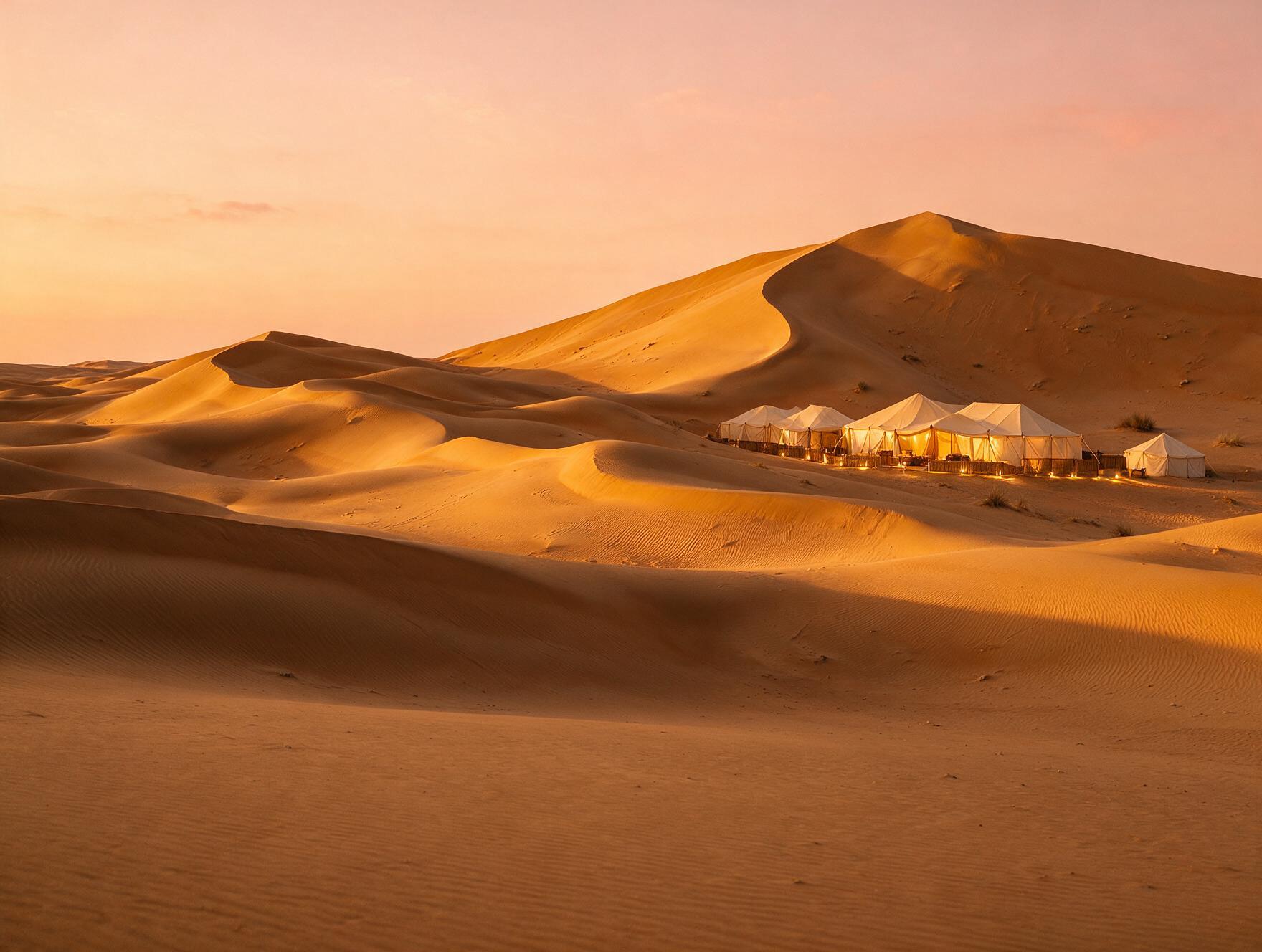
Skip anything visible from the highway. The camps worth staying at — Desert Nights Camp and Thousand Nights Camp are two well-regarded options — require an actual 4WD transfer into the dunes, which is part of what keeps them off the day-tripper circuit. Tent quality ranges from comfortable AC canvas tents to luxury tents with private plunge pools; none of it is backpacker-tier, by design.
Sur
Sur doesn’t have Jebel Akhdar’s marquee names, but it has good mid-range coastal hotels and makes an unhurried base for the dhow yards and a night or dawn visit to Ras Al Jinz, 14 kilometres down the coast.
The Hidden Gems, In Detail
Wadi Shab: the turquoise pools and the hidden cave
Wadi Shab sits on the coastal road between Muscat and Sur, near the town of Tiwi, and it’s the single experience I’d tell someone to prioritise over everything else in this guide. The hike follows the canyon floor over rock and gravel for roughly 45 minutes to an hour, past pools that get more turquoise the further you go. About twenty minutes in, you cross the wadi’s mouth — a local runs a small wooden boat back and forth, cash only, OMR 1 per person, roughly 8am to 5pm. The crossing itself takes two or three minutes.
The real payoff is at the end: a narrow cave reached by swimming through near-total darkness for about thirty seconds, through a gap barely wider than your shoulders, opening into a hidden pool with a waterfall inside the cave. It’s genuinely one of the strangest, best things I’ve done in the Gulf. Budget 3 to 5 hours total for the round trip.
Practical notes: wear water shoes, bring a dry bag or waterproof phone case, and pack at least a t-shirt and shorts to swim in — modest coverage matters here even in the water. Visit October through April; summer heat makes the hike miserable, and — the honest caveat worth repeating — check the forecast first, because Wadi Shab and its neighbouring wadis flood fast and dangerously after rain. Omani authorities issue regular flash-flood warnings for exactly this reason. Go on a weekday if you can; Fridays and Saturdays bring crowds that undercut the point.
Jebel Akhdar and Jebel Shams: the “Grand Canyon of Arabia”
Jebel Shams is Oman’s highest peak, and the Wadi Ghul canyon beneath it, covered by Oman’s official tourism board, has earned the nickname “Grand Canyon of Arabia” — narrower than its American namesake, but the width makes it look, if anything, deeper and more dramatic. The must-do is the Balcony Walk (trail W6), a roughly 9-10 km round-trip path tracing the canyon’s contour to As Sab, an abandoned mountain village with old terraced fields still visible. It’s easy on elevation but runs close to a serious drop for parts of it — not one for anyone afraid of heights.
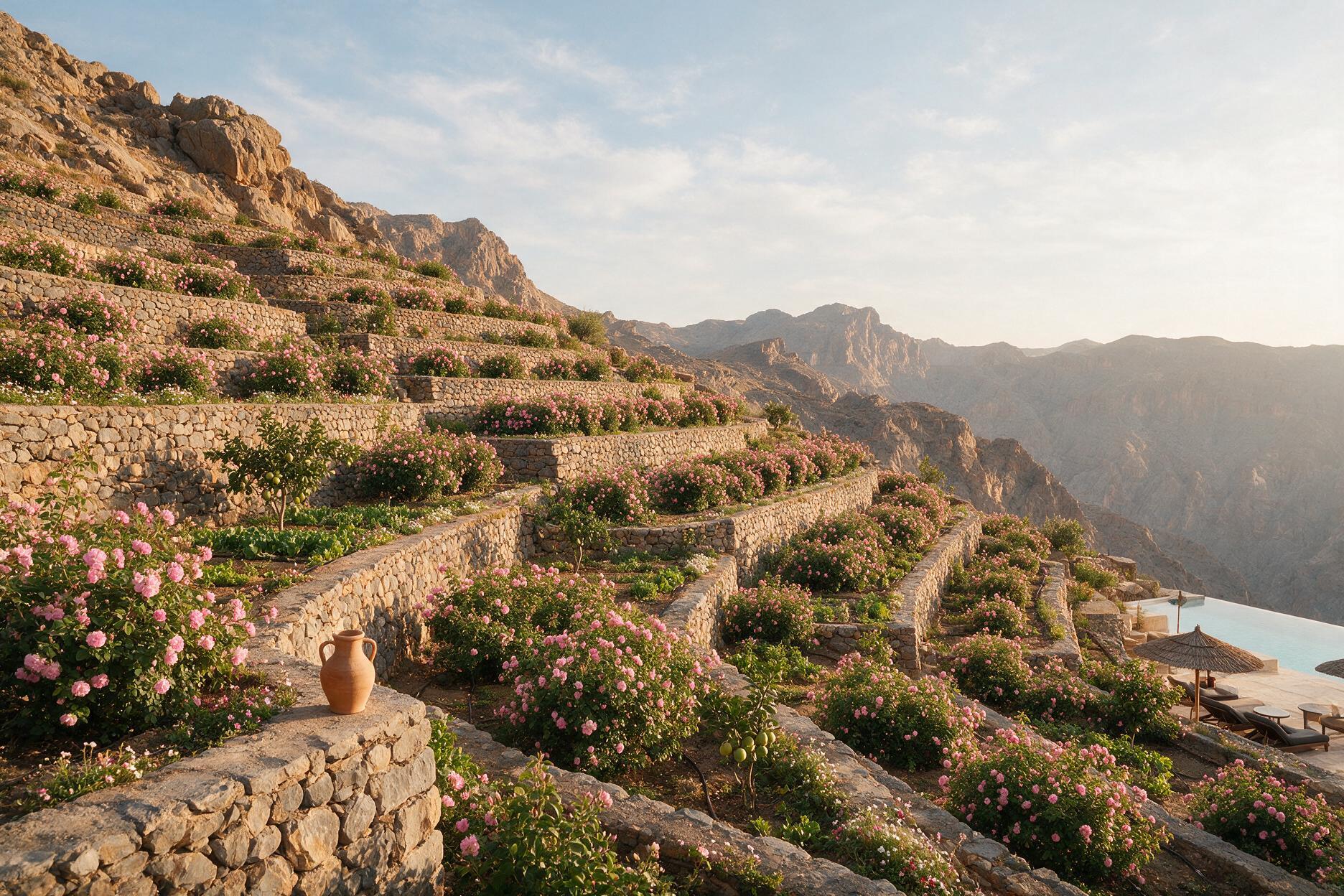
Jebel Akhdar, the neighbouring “Green Mountain,” is Oman’s rose country. From roughly mid-March to May, the Damask rose harvest covers the terraced slopes in pink, and villages distil the petals into rosewater using traditional mud ovens called al-duhjan — a craft passed down for generations. The honest caveat: day-tour buses know about it too, so stay overnight and get out early rather than visiting midday. Fun fact — the road up is one of the few in Oman that officially requires a 4WD; regular cars are turned back at the checkpoint.
Nizwa: the Friday goat market and the fort
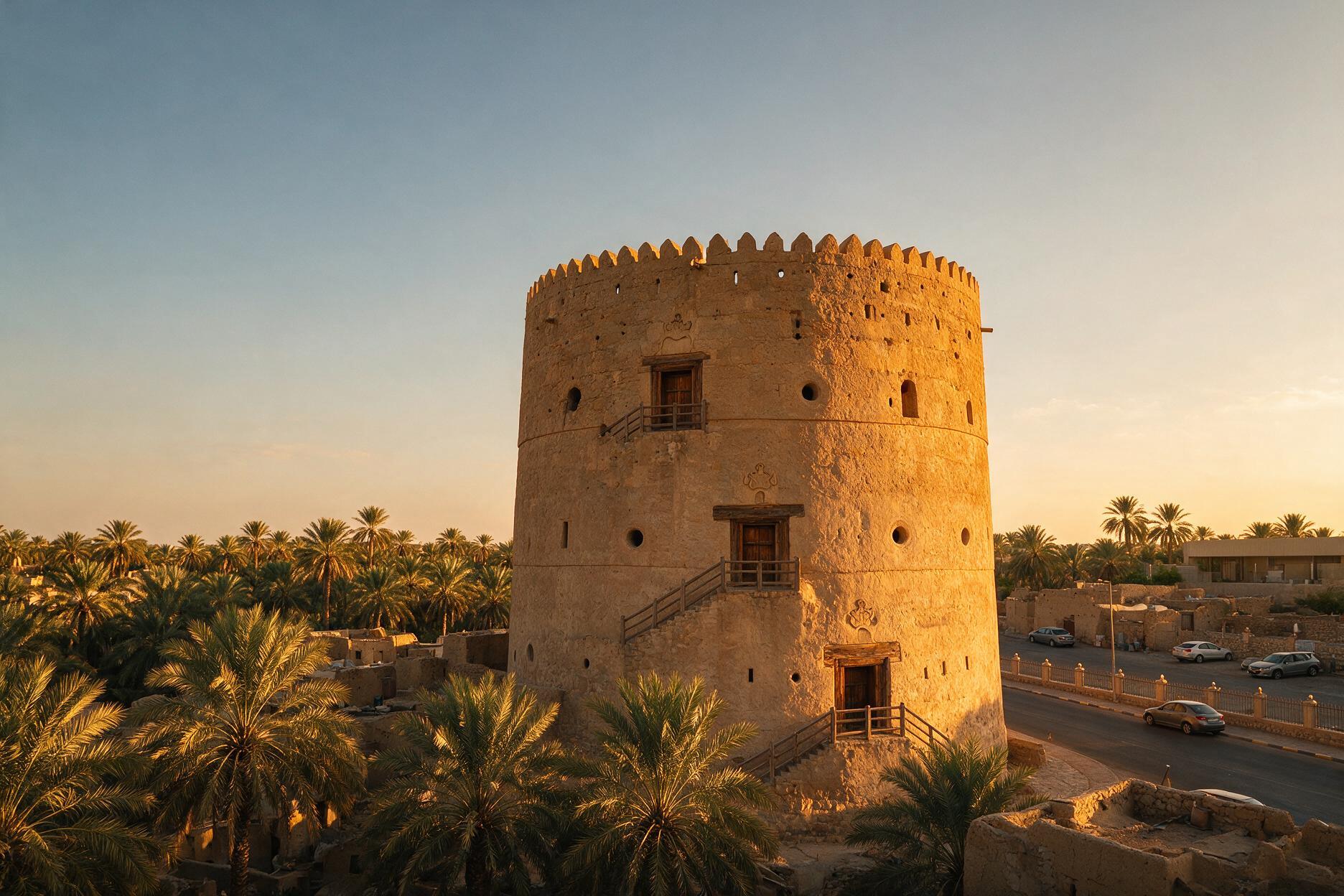
Nizwa was Oman’s ancient capital, and its round-towered fort is worth an hour on its own — OMR 0.5 entry, open 8am-6pm most days (8-11am and 1:30-6pm on Fridays), with rooftop views over the old town.
But build your itinerary around a Friday morning for the livestock souq next door. It runs roughly 7-9:30am, peaks 7:30-8:30, and isn’t staged for tourists at all — a working market where farmers trade goats, sheep and cattle as they have for generations. The detail that stuck with me: money doesn’t change hands in the trading ring. Buyers inspect the animals, someone calls out a price — “khamsun,” fifty rial, is common — and the deal closes on the sidelines, often over a cup of karak tea. Wide shots are fine to photograph freely; ask before shooting anyone up close, and dress conservatively.
Wahiba Sands: desert camps off the tour-bus loop
The Sharqiya Sands — most people still say Wahiba Sands — are roughly a 2.5-3 hour drive from Muscat, and they’re the real desert most travellers picture when they think “Oman,” not a dune park bolted onto a city. Camel treks, a night under genuinely dark skies, and guided dune driving are all worth it, but the mistake to avoid is trying it in a standard 2WD — vehicles get stuck constantly. Let the camp’s transfer vehicle handle the dune crossing; rent your own car only for the highway legs.
Sur and Ras Al Jinz: dhow yards and turtle nesting
Sur’s dhow-building yards are one of Oman’s quietly remarkable working traditions — craftsmen still build ocean-going wooden ships by hand, largely by eye rather than blueprint. It’s a working yard, not a museum, so keep tour-group volume down and ask before photographing workers closely.
Fourteen kilometres down the coast sits the Ras Al Jinz Turtle Reserve, one of the most important green turtle nesting sites in the Indian Ocean, with nesting and hatching peaking roughly May through September. Viewing is tightly managed: night sessions start at 9pm (arrive by 8:30pm), dawn sessions at 5am (arrive by 4:45am), both with reserve guides who brief you on keeping flash and phone lights off near nesting females. Entry for non-resident visitors runs around OMR 12 for adults, OMR 6 for children; book ahead through the reserve directly, especially in peak season.
Musandam: the fjords, if you have an extra day
This is the one for travellers with a flexible extra day or two. Musandam, nicknamed the “Norway of Arabia,” is a mountainous Omani exclave separated from the rest of the country by a stretch of UAE territory — getting there means either a direct flight from Muscat to Khasab or a drive across the UAE border from Ras Al Khaimah, paperwork included. The reward is Khor ash Sham and the peninsula’s other fjords: sheer rock walls dropping into still, deep-blue water, explored by a dhow cruise with swimming stops and, on a good day, dolphins riding the wake. Given the logistics, treat Musandam as its own short extension rather than a day trip bolted onto Muscat — it deserves the time.
Food in Oman
Oman isn’t a food-tourism destination the way Bangkok or Istanbul is, and it’s worth saying that honestly rather than overselling it. What it does have is worth seeking out deliberately, not settling for the nearest hotel buffet. Shuwa — meat marinated in spices, wrapped in banana leaves, slow-cooked underground for up to 24 hours — is traditionally an Eid dish, but some restaurants serve versions year-round. Omani halwa is nothing like the Indian dessert of the same name: a dense, sticky, date-and-ghee sweet studded with nuts, usually served with cardamom-spiced kahwa coffee. Along the coast, Sur especially, order fresh grilled fish over anything meat-based inland. Muscat’s menus also carry visible traces of Oman’s centuries-old trading links with Gujarat and Zanzibar, so Indian and East African flavours turn up in otherwise local dishes more often than you’d expect.
What It Actually Costs, Per Day
Get Tripped doesn’t do budget framing, so here’s what a comfortable trip realistically costs, not the cheapest version of one.
| Tier | Per day (OMR) | Roughly in INR | What it covers |
|---|---|---|---|
| Mid-range | OMR 60-100 | ₹14,000-23,000 | 3-star/boutique stays, sit-down meals, a rental car |
| Luxury | OMR 150-300+ | ₹35,000-70,000+ | 5-star and canyon-edge resorts, fine dining, private drivers |
Fuel and entry fees barely move the needle — a week of major sites, forts included, usually totals well under OMR 25. The bigger swing is accommodation, especially at Jebel Akhdar, where the marquee resorts sit firmly in the luxury bracket.
Currency, Payments and SIM/eSIM
The Omani Rial (OMR) is, fun fact, consistently one of the highest-valued currencies in the world — pegged to the US dollar since the 1980s at roughly 1 OMR to 2.6 USD, which is why that OMR 20 visa fee works out to around ₹4,600. Cards are widely accepted in hotels, malls, and city restaurants; carry cash in smaller denominations for souqs, tips, the Nizwa market, and the Wadi Shab boat crossing, which is cash-only.
Ooredoo and Omantel both run 24-hour SIM booths at Muscat airport — a tourist SIM with around 8GB of data for 10-14 days runs about OMR 5. eSIMs from providers like Airalo also work fine once activated, though a few travellers report the companion apps behaving oddly on Omani networks — worth knowing before you rely on one for something time-sensitive like a boarding pass.
A Mistake to Avoid
Beyond the visa-on-arrival misunderstanding above, the most common mistake is underestimating how much time and heat management the interior needs. Distances on a map look small — Muscat to Nizwa is only about 160 km — but between mountain roads, photo stops, and 30°C+ heat outside winter, days fill up fast. Build in slack, don’t schedule Wadi Shab and Jebel Akhdar the same day, and check the forecast before driving near any wadi — flash-flood risk after rain is real and taken seriously by local authorities.
Safety Notes
Oman is widely regarded as one of the safer countries to travel in, within the Gulf and globally — low crime, a genuinely welcoming culture, and safe enough to be a comfortable choice for solo women travellers, provided you dress modestly outside Muscat. The real risk isn’t crime, it’s the road: some drivers move fast on the highways, and camels wandering onto rural roads, especially in the interior and south, are a genuine hazard after dark. Drive cautiously at night and build in extra buffer on interior routes.
One thing worth knowing: homosexuality is criminalised under Omani law, as across most of the Gulf. LGBTQ+ travellers should exercise discretion.
Notes for Different Kinds of Travellers
Couples
Jebel Akhdar’s canyon-edge suites and the higher-end Wahiba Sands camps with private plunge pools are built for exactly this. A sunset dhow cruise in Musandam, if your dates stretch, is one of the more romantic half-days in the Gulf.
Road-trippers
This entire guide is a self-drive loop in disguise: Muscat, then Nizwa (timed for a Friday), up to Jebel Akhdar, down through Wadi Shab, on to Sur and Ras Al Jinz, and back to Muscat — roughly 6-8 days unhurried, longer with Musandam or Salalah added.
Luxury seekers
Alila Jabal Akhdar and Anantara Al Jabal Al Akhdar are the two properties worth building an itinerary around. Pair either with a high-end Wahiba Sands camp and, budget permitting, a private dhow charter in Musandam over a shared group tour.
Families
Oman is genuinely family-friendly, and Ras Al Jinz’s guided turtle-nesting walks are the kind of thing kids remember for years. Plan around heat and drive times more conservatively than you would solo — interior distances hit differently with kids in the back seat.
FAQs
Is Oman safe for Indian tourists?
Yes — Oman is consistently regarded as one of the safer, more welcoming countries in the Gulf, with low crime and a courteous culture toward visitors. The bigger safety consideration is road driving — wildlife on rural roads, flash floods in wadis after rain — not personal safety.
Do Indians need a visa for Oman, and is there visa-on-arrival?
Yes, a visa is needed, and no, there’s no general visa-on-arrival for Indian citizens. Indian passport holders need an eVisa through the official Royal Oman Police portal (evisa.rop.gov.om) before travelling, unless they separately hold a valid US, UK, Schengen, Canadian, Australian or Japanese visa, which allows 14-day visa-free entry instead. Most travellers need the standard tourist eVisa — apply a few weeks before you fly.
How many days do I need in Oman?
For this hidden-gems route — Muscat, Nizwa, Jebel Akhdar, Wadi Shab, Sur and Ras Al Jinz — plan 7-8 days minimum. Add 2-3 more for Musandam or an extension into Salalah.
Is Oman expensive to visit?
It sits in the mid-range to premium bracket for Gulf travel — cheaper than a comparable luxury Dubai trip in most categories, but not a shoestring destination. Expect roughly OMR 60-100 a day mid-range, OMR 150-300+ for luxury.
Can Indian tourists self-drive in Oman?
Most rental companies accept a valid Indian driving licence for short stays, though it’s worth confirming with your specific company and carrying an International Driving Permit as backup. Roads are excellent and well-signed, making self-drive the best way to see the interior.
Is Wadi Shab difficult or dangerous?
The hike is moderate — manageable in good footwear, no technical climbing — but you need to be a confident swimmer for the pools and the cave section, and it’s a bad idea during or after rain, when flash floods are a real risk. Avoid peak summer for heat too.
Is Oman worth visiting beyond Muscat?
That’s really the whole point of this guide: yes, significantly. Muscat is a pleasant capital, but the interior — mountains, wadis, desert, coast — is where Oman stops resembling any other Gulf city.
The Oman Trip Your Friends Haven’t Done
Nobody needs convincing to visit Dubai — it sells itself, and it’s genuinely good at what it does. Oman asks a little more of you: research beforehand, a rental car, a Friday morning scheduled around a goat market instead of a brunch. What you get back is a version of the Gulf that still feels like it belongs to the people living there, not to a tourism campaign — rose terraces worked by the same families for generations, a canyon that earns its nickname honestly, a turquoise pool you had to work a little to reach.
That’s usually the trip people end up talking about longest, and it’s the one your friend group probably hasn’t done yet.
Let Get Tripped Build Your Oman Itinerary
Self-drive routes through unfamiliar mountains, timing a Friday around a livestock souq, booking Jebel Akhdar before the good rooms disappear — this is exactly the kind of trip that’s better planned with someone who’s mapped it out before. Get Tripped can build a custom Oman itinerary around this hidden-gems route, handle the eVisa paperwork and self-drive car rental logistics, and match you with the right mix of Muscat luxury, canyon-edge stays, and desert camps for how you actually want to travel. Tell us your dates — we’ll do the rest.