
Abu Dhabi Free Visa for Indians: How the 2026 Offer Actually Works
I got a message from a cousin last week asking if the “free Abu Dhabi visa thing” was actually real or one of those WhatsApp forwards that turns out to be three years old and half-true. Fair question — the UAE has run visa promotions before. This one’s real, it’s dated, and it has a deadline that actually means something: October 31, 2026.
Here’s what happened. On August 10, 2026, the Department of Culture and Tourism – Abu Dhabi (DCT Abu Dhabi) announced it would cover the cost of UAE entry visas for Indian travellers who book a qualifying Abu Dhabi holiday — a saving of Dh285, or about $77, per person. It’s not unlimited: the pilot covers 20,000 visas, worth roughly $1.5 million in subsidies, and it runs only through the end of October. After that, it’s anyone’s guess whether it gets extended.
If you’ve been sitting on an Abu Dhabi trip, this is the kind of thing that tips the decision.
Who Actually Qualifies for the Free Visa
The fine print matters more than the headline here. To get the free visa, you need to:

- Book a return flight departing from India
- Stay a minimum of 3 consecutive nights in an Abu Dhabi hotel
- Book through a participating travel partner or OTA — DCT Abu Dhabi has said clearly that travellers cannot apply for this independently through the usual visa channels
That last point trips people up. This isn’t a coupon code you punch into a government visa portal. It’s baked into the package price when you book through a partner agency, so the visa cost simply doesn’t show up on your invoice. If you’re booking flights and hotels separately yourself, you won’t automatically get this — you need the bundled package route.
Abdulla Yousuf, DCT Abu Dhabi’s director of international operations, framed it plainly: India is one of the emirate’s most important international markets, and this is meant to make Abu Dhabi an easier “yes” against competing options like Dubai, Thailand, or Bali. Worth knowing too — in June 2026, the UAE separately expanded visa-on-arrival access to six more nationalities (Philippines, Thailand, Indonesia, Vietnam, South Africa, Kenya) under a different scheme, but that one doesn’t apply to Indian passport holders, who already have a more established visa route. Don’t confuse the two when you’re reading around — a lot of the coverage lumps them together.
How Much You’re Really Saving
Dh285 per person doesn’t sound life-changing on its own, but do the math for a family of four and it’s over Dh1,100 — more than a full day’s dining budget in the city, or roughly what you’d spend on a Louvre Abu Dhabi visit plus lunch for the group. It’s not going to make or break a luxury trip, but it does meaningfully soften a mid-range one, and it’s exactly the kind of nudge that makes sense to act on now rather than “sometime this year.”
Best Time to Visit Abu Dhabi in 2026
Here’s the part nobody selling the visa offer wants to lead with: August, when this was announced, is genuinely the worst month to visit. Temperatures sit around 42-45°C, and locals mostly stay indoors between 11am and 5pm. If you can, aim for the back half of the offer window instead.
October is the sweet spot. Highs settle into the 27-36°C range, the brutal humidity breaks, and you can actually sit outside at a waterfront café without regretting it by the second sip of karak chai. September is a reasonable middle ground — still warm, still fewer tourists than the December-January peak, and hotel rates haven’t caught up to peak season yet. If your dates are flexible, book the visa offer now but push your actual travel to late September or October.
Flights from India: Routes and What They Cost
Connectivity from India to Abu Dhabi is about as easy as international travel gets. Air India runs roughly 10 daily flights each from both Delhi and Mumbai, with fares from around ₹13,700 one-way from Delhi and ₹15,000 from Mumbai in typical pricing, alongside IndiGo, Air India Express, and Singapore Airlines on connecting routings. Round-trip fares in the ₹25,000-35,000 range per person are realistic for economy if you book 3-6 weeks out — earlier tends to help more on this route than most.
Beyond Delhi and Mumbai, Air India Express has also opened newer connections — including a first-ever direct link from Guwahati to Dubai — which is worth checking if you’re travelling from the Northeast, since routing through a second Indian city used to be the norm.
How Many Days to Plan
Four days is the minimum to see Abu Dhabi properly without feeling like you’re only doing a highlight reel — and it conveniently clears the 3-night minimum for the free visa with a night to spare. Five to six days lets you add a desert safari or a day trip to Al Ain without rushing the city sights. If you’re combining with Dubai, which most Get Tripped travellers do given the 90-minute drive between them, budget 3 days for Abu Dhabi and 4 for Dubai as a rough split.
Where to Stay
Skip generic “top hotels” advice and think about it by area:
Corniche / Al Bateen — waterfront, walkable, good mid-range-to-upscale hotel density, easy access to the Corniche’s cycling and running path if that’s your thing. This is the area to pick if you want to feel like you’re in the city rather than a resort bubble.
Yas Island — the theme park zone (Ferrari World, Warner Bros. World, Yas Waterworld) with resort-style hotels attached, plus the F1 circuit and Yas Mall. Better for families with kids or anyone prioritising the entertainment attractions over the old-city feel — it’s a 30-40 minute drive from downtown, so factor that into a short trip.
Saadiyat Island — the culture and beach end, home to Louvre Abu Dhabi and the newer Natural History Museum, with quieter, more design-forward luxury properties. Best pick for a couples trip or anyone who wants beach mornings and museum afternoons without the Yas Island crowds.
For a mid-range trip, Corniche gives you the most useful location per dirham. For a splurge, Saadiyat’s beachfront properties are worth the premium.
A Realistic 4-Day Itinerary
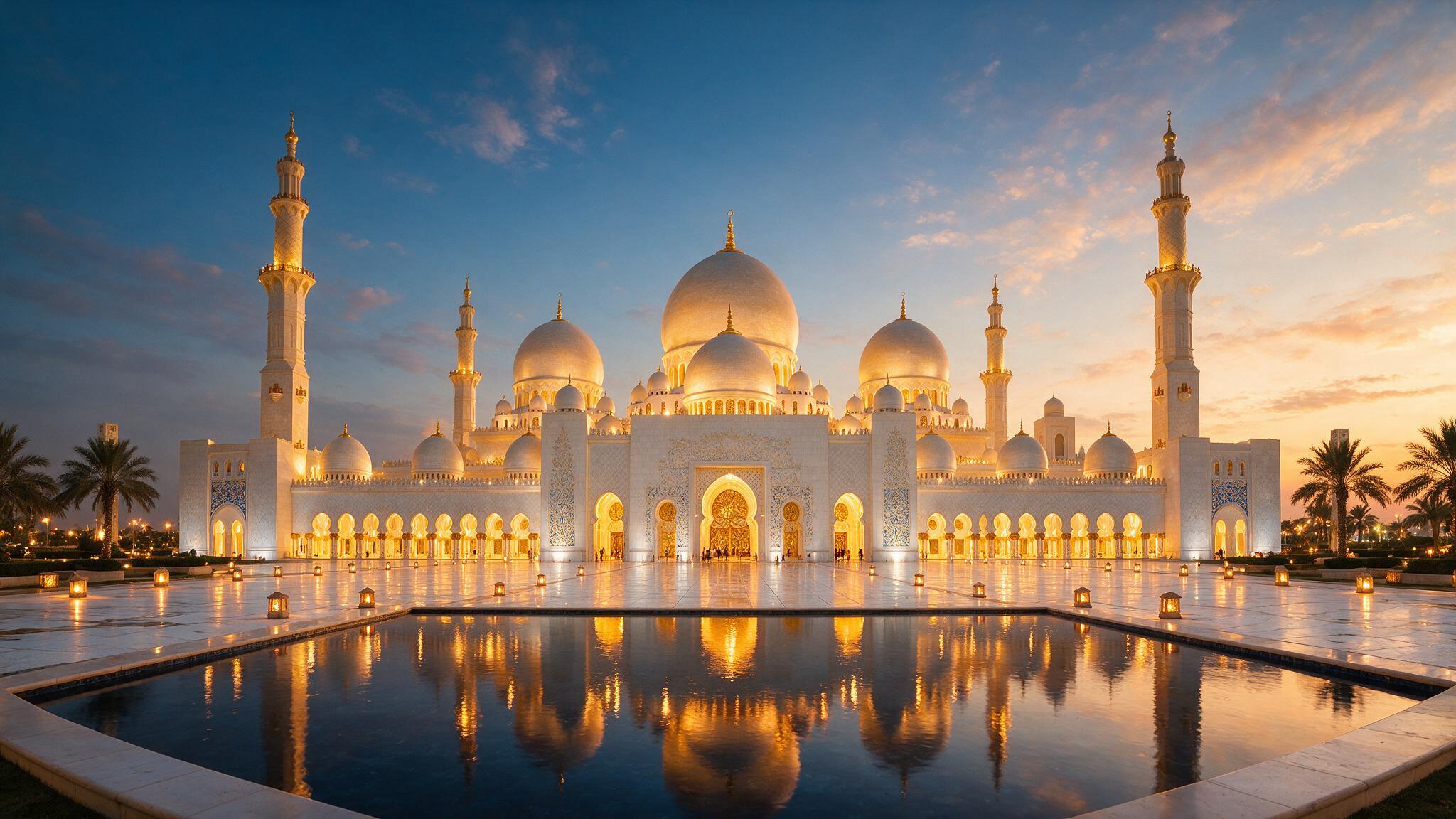
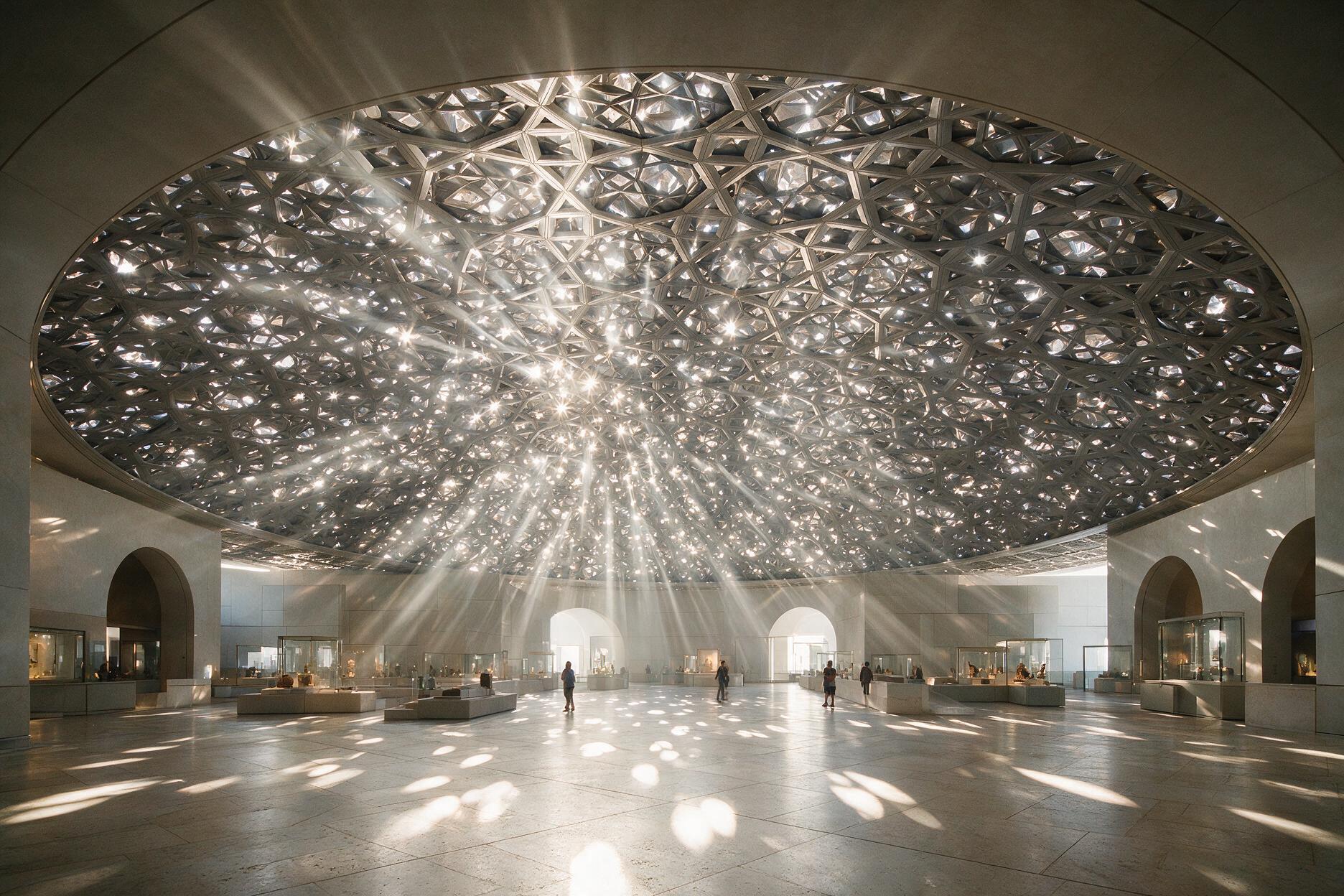
Day 1 — Culture core. Start at Qasr Al Watan, the presidential palace that’s open to visitors, in the morning before the heat and crowds build. From there, Louvre Abu Dhabi for the afternoon — the building itself, with its perforated dome casting shifting light patterns across the galleries, is worth the visit even if art museums aren’t usually your thing. End the day at Sheikh Zayed Grand Mosque, timed for after sunset when it’s lit and noticeably cooler. Visiting hours run roughly 9am-10pm, though Friday mornings are closed to visitors until around 4:30pm for prayers — plan around that if your trip includes a Friday.
Day 2 — Yas Island. Pick your intensity: Ferrari World and Warner Bros. World if you’ve got kids or want the full theme-park day, or a calmer split of Yas Waterworld in the morning and Yas Mall or the F1 circuit’s public areas in the afternoon. This is also where the desert-safari day trips typically depart from if you’re adding one.
Day 3 — Saadiyat and the coast. Beach morning on Saadiyat, then the Abu Dhabi Natural History Museum, which opened in late 2025 as the largest of its kind in the region and is still genuinely uncrowded compared to the Louvre. If you want something less scripted, Jubail Mangrove Park nearby offers kayaking through the mangroves — a proper break from the glass-and-marble version of Abu Dhabi most itineraries stick to.
Day 4 — Al Ain or slow morning. If you’ve got the energy, Al Ain (about 90 minutes inland) has the UAE’s only UNESCO World Heritage-listed oasis and a noticeably different, older feel than the coast. If not, use the morning for the Corniche — walk or cycle it before 9am while it’s still cool, then head to the airport with time to spare.
What It Costs Per Day
Get Tripped doesn’t plan trips around doing Abu Dhabi cheaply, but real numbers still help you plan properly. For a mid-range trip — 4-star hotel, a mix of taxis and the metro-adjacent bus network, sit-down meals rather than only hotel buffets — figure roughly ₹12,000-18,000 per person per day including accommodation, once you split a double room. Push into 5-star Saadiyat or Yas Island resort territory with private tours and fine dining, and that climbs to ₹25,000-40,000+ per day. Entry to Louvre Abu Dhabi runs around 63 AED (~₹1,450) standalone, Qasr Al Watan around 65 AED, and most single attractions land somewhere in that band — it adds up fast if you’re doing four or five in a trip, so a combo pass is usually worth pricing out before you buy separately.
Food Worth Planning Around
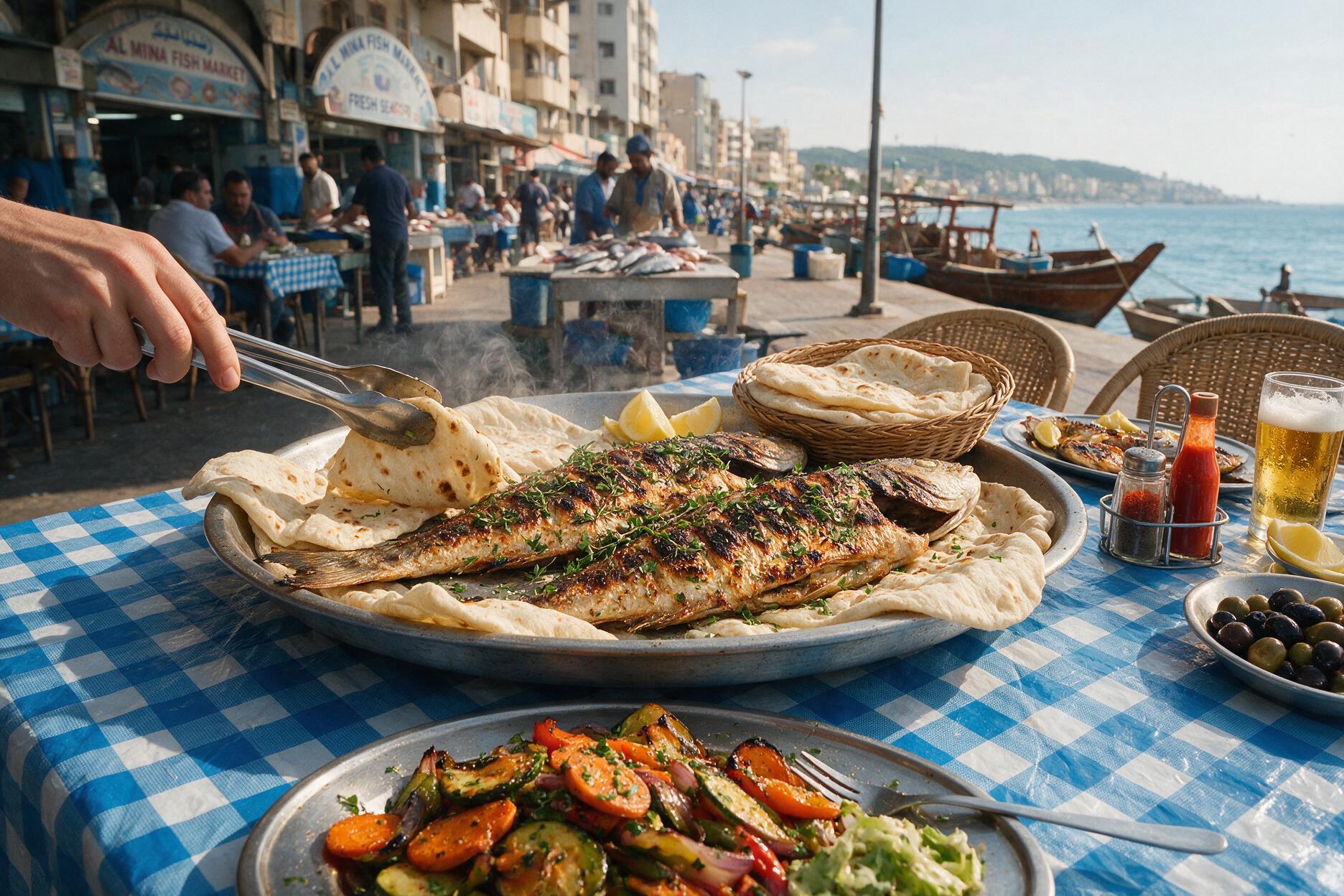
Abu Dhabi’s food scene undersells itself in most guides, which tend to point you straight at hotel brunches and call it done. Those brunches are genuinely good — Friday brunch culture here is real and worth doing once — but the more interesting eating is elsewhere. Al Mina, the old fish market area, has some of the best and cheapest seafood in the city if you’re willing to point at what you want and have it grilled to order. Lebanese and Levantine food is everywhere and generally excellent, since it’s as much a local staple as an import. And if you want a proper local breakfast, look for a spot doing balaleet — sweet vermicelli with a savoury omelette on top, which sounds wrong until you’ve had it and understand exactly why it works.
Money, SIM Cards, and Getting Around
The currency is the UAE dirham (AED), pegged to the US dollar at a fixed rate, so it doesn’t fluctuate the way some destinations do — useful for budgeting in advance without worrying the number will move much by the time you travel. Cards are accepted almost everywhere, including small cafés and taxis, so carrying large amounts of cash isn’t necessary. UPI has also expanded into the UAE over the past couple of years and is now live at over 60,000 merchants including major retail and hospitality chains, so Indian travellers increasingly have that option too, though it’s not yet universal — keep a card as backup rather than relying on UPI alone.
For data, prepaid tourist SIMs start around 49 AED (~₹1,100) for 2GB, or you can go the eSIM route before you fly, with plans from under $2 per GB through providers like Airalo or Saily if your phone supports it — genuinely the easier option since you land already connected instead of hunting for a SIM counter after a long flight.
Abu Dhabi’s public transport is workable but not as extensive as Dubai’s metro — you’ll rely more on taxis (metered, reasonably priced, easy to flag or book via app) and, if you’re spreading across Corniche, Yas, and Saadiyat, a rental car starts making real sense given how spread out those islands are from each other.
A Mistake to Avoid
Don’t try to cram Sheikh Zayed Grand Mosque into a rushed midday stop between other things. It’s free to enter, genuinely stunning, and also genuinely strict about dress code — women need to cover shoulders, arms, and legs, and headscarves are required (abayas are available to borrow at the entrance if you don’t have one). Doing this at 1pm in August, in the heat, while trying to also cover legs and arms, is a miserable version of what should be one of the best twenty minutes of the trip. Go in the evening instead, when it’s lit and the temperature has actually dropped.
FAQs
Is the UAE visa really free for Indians right now, or is this only for certain airlines? It’s tied to the DCT Abu Dhabi offer specifically, not a blanket UAE-wide policy, and it’s not restricted to specific airlines — it applies when you book a qualifying Abu Dhabi package (return flight from India + 3+ hotel nights) through a participating travel partner, through October 31, 2026.
Can I still get the free visa if I book my flight and hotel separately? Based on how DCT Abu Dhabi has described the programme, it’s structured as a bundled package benefit through travel partners rather than something you can claim by booking components independently — check with your agent before assuming it applies.
Is 3 nights in Abu Dhabi enough, or should I add Dubai? Three nights covers the essentials (mosque, Louvre, Yas Island) at a comfortable pace. Most travellers combining Abu Dhabi with Dubai split roughly 3 nights Abu Dhabi and 4 in Dubai, given it’s about a 90-minute drive between the two.
Is Abu Dhabi expensive compared to Dubai? Generally a touch more affordable at the mid-range tier, particularly outside Saadiyat and Yas Island resort pricing — though top-end luxury properties in both cities land in similar territory.
Do I need cash, or does everyone take cards? Cards work almost everywhere. UPI is increasingly accepted too, but isn’t universal yet, so keep a card as your primary method and treat UPI as a bonus rather than the plan.
What should I actually pack for the mosque visit? Full-length clothing covering arms and legs, and a headscarf for women — abayas are available to borrow on-site if needed, but bringing your own saves time in the queue.
Will this visa offer definitely still be running when I want to travel? It’s capped at 20,000 visas and scheduled to end October 31, 2026 — whichever comes first. If your travel dates are flexible, booking sooner protects you against either the cap or the deadline hitting first.
Conclusion
The free visa is a genuinely good reason to move an Abu Dhabi trip up your list, but it’s not the only reason to go — the city’s spent the last few years adding a real museum scene, a decent food identity beyond hotel buffets, and enough spread-out neighbourhoods that four days doesn’t feel thin. Book through a partner who can confirm the offer applies to your package, and aim for late September onward if your dates allow it. August looks tempting because of the news cycle; October is when the trip actually feels good.
Call to Action
Planning an Abu Dhabi trip before the free-visa window closes on October 31? Get Tripped’s Abu Dhabi and combined Abu Dhabi–Dubai packages are built around exactly this kind of trip — reach out and we’ll check availability against the current offer and put together an itinerary around your dates.