
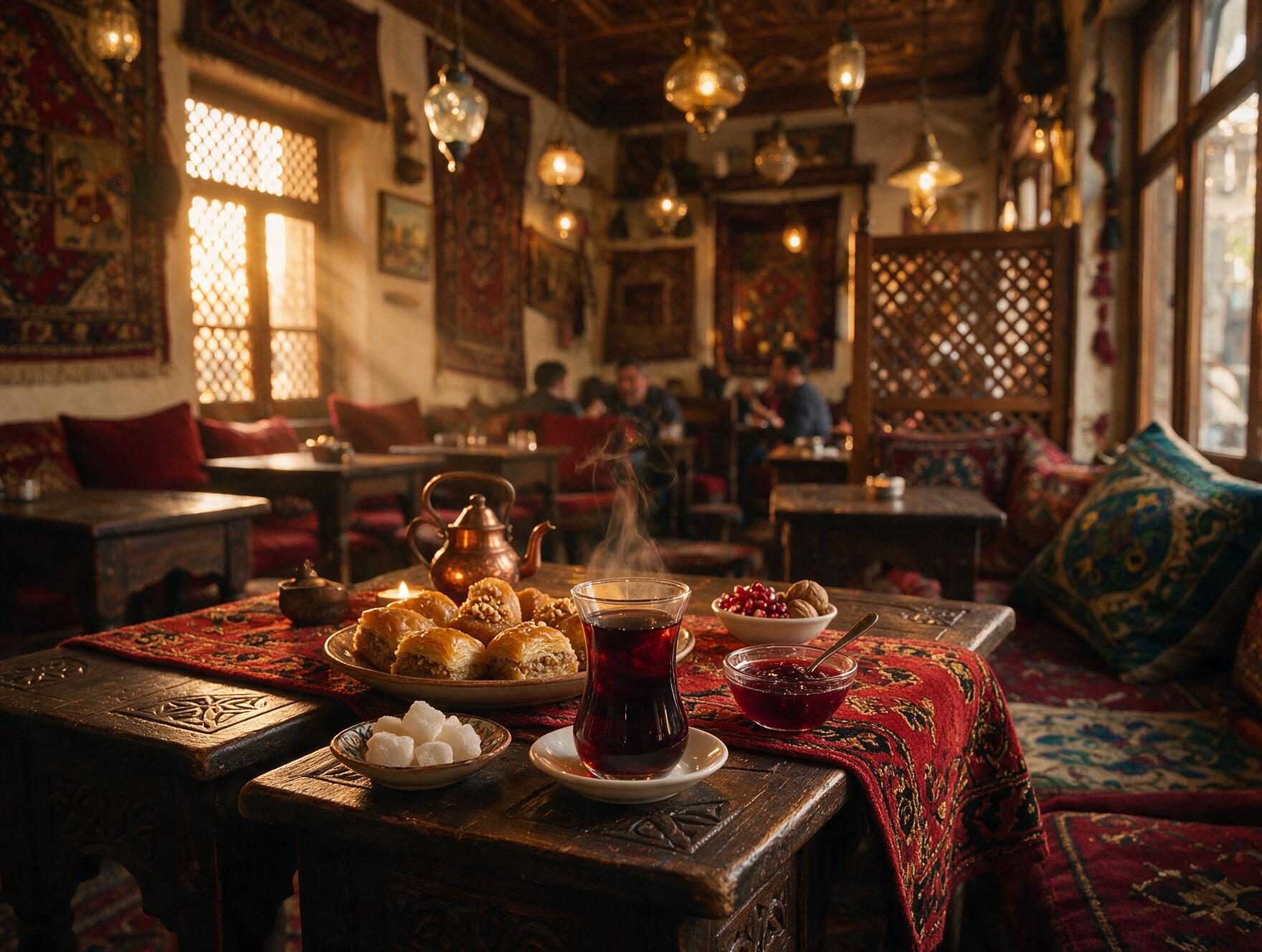
The tea arrives before you’ve asked for it. That’s the first thing that tells you you’re somewhere different — in Icherisheher, Baku’s walled Old City, a glass of black tea in a pear-shaped armudu glass shows up at your table almost as a greeting, usually with a small dish of quince or fig jam on the side, and nobody’s in a hurry for you to order anything else. I sat with that first glass for twenty minutes longer than I meant to, watching a man two tables over lose an argument about football to his own grandfather, before I remembered I was supposed to be finding breakfast.
That’s the pace this city runs on once you’re inside the old walls, and it’s worth building a full day around rather than treating Baku as a one-afternoon stop between the airport and somewhere else. Here’s how I’d spend it — a walking, eating, tea-drinking day through Baku’s Old City, with the practical stuff (flights, visa, when to go) woven in where it actually matters.
Table of Contents
- Getting to Baku from India
- Visa for Indian passport holders
- When to go
- Morning: breakfast in the Old City
- Mid-morning: inside the walls
- Lunch: plov, done properly
- Afternoon: the bazaar and the boulevard
- Late afternoon: the tea house ritual
- Evening: dinner and the Flame Towers view
- Practical notes: money, SIMs, and one mistake to avoid
- FAQs
Getting to Baku from India
This is easier than most people assume. There are non-stop flights from Delhi to Baku running a little under four hours — short enough that Baku works as a genuine long-weekend trip rather than something that needs a full week to justify the travel time. Round-trip fares commonly show up in the ₹15,000–20,000 range if you book a few weeks out, which puts it closer to a domestic-plus trip than an international one, price-wise.
Visa for Indian passport holders
Azerbaijan runs a straightforward e-visa system through the official ASAN Visa portal — no embassy visit, no biometrics for the standard tourist e-visa. As of 2026, the standard fee sits at USD 29 (the government processing fee plus the ASAN service charge), with a rush option at USD 60 that clears in about three hours if you’ve left it late. Standard processing takes roughly three working days, the visa is valid for 90 days from issue, and it allows a single-entry stay of up to 30 days. Your passport needs at least three months of validity remaining beyond your departure date from Azerbaijan — that requirement eased slightly this year from the old six-month rule. Apply through the official portal directly; you don’t need a middleman for this one.
When to go
Baku runs a proper seasonal swing — sharp winters, hot summers — and the Caspian doesn’t moderate it as much as you’d expect from a coastal city. Summer (July–August) sits around 30°C with almost no rain, which is genuinely pleasant for the waterfront boulevard but starts to feel like a lot by mid-afternoon in the stone alleys of the Old City, where there’s little shade. April–May and September–October are the better call for exactly the kind of day I’m describing here: 16–25°C, which is the range where Icherisheher’s narrow lanes stay walkable for hours without anyone needing a shade break. November brings the cheapest rates of the year if budget matters more than sunshine, but it’s also the wettest month, so build in some indoor backup (the Carpet Museum, or just more tea).
Morning: breakfast in the Old City
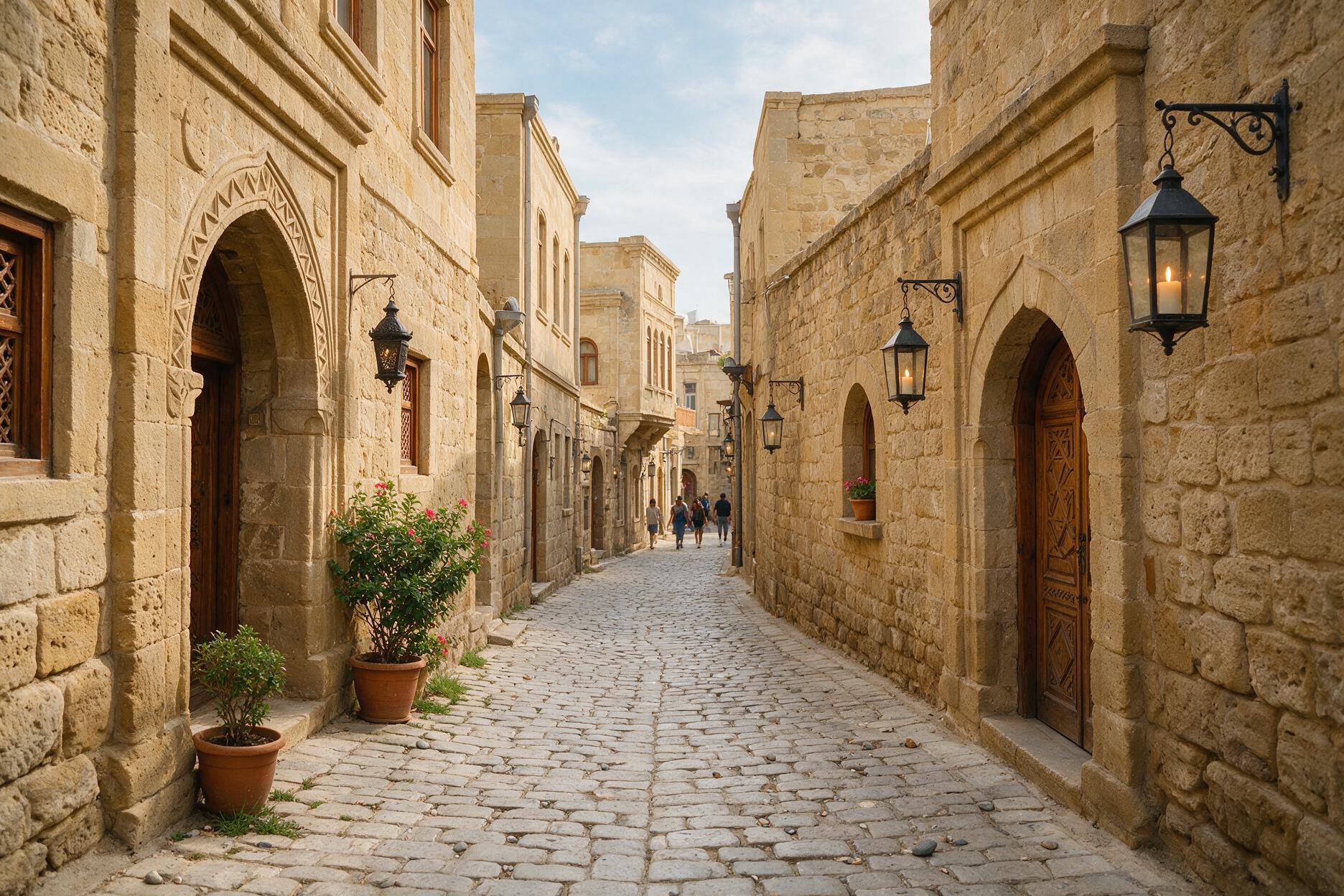
Start early, before the tour groups arrive — Icherisheher is compact, maybe 1 square kilometre inside the walls, and it fills up fast once the cruise-ship and day-tour crowds show up around 10am. Breakfast here isn’t a menu so much as a spread: qutab (thin flatbread folded over greens, pumpkin, or minced meat, cooked on a flat griddle until it blisters), fresh white cheese, honey, and more tea. A few small cafés tucked into the Old City’s side streets do this well and cheaply — ask your hotel for whichever one is closest, since half the appeal is stumbling onto it rather than following a pin on a map.
Honest caveat: don’t expect Western-style coffee culture here yet. Baku has good coffee if you go looking for it in the newer parts of town, but the Old City runs on tea, and fighting that is a losing battle. Order the tea.
Mid-morning: inside the walls
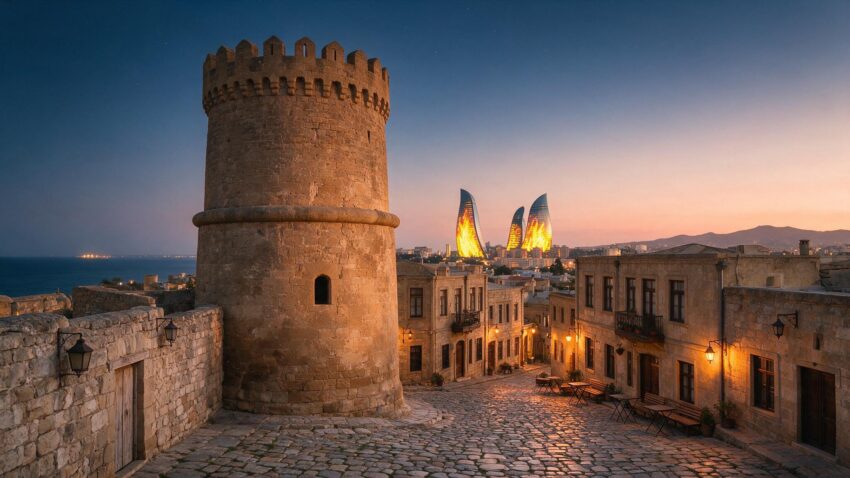
Icherisheher earns its UNESCO listing honestly — it’s one of the few old walled cities where daily life still happens inside the walls rather than the whole place being turned over to souvenir shops. Wander without a fixed plan for an hour: the Maiden Tower (Qız Qalası), an eight-storey stone tower whose actual original purpose nobody has definitively figured out, is worth the climb for the rooftop views over the bay. The Palace of the Shirvanshahs, a 15th-century royal complex, is the other anchor sight, and it’s genuinely worth the entry fee rather than a walk-by photo stop.
The part I’d flag as the actual hidden gem: the side streets north of the Maiden Tower, away from the main tourist path between the two big sights, where you’ll find carpet weavers’ workshops, a couple of tiny art galleries in converted homes, and stone stairways that go nowhere in particular except up to someone’s front door. This is where Baku still feels lived-in rather than curated.
Lunch: plov, done properly
Plov — specifically Shah Plov, the saffron rice version studded with dried fruit and nuts, sometimes baked inside a thin bread crust that you crack open at the table like a small event — is the dish to build lunch around, and Baku Old City has restaurants that do little else and do it well. Şirvanşah Müzey-Restoran, set right by the Shirvanshahs’ palace, leans into the historic setting but backs it up with solid Azerbaijani classics, including their lavangi (stuffed chicken or fish with a walnut-and-herb filling). If you want the plov-focused version of the meal without the fuller menu, a dedicated plov house nearby will do a simpler, cheaper version that’s just as good for what it is.
A mistake worth avoiding here: don’t fill up on qutab at breakfast and then order a full plov spread at lunch expecting to have room for anything later. Azerbaijani portions are generous by default, and the tea house ritual later in the day deserves its own appetite.
Afternoon: the bazaar and the boulevard
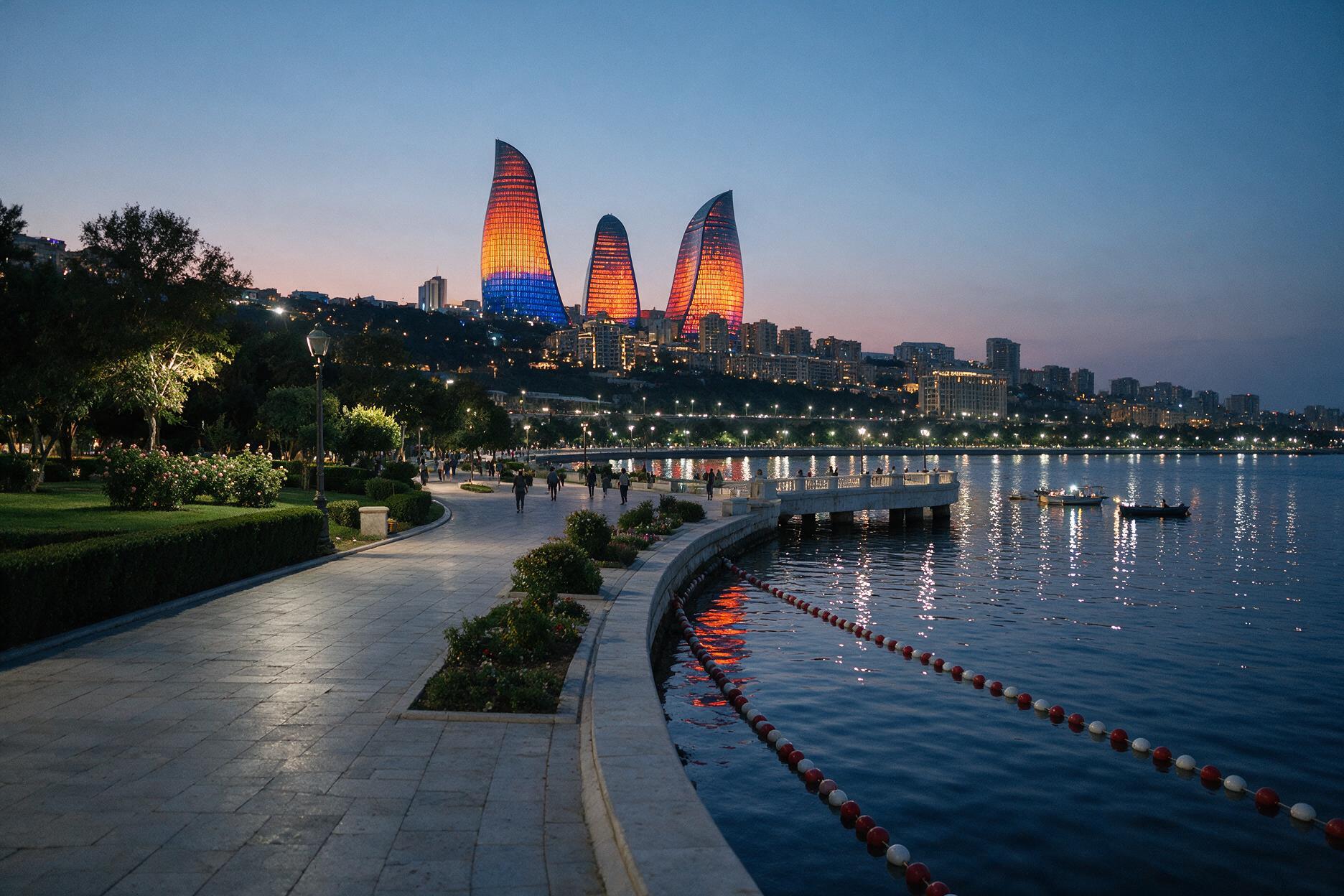
After lunch, the pace should slow rather than speed up. Wander toward the Baku Boulevard, the long waterfront promenade that runs along the Caspian — it’s where locals actually go to walk, not a tourist-only strip, and it gives you the postcard view of the Flame Towers from across the water without paying for a rooftop bar to get it. If shopping interests you, the covered sections near the Old City’s Fountain Square area have a mix of carpet sellers, spice stalls, and the sort of small jewellery shops selling filigree silver work that’s genuinely Azerbaijani rather than generic tourist stock — worth a look even if you’re not buying, since watching the bargaining is half the entertainment.
Late afternoon: the tea house ritual
This is the part of the day I’d protect above everything else on this list. Azerbaijani tea culture isn’t a quick stop — a proper çayxana (tea house) visit is built around sitting for an hour or more, tea served in the armudu glass with sugar cubes you’re meant to hold in your cheek rather than stir in, and small sweets like şəkərbura (a crescent-shaped pastry filled with ground walnuts and cardamom) or pakhlava on the side. Find one tucked into the Old City’s quieter corners rather than the ones with English menus facing the main tourist route — the tea is the same, but the pace is more honest.
Fun fact worth knowing before you sit down: in a proper çayxana, an empty tea glass left upside-down on its saucer is the traditional signal that you’re done and don’t want a refill — otherwise the server will keep topping you up, which is exactly the kind of hospitality you want on your first afternoon here anyway.
Evening: dinner and the Flame Towers view
By evening, step outside the Old City walls for dinner somewhere with a Flame Towers view — the three flame-shaped skyscrapers that define Baku’s modern skyline are lit with an LED display after dark that’s genuinely worth timing dinner around. A few restaurants along the boulevard or up in the Highland Park area work for this; ask your hotel for their current pick, since the best-positioned rooftop spots shift year to year as new places open. Order the Caspian fish if it’s on the menu — balık, usually grilled or fried whole, is a coastal specialty that doesn’t travel far from the day’s catch.
Practical notes: money, SIMs, and one mistake to avoid
Cards work at hotels and most restaurants in the city centre, but keep manat cash on hand for the bazaar, tea houses, and smaller cafés, where card machines are inconsistent. An eSIM from a local or international provider is the simplest way to get data from the airport, and Wi-Fi is generally reliable at hotels and cafés if you’d rather not bother.
The one mistake I’d flag hardest: treating Baku as a half-day stopover between flights. It’s tempting, given how well-connected it now is, but the Old City rewards slowness in a way that a rushed two-hour walk-through actively works against — you’ll see the Maiden Tower and not much else. Give it the full day this itinerary describes, or better, two.
Who this day actually suits
Couples get the most out of this itinerary — the tea house hour and the Flame Towers dinner both lean romantic without trying too hard, and Baku’s Old City is compact and safe enough to wander after dark without a fixed plan. Solo travellers will find it easy too; Azerbaijanis are used to tourists sitting alone at a tea house for an hour with a book, and nobody will rush you or make it weird. If you’re travelling with extended family, the pace works less well as written — qutab-making classes exist in a few Old City spots and are a better anchor for a group than the tea house ritual, which is really built for two or three people at most. For luxury travellers, the same day works, just layer in a private guide through the Old City’s back streets (worth it here specifically, since a lot of the workshop and gallery access is easier with someone who knows the shopkeepers) and swap the boulevard-side dinner for one of the newer fine-dining rooms in the Flame Towers complex itself.
FAQs
Do Indians need a visa for Azerbaijan?
Yes, but it’s a simple e-visa — apply online through the official ASAN Visa portal, with standard processing around three working days and a fee of about USD 29 as of 2026.
How long is the flight from Delhi to Baku?
Non-stop flights run a little under four hours, making Baku a realistic long-weekend trip from India rather than something that demands a full week.
Is Baku expensive?
Not particularly, especially against the flight cost. A day of good food, tea houses, and Old City entry fees runs comfortably on a mid-range budget, and round-trip flights from Delhi often come in under ₹20,000 booked in advance.
What is the must-try food in Baku?
Shah plov (saffron rice with dried fruit and nuts, sometimes baked in a bread crust), qutab (stuffed flatbread), dolma, and the tea-house sweets şəkərbura and pakhlava. Don’t skip the tea itself — it’s as central to the experience as any single dish.
Is one day enough for Baku’s Old City?
You can hit the highlights in a day if you move with purpose, but Icherisheher rewards slower pacing. Two days lets you add a day trip to the Gobustan petroglyphs or the mud volcanoes outside the city without feeling rushed.
What’s the best time of year to visit Baku?
April–May or September–October, when temperatures sit in a comfortable 16–25°C range and the Old City’s stone alleys are pleasant to walk for hours. Summer is hot and dry; November is cheap but wet.
The takeaway
Baku doesn’t need a hard sell — a walled Old City with working tea houses, a coastline you can walk for an hour without seeing another tourist, and a direct flight under four hours from Delhi does most of the convincing on its own. What it does need is a full day, not a stopover, and an itinerary built around sitting still for once rather than checking sights off a list.
If you’d rather have the tea house, the plov lunch, and the Flame Towers dinner booked before you land instead of hunting for them on your first afternoon, that’s the kind of ground-level planning Get Tripped builds into a Caucasus itinerary — get in touch and we’ll put the day together around what you actually want to do with it.