
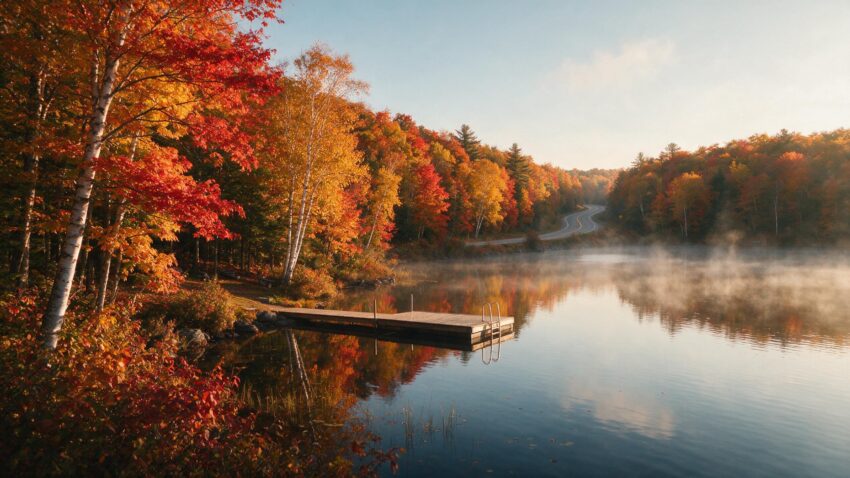
For years, the honest answer to “should I fly to Canada from India” was “only if you have to.” A Delhi–Toronto ticket usually meant a stop in Frankfurt, London, or a long backtrack through the Gulf, and even Air India’s own nonstop-branded service quietly touched down in Vienna to refuel before continuing on to Toronto — a technical stop that added nothing for the passenger except another hour on the tarmac and a flight time pushing 20 hours. That changes on August 1, 2026, when Air India starts flying Delhi–Toronto as a genuine daily nonstop on a new Boeing 787-9, and again on October 25, 2026, when it launches Mumbai’s first-ever nonstop to Toronto. Between the two, Air India becomes the only carrier flying direct between India and Canada, and the timing — right as Ontario and Quebec’s maple canopies turn — is not a coincidence airlines usually get right on the first try.
This isn’t a “best of Canada” roundup. It’s a practical look at what actually changes for an Indian traveler now that the flight itself stops being the hardest part of the trip, what routes and itineraries this genuinely unlocks, and what still needs planning — visas, costs, timing — before you book.
What Actually Changed: The Route News
Two separate upgrades are landing five months apart, and they solve different problems.
Delhi–Toronto: From a 20-Hour Slog to a 16–17 Hour Nonstop
Air India’s Delhi–Toronto service (flight AI187 outbound, AI188 return) has existed for a while, but it wasn’t a true nonstop in the way most flyers assumed. The aircraft made a fuel stop in Vienna on the way, which meant total journey time of close to 20 hours even though passengers never had to change planes. From August 1, 2026, that stop is gone. Air India is deploying a new Boeing 787-9 with extended range on the route, cutting flying time to about 17 hours westbound (Delhi to Toronto) and around 16 hours on the return leg, where the jet stream works in the aircraft’s favour. Frequency also moves from five times a week to a true daily service.
The new aircraft carries a three-class cabin — 30 lie-flat Business Suites, 28 Premium Economy seats (a first for this route, in a 2-3-2 layout with 38-inch pitch), and 238 Economy seats — with updated entertainment systems across all three cabins. AI187 departs Delhi at 01:45 and lands in Toronto at 09:30 local time; AI188 leaves Toronto at 12:30 and gets into Delhi at 14:05 the next day. Air India’s own newsroom confirms the fuel-stop removal and the 787-9 deployment, and it’s genuinely the more consequential of the two changes if your travel dates fall in September — because it’s already live for peak foliage season, while Mumbai’s route isn’t.
Mumbai–Toronto: A Route That Didn’t Exist Before
This one’s new, not upgraded. From October 25, 2026, Air India launches Mumbai–Toronto nonstop for the first time, three times a week (Wednesday, Friday, Sunday), running through the winter schedule to March 26, 2027, at which point the airline will presumably decide whether to extend it based on demand. The route flies a Boeing 777-300ER with 8 First suites (with closing doors, which is unusual for this market), 40 lie-flat Business seats, and 280 Economy seats, plus onboard WiFi. AI193 leaves Mumbai at 04:00 and lands in Toronto at 10:00 local time; AI192 departs Toronto at 12:30, arriving Mumbai 14:10 the following day. Air India’s press release notes this makes it the only airline flying nonstop between India and Canada on any route, adding roughly 2,000 weekly seats between the two countries and a 71% jump in premium seat capacity to Toronto overall.
Here’s the nuance worth knowing before you book: because Mumbai’s route starts October 25, it actually lands after the peak colour weeks in Ontario cottage country and most of Quebec, which typically wrap up by the second week of October. If you’re flying from Mumbai for peak Algonquin or Laurentians colour, you’d currently need a one-stop routing or fly via Delhi. If your trip is built around Niagara (which peaks later, mid-to-late October) or you’re happy with late-season colour and lower crowds, the new Mumbai nonstop lines up nicely. Delhi flyers have the cleaner match — the daily 787-9 nonstop is already running for the entire September–October window.
| Route | Status | From | Aircraft | Flight Time | Frequency |
|---|---|---|---|---|---|
| Delhi–Toronto | Upgraded (fuel stop removed) | Aug 1, 2026 | Boeing 787-9 | ~16–17 hrs | Daily |
| Mumbai–Toronto | New route | Oct 25, 2026 | Boeing 777-300ER | ~16 hrs | 3x weekly (Wed/Fri/Sun) |
What This Actually Unlocks for a Canada Trip
The real shift isn’t just shorter flight time on paper — it’s that a Canada trip stops needing a full day of buffer on either end just to recover from the journey. A nonstop overnight flight lands you in Toronto in the morning, reasonably rested, with a full day still ahead of you. That changes what’s realistic in a standard 10-12 day leave block, which is what most of our clients are actually working with.
A Relaxed Ontario–Quebec Loop (10-12 Days)
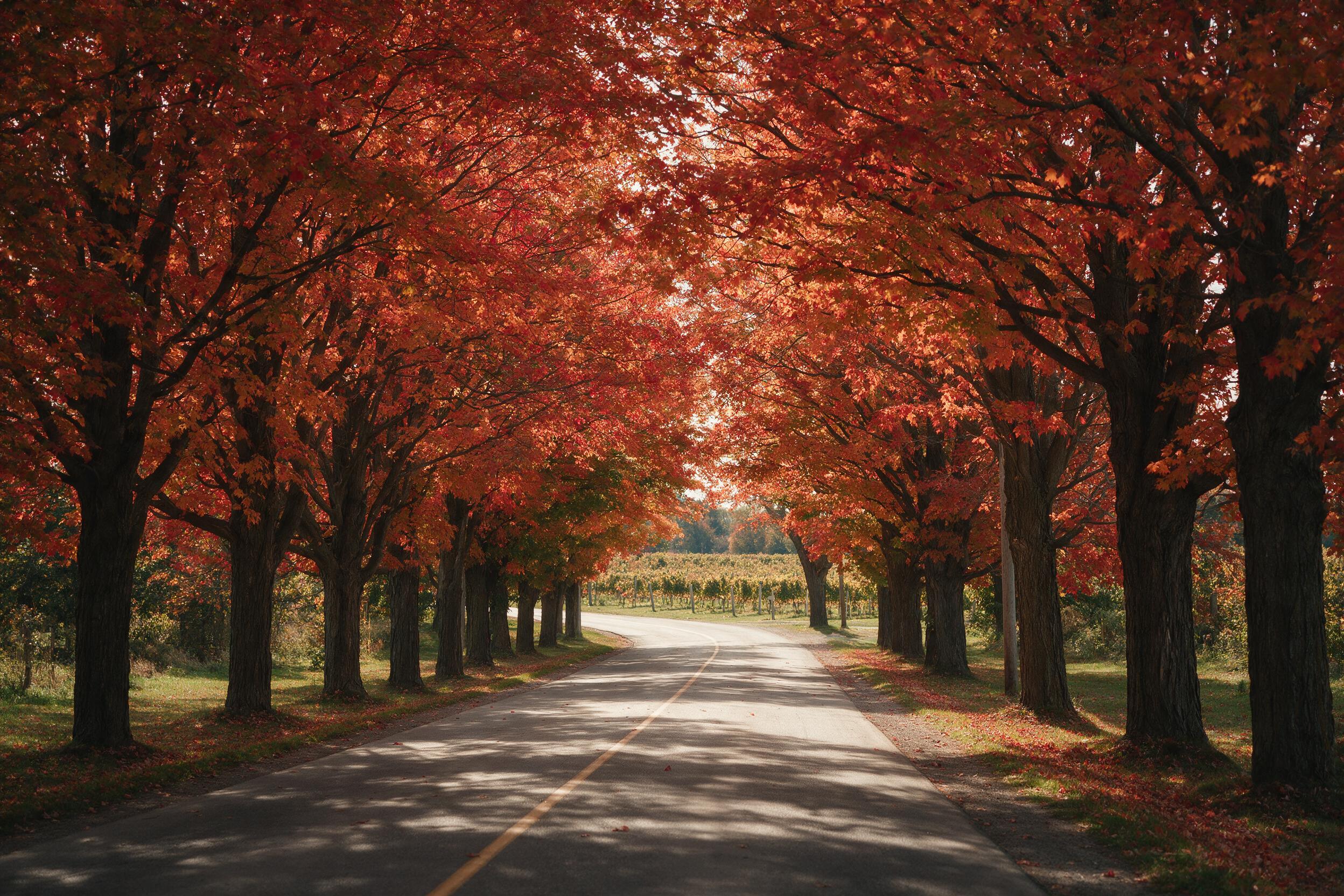
This is the itinerary that benefits most directly. Toronto as your entry and exit point, with time in Ontario’s cottage country for the colour, a few days in Quebec City and Montreal for the old-world charm, and Niagara Falls worked in either at the start or the end since it’s a short drive from Toronto. Nine to twelve days is enough to do this without feeling rushed, especially now that you’re not losing a travel day to a layover in Europe or the Gulf each direction.
Banff and Jasper as a Genuine Add-On
Before this route change, tacking the Rockies onto a Toronto-based Canada trip meant a five-hour internal flight on top of an already brutal international one. It’s still a separate domestic flight (Air Canada and WestJet both fly Toronto–Calgary in around 4.5 hours), but arriving into Toronto reasonably fresh makes the connection far less punishing than it used to be. If you want both eastern Canada’s foliage and the Rockies’ larch season, you’re looking at 13-15 days minimum — worth knowing before you commit to trying to squeeze it into ten.
A Single-City, Slower Trip
Not everyone wants to move every two days. A trip built around Toronto and a loop through Muskoka and Algonquin, with day trips rather than full relocations, works well for travelers who’d rather actually rest on a holiday than tick off cities. This is also the easiest itinerary to build around the new daily Delhi flight, since you’re not fighting a three-times-a-week schedule for your return date.
Visa and Entry: What Indian Passport Holders Actually Need
This hasn’t changed with the new routes, and it’s worth being precise since a lot of online content blurs it: Indian passport holders need a Temporary Resident Visa (visitor visa), not an eTA. The Electronic Travel Authorization is only for citizens of visa-exempt countries, plus, since April 2022, U.S. lawful permanent residents flying into Canada. India isn’t on that list, so applying for an eTA instead of a TRV is a mistake we still see travelers make after reading outdated blog posts.
- Fee: CAD 100 per person for the visa itself, plus a CAD 85 biometrics fee per person (capped at CAD 170 for a family applying together) — roughly CAD 185 all-in per adult.
- Biometrics: Fingerprints and a photo, given in person at a Visa Application Centre (VFS Global handles this for Canada across most Indian cities). This is generally only required once every 10 years unless your circumstances change.
- Processing time: IRCC’s own published average sits around 30 days from outside Canada, but that’s a global figure — from India it commonly runs anywhere from 6 to 12 weeks depending on season, and it stretches further around peak summer and holiday travel months. Given that autumn foliage trips get booked well in advance anyway, apply the moment your dates are set, not after you’ve locked in non-refundable flights.
- Validity: A visitor visa is very often issued as multiple-entry, valid up to 10 years or until your passport expires, whichever comes first — so a Canada trip this year can double as your visa for a return visit later without reapplying, assuming it’s still valid.
None of this is new because of the flight changes — but easier flights mean more people are suddenly considering Canada on a timeline that doesn’t leave room for a visa scramble. Build the visa application into your planning from week one, not as a formality you handle after booking.
Best Time to Go: Timing It to the Colour
“Fall in Canada” isn’t a single window — it moves by latitude and shifts by five to ten days year to year depending on temperature and rainfall, so treat these as planning windows, not fixed dates.
- Algonquin Park and Ontario’s far north: late September into the first days of October — the earliest peak in the region.
- Muskoka and Haliburton: generally the first two weeks of October, per Ontario Parks’ weekly fall colour report, which starts publishing updates from mid-September.
- Quebec’s Eastern Townships and the Laurentians: typically the last week of September through the first week of October — a touch ahead of Ontario’s cottage country.
- Niagara Parkway: the latest of the bunch, usually mid-to-late October, which happens to line up well with the new Mumbai nonstop’s launch date.
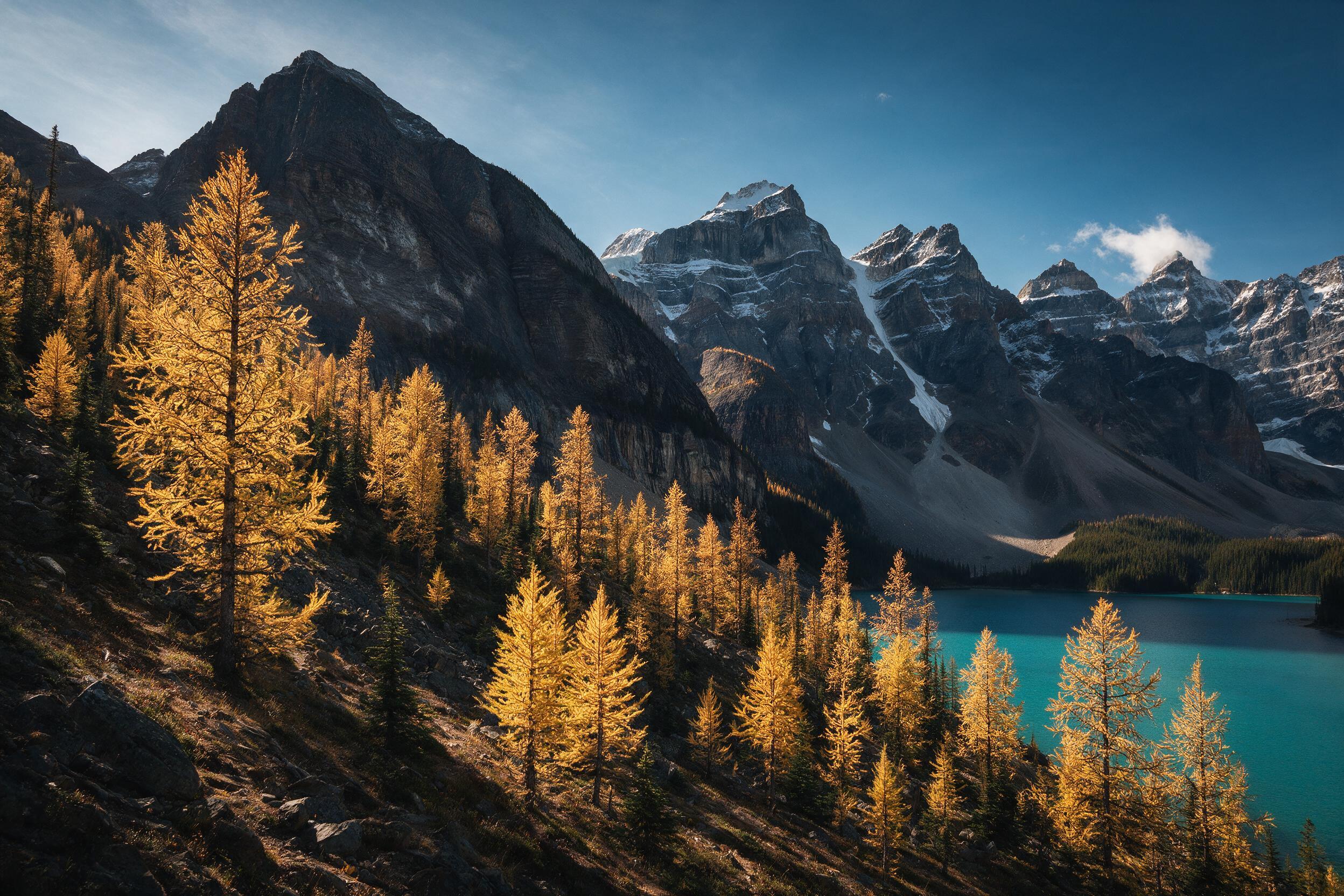
- Banff and Jasper’s larch season: a narrower, more specific event than general leaf colour — the golden larches along trails like Larch Valley and Consolation Lakes typically peak for about 7 to 10 days between September 20 and October 5, per Banff & Lake Louise Tourism.
If chasing peak colour is the whole point of the trip, book the Delhi route (already nonstop from August 1) and plan to land between mid-September and early October. If your schedule only works from late October onward, lean the itinerary toward Niagara and southern Ontario, or treat the trip as a shoulder-season city break — Toronto, Montreal and Quebec City are genuinely good in late October even without peak leaves, with thinner crowds and better hotel rates to show for it.
Weather-wise, September in Ontario and Quebec runs a comfortable 12-22°C by day, dropping toward 5-12°C by late October, with evenings noticeably cold enough for a proper jacket. Banff is colder and less predictable — early snow at higher elevations by late September isn’t unusual, so pack layers rather than a single “fall” wardrobe.
A Sample 11-Day Itinerary
This is the shape most of our Canada itineraries take now that the Delhi nonstop removes a full recovery day from the front end of the trip.
- Day 1-2, Toronto: Land in the morning on the overnight nonstop, check in, and treat day one as a half-day — the CN Tower, a walk through the Distillery District, dinner in Kensington Market. Day two, a full day in the city including the St. Lawrence Market and the waterfront.
- Day 3, Niagara Falls: A day trip (about 90 minutes each way) or an overnight if you want the falls lit up at night and a slower morning at Niagara-on-the-Lake before heading back.
- Day 4-6, Muskoka and Algonquin: Rent a car or take a private transfer roughly three hours north. This is the stretch built entirely around the leaves — a drive along Highway 35 near Minden, the lookout at Dorset Tower, and a night or two at a lakeside lodge rather than a hotel chain.
- Day 7, Ottawa (optional): A stop between Ontario and Quebec, worth it for Parliament Hill and the Rideau Canal if you have the extra day; skippable if you’d rather have more time in Quebec.
- Day 8-9, Montreal: Old Montreal’s cobblestones, Mount Royal for a foliage view over the city, and food that’s noticeably more French than the rest of Canada — this is where you eat well.
- Day 10-11, Quebec City: The most European city on the continent, walled Old Town included. Fly back out of Montreal or add a short domestic hop; Quebec City’s own international connections are limited, so most itineraries loop back through Montreal or Toronto to catch the return flight.
Add three to four days at either end for Banff and Jasper if the Rockies are non-negotiable — just book that internal flight early, since Toronto–Calgary fares climb fast during peak larch season.

What It Costs
Numbers here move constantly with fuel prices and season, so treat these as a planning range rather than a quote. At the time of writing, Air India’s own site lists Mumbai–Toronto economy fares starting around ₹94,000 round trip and Delhi–Toronto around ₹64,000 in economy during lower-demand periods — expect both to run meaningfully higher across the September-October peak, and premium economy and business fares to sit well above that, particularly on the Delhi 787-9 given it’s the first route in Air India’s network to offer that cabin on this city pair. Book 3-4 months out for the best economy pricing, and earlier still if premium economy or business is the plan, since those cabins are smaller and sell out faster on new routes.
On the ground, we don’t build these trips around doing Canada cheaply — this isn’t a backpacking itinerary — but here’s a realistic sense of daily spend in Canadian dollars per person, double occupancy:
- Comfortable mid-range: CAD 220-320/day — a well-located 4-star hotel, a mix of sit-down restaurants and casual spots, and a rental car or private transfers for the road-trip legs.
- Luxury: CAD 450+/day — think the Fairmont properties in Toronto, Quebec City, and Banff, private guided drives for the foliage routes, and tasting-menu dinners in Montreal.
Canada runs almost entirely on card and tap payments — cash is rarely needed beyond small tips or a farmers’ market stall. Most Indian cards work fine with the usual foreign transaction fee, so a travel-friendly card is worth setting up before you leave. An eSIM (Airalo and Google Fi both have solid Canada plans) beats hunting for a local SIM on arrival, especially through patchy-coverage stretches like parts of Algonquin.
Food and Culture Notes
Canadian food doesn’t get talked about the way Japanese or Italian food does, and that’s a little unfair to it. Montreal’s bagels (try Fairmount or St-Viateur, and pick a side in the ongoing rivalry between the two) are genuinely different from New York’s — smaller, denser, wood-fired. Quebec’s poutine is worth having at least once from an actual Quebec kitchen rather than a mall food court version. And late September through October is peak apple and squash season across Ontario’s farm country, so a stop at a working orchard for fresh cider isn’t a tourist cliché here — it’s what the season actually looks like.
Culturally, Canadians tip 15-20% as standard at restaurants, tapping is the default for anything under about CAD 250, and the pace of service is noticeably more relaxed than what a fast-paced Indian city trains you to expect — plan for a slower meal, not a rushed one. Indian communities are large and well-established in Toronto, especially Brampton and Scarborough, so familiar food is never far off if a run of continental meals wears thin.
Two Places Worth Knowing About
Elora, Ontario — a small village built around a limestone gorge about 100 km from Toronto, with a walkable historic mill town centre that most first-time visitors to Ontario never hear about because it doesn’t show up on the standard Toronto-Niagara-Muskoka circuit. Worth a half-day detour if you’re driving between Toronto and cottage country anyway.
Mont-Tremblant, Quebec — better known as a ski town, but the resort village in autumn, with a gondola ride up for a foliage view across the Laurentians, is quieter and arguably prettier than the winter version everyone books for.
A Mistake to Avoid
Don’t build the whole trip around a single “peak week” for the leaves and then book non-flexible everything. Colour timing genuinely shifts by a week or more depending on that year’s weather, and Ontario Parks’ own reporting exists precisely because nobody can guarantee it months out. Build in a few flexible days rather than a single fixed date at a single lookout point, and check the weekly colour reports once you’re within about three weeks of travel so you can shift a day-trip or two if the peak is running early or late.
A Fun Fact
The reason Air India’s old Delhi–Toronto flight stopped in Vienna wasn’t about Austria at all — it was range. Older long-haul aircraft simply couldn’t carry enough fuel to cover the roughly 11,300 km great-circle distance nonstop while also carrying a full passenger and cargo load, so a mid-route refuelling stop was standard practice on this exact city pair for years. The Boeing 787-9’s extended range is the specific piece of hardware that made removing that stop possible — it isn’t a scheduling choice, it’s an aircraft upgrade.
Who This Trip Suits
Couples
The Montreal–Quebec City leg is the standout here — cobblestone streets, long dinners, and a gondola ride over Mont-Tremblant’s autumn colour make for a genuinely romantic stretch that doesn’t feel forced into being one. Pair it with a Fairmont stay in Quebec City’s Old Town for the splurge night of the trip.
Families
Toronto’s Ripley’s Aquarium and the CN Tower cover a day easily with kids, and Niagara Falls does the heavy lifting on “wow factor” without requiring much walking. Muskoka’s lakeside lodges tend to have more space and kid-friendly activities (canoeing, short nature trails) than a city hotel, so we’d weight a family itinerary more toward cottage country and less toward museum-hopping.
Luxury Travelers
This is where the new cabins actually matter. Air India’s 787-9 Business Suites on Delhi–Toronto and the 777-300ER’s First Class suites (with closing doors) on the new Mumbai route are a genuine step up from what’s flown this sector before, and with premium economy now available on Delhi-Toronto for the first time, a family that doesn’t all want to pay for full business has a real middle option. On the ground, pair that with Fairmont or Four Seasons stays and a private driver for the foliage routes rather than a rented car, and the whole trip reads as effortless rather than adventurous.
Frequently Asked Questions
Is the new Air India Toronto flight actually nonstop, or does it still stop somewhere?
Both are genuine nonstops. Delhi–Toronto drops its Vienna refuelling stop from August 1, 2026, and the new Mumbai–Toronto service launching October 25, 2026 is nonstop from day one — it’s a new route, not an upgrade to an existing one.
How long is the flight from India to Toronto now?
Delhi–Toronto runs about 17 hours outbound and around 16 hours on the return, once the fuel stop is removed. Mumbai–Toronto is a similar length at roughly 16 hours, reflecting the added distance from Mumbai balanced against a more direct routing.
Do Indians need a visa for Canada, or is an eTA enough?
Indian passport holders need a Temporary Resident Visa (visitor visa) — India is not on Canada’s visa-exempt list, so an eTA alone won’t get you in. Budget CAD 100 for the visa plus CAD 85 for biometrics per person, and apply at least 2-3 months before travel.
When is the best time to see fall colours in Canada from India?
For Ontario cottage country and most of Quebec, aim for mid-September through the first week of October. Niagara peaks later, mid-to-late October. Banff’s larch season is a narrower window, usually September 20 to October 5.
Can I combine Toronto with Banff and Jasper in one trip?
Yes, but budget for a separate domestic flight (Toronto–Calgary is about 4.5 hours) and 13-15 days total rather than the 10-12 that suffices for an Ontario-Quebec-only itinerary.
Is the Mumbai–Toronto flight seasonal or year-round?
As launched, it’s scheduled from October 25, 2026 through March 26, 2027 — effectively a winter-season route for now. Whether Air India extends it into a year-round service will likely depend on demand through that first season.
What aircraft and cabins does each route fly?
Delhi–Toronto flies a Boeing 787-9 with 30 Business Suites, 28 Premium Economy seats, and 238 Economy seats. Mumbai–Toronto flies a Boeing 777-300ER with 8 First suites, 40 Business seats, and 280 Economy seats.
Is it cheaper to fly via Europe or the Gulf instead of nonstop?
Sometimes marginally, but you’re trading a lower fare for 4-6 extra hours of total travel time and an extra security/immigration cycle at a connecting airport. For a trip built around limited annual leave, the nonstop is usually worth the difference.
Getting There Is Finally the Easy Part
Canada has always had the scenery to justify a long flight. What it hasn’t had, until this year, is a flight from India that didn’t feel like an ordeal before the holiday even started. A daily nonstop from Delhi and a new direct option from Mumbai — both landing right as the maples turn — change the calculation for anyone who’s been putting off a Canada trip because of the journey itself rather than the destination.
If you’d rather not spend the next month cross-referencing fall colour reports, larch season windows, and visa processing times yourself, that’s exactly what we do at Get Tripped. Get in touch and we’ll build a Canada itinerary around your actual dates, your leave block, and how much of the trip you want to spend behind the wheel versus being driven.