
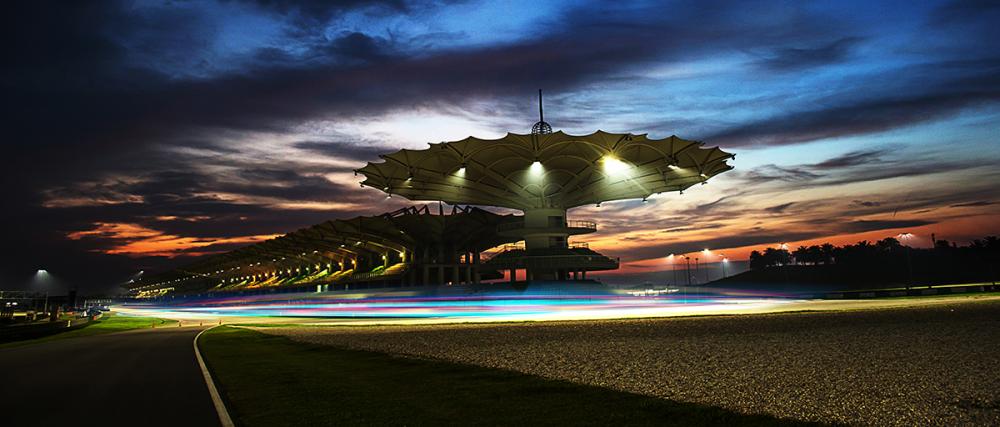
Formula 1 walked away from Malaysia in 2017, and for most fans who came to the sport in the years since, Sepang has existed only as a name that shows up in old highlight reels — a circuit people talked about with a certain fondness because it used to produce genuinely unpredictable races. That changes this October. F1 and the FIA have confirmed that Sepang International Circuit will host the Gulf Air Bahrain Grand Prix from October 2-4, 2026, stepping in after the original Bahrain race was postponed amid conflict in the Middle East. The race keeps the Bahrain Grand Prix name — Bahrain is still funding it — but the cars, the fans, and the circuit itself are all Malaysian.
For Indian F1 fans, this lands in a genuinely useful spot on the calendar: a 4-6 hour flight, no time zone adjustment worth mentioning, and — as of this year — a visa-free entry policy that removes what used to be the most annoying part of planning a Malaysia trip. This is a guide to actually building that trip, not just the race weekend itself.
Table of Contents
- Race Weekend Dates and What Makes This One Different
- Getting to Malaysia from India
- Visa Requirements — This Got Easier in 2026
- Tickets: What to Expect
- Getting From Kuala Lumpur to Sepang Circuit
- Where to Stay
- Weather and What to Pack
- Beyond the Race: What to Do in KL
- A Mistake to Avoid
- Costs to Budget For
- FAQs
- Final Thoughts
Race Weekend Dates and What Makes This One Different
The race runs October 2-4, 2026, and sits inside what’s being described as a demanding triple-header for the championship, sandwiched between the Azerbaijan and Singapore Grands Prix. That’s relevant for two reasons: first, it means the paddock and travelling fan base are already moving through the region that month, so flights and hotels across Southeast Asia will be under real demand pressure. Second, because Malaysia hasn’t hosted since 2017, this isn’t a routine calendar stop — it’s being treated by a lot of the F1 community as a one-off comeback, which is already driving strong early interest in tickets.
Getting to Malaysia from India
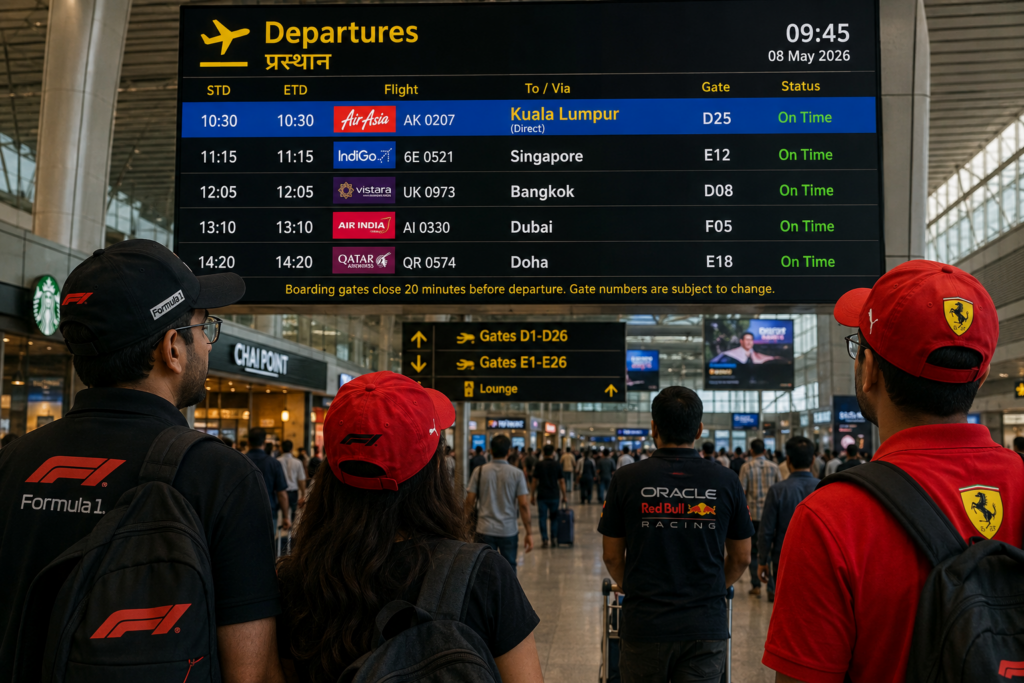
This is one of the more genuinely convenient F1 destinations for Indian fans, versus flying to Austin, Melbourne, or even the European rounds. Direct flight times from major cities:
- Chennai to Kuala Lumpur: around 3 hours 50 minutes
- Bengaluru to Kuala Lumpur: around 4 hours 15 minutes
- Hyderabad to Kuala Lumpur: around 4 hours 20 minutes
- Mumbai to Kuala Lumpur: around 5 hours 5 minutes
- Delhi to Kuala Lumpur: around 5-6 hours
There are roughly 45 direct flights daily from various Indian cities into Kuala Lumpur International Airport, run across Air India, IndiGo, Malaysia Airlines, and AirAsia. One-way fares start from around ₹10,000-18,000 in normal conditions, though expect that to climb as race weekend approaches and demand tightens — this is a trip worth booking flights for well ahead of the date rather than waiting.
Visa Requirements — This Got Easier in 2026
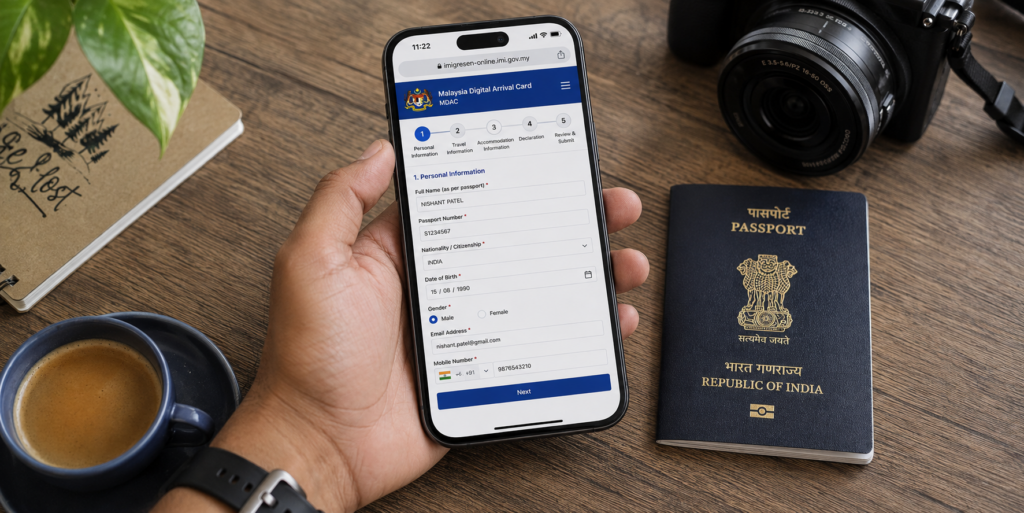
Here’s the genuinely good news: Malaysia currently grants Indian passport holders 30-day visa-free entry for tourism purposes, a policy confirmed as valid through December 31, 2026 — which comfortably covers this race weekend.
The one thing you can’t skip is the Malaysia Digital Arrival Card (MDAC), a free online form every traveler must submit within 3 days of arrival, available at the official portal (imigresen-online.imi.gov.my/mdac/main). You’ll also want a passport valid for at least 6 months beyond your travel dates, proof of onward or return travel, evidence of accommodation, and enough visible funds to cover your stay. This visa-free window is specifically for tourism — it doesn’t cover work or study — but for a race-weekend trip, it removes what used to be a multi-week visa application process entirely.
Tickets: What to Expect
A word of caution up front: as of this writing, Sepang hasn’t released official 2026 pricing, and anything circulating online is an estimate based on historical Sepang and comparable-circuit pricing, not a confirmed number. Treat the following as a planning range, not a quote, and always verify against the official Sepang International Circuit ticketing page before you commit.
Rough estimated tiers, based on historical reference pricing for similar 3-day grandstand passes:
- General admission (hillstands): roughly USD 300-350 for the weekend
- F Grandstand / tower seating: roughly USD 450-500
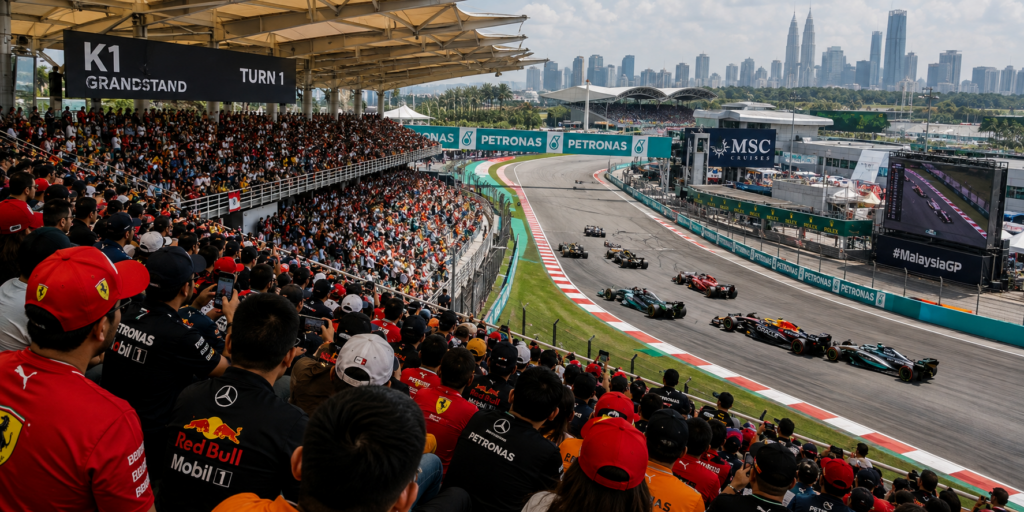
- K1 Grandstand (Turn 1 overtaking zone): roughly USD 425-450
- Main/Premier Grandstand: roughly USD 675-725
- Premier/VIP packages: upward of USD 1000, climbing well beyond that for hospitality-tier access
Tickets were expected to open for sale in early August 2026, sold through F1’s official channels and the Sepang International Circuit site directly. Given this is Malaysia’s first race back after a near-decade gap, main grandstand and K1 categories — the seats with the best sightlines on the overtaking zones — are the ones most likely to sell out first. If you have a specific seat category in mind, that’s not the one to wait on.
Getting From Kuala Lumpur to Sepang Circuit
Sepang Circuit sits close to Kuala Lumpur International Airport — about 15 miles and roughly 21 minutes by car from KLIA itself, or around 37 miles and closer to 50 minutes from central Kuala Lumpur. There’s no direct rail connection running all the way to the circuit; the practical route is a train or bus to KLIA Terminal 1 or 2, then a taxi or e-hailing (Grab is reliable and widely used across Malaysia) for the final stretch. On race days themselves, expect the circuit and Sepang organizers to run shuttle services from designated pickup points — details typically get published closer to the event, so it’s worth checking the official race weekend guide once it’s live rather than assuming your usual Grab route will work smoothly with race-day traffic.
Where to Stay
You’ve got two real strategic choices here: stay near the airport and circuit for minimal travel each race day, or stay in central Kuala Lumpur and treat the daily transfer as part of the trip.
Near KLIA/Sepang: Hotels like the Sama-Sama Hotel KLIA (about 10 minutes from the circuit) and several airport-adjacent options offer the shortest possible commute on race days — genuinely useful if you’re doing all three days (practice, qualifying, race) and don’t want to lose hours each day to transfers.
Central Kuala Lumpur: Staying near the Petronas Towers or Bukit Bintang gives you a proper city base with better food, nightlife, and shopping options for the evenings, at the cost of a roughly 45-60 minute transfer each way to the circuit. This is the better choice if the trip isn’t purely about the race and you want a fuller KL experience around it.
Given this is a high-demand weekend for the region, book hotels early — properties near the circuit in particular will fill fast once ticket sales open and international fans start locking in dates.
Weather and What to Pack
October in Kuala Lumpur runs hot and humid — average highs around 91°F (33°C), lows around 78°F (26°C), with the monsoon season typically running October through January bringing regular afternoon showers. Sepang’s grandstands offer limited shade in most categories, so plan for direct sun exposure through a full race day: sunscreen, a hat, and a light poncho or rain jacket for the genuinely likely chance of a downpour at some point over the weekend. Hydration matters more here than it does at a cooler-climate circuit — this isn’t a weekend to underestimate the heat.
Beyond the Race: What to Do in KL
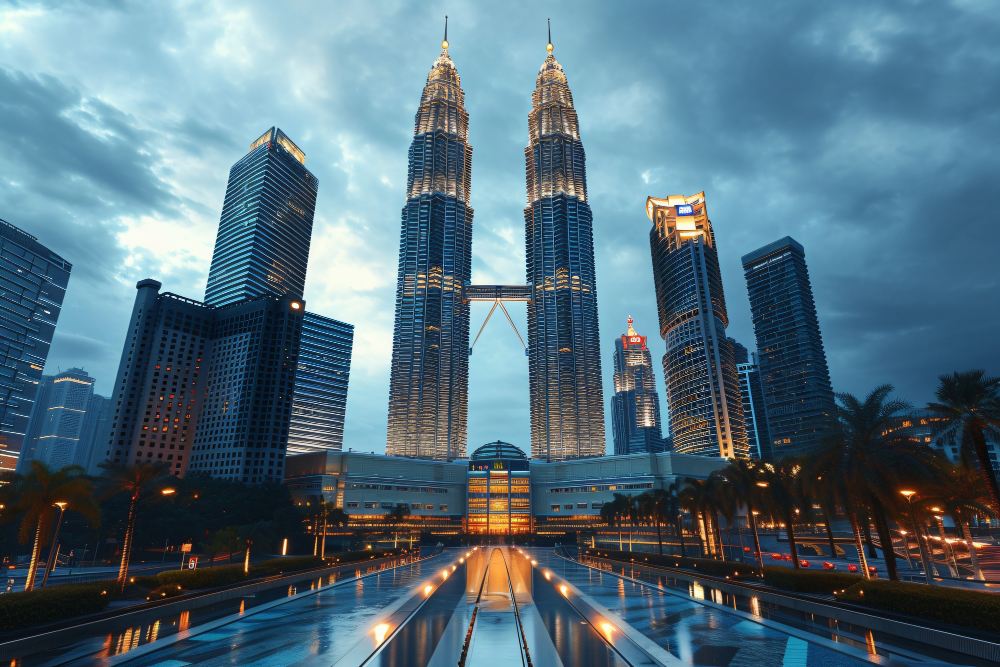
Race weekend itself is typically Friday practice through Sunday’s Grand Prix, which leaves you a few options depending on how many extra days you build in.
The Petronas Twin Towers are the obvious anchor — book Skybridge tickets online in advance, since walk-in slots are limited and sell out fast on weekends, and the observation deck occasionally closes during heavy rain, which October makes more likely than usual. Beyond that, Kuala Lumpur’s real strength in October is food and culture rather than outdoor sightseeing given the weather — a proper walk through the hawker stalls around Jalan Alor at night, a visit to the Batu Caves (best done as a half-day morning trip before the afternoon rain typically rolls in), and the Central Market and Chinatown for a slower, browsing-paced day.
If your group includes non-race-fan family members, this is a genuinely good split-interest destination — they can spend race days in the city while you’re at Sepang, and you reconvene for KL’s food scene each evening.
A Mistake to Avoid
Don’t assume your usual Grab or taxi ride to the circuit will run smoothly on race day itself. This is Malaysia’s first F1 weekend in nearly a decade, and neither the road network around Sepang nor the fans attending have recent experience with F1-scale crowds and traffic management at this circuit. Build in significantly more transfer buffer than Google Maps suggests, particularly for the Sunday race itself, and check the official race weekend transport guide once it’s published rather than relying on a normal-day estimate.
Costs to Budget For
Outside of flights and tickets, plan for: hotel rates that spike meaningfully during race weekend versus a normal October week in KL (book early to avoid the worst of this), circuit food and drink (bring your own water where allowed, since in-circuit prices run high as they do at most F1 venues), and a Grab/taxi budget that’s higher than usual given the daily circuit transfers. A realistic mid-range budget beyond flights and tickets runs roughly USD 150-250 per person per day across hotel, transport, food, and incidentals — climbing further if you’re staying at a premium circuit-adjacent property.
Frequently Asked Questions
Why is this called the Bahrain Grand Prix if it’s being held in Malaysia?
Bahrain is funding the race and retains naming rights after its own Grand Prix was postponed due to regional conflict; Sepang is hosting as a replacement venue, similar to how other circuits have stepped in for displaced races in F1’s recent history.
Will Malaysia have its own Grand Prix again in future years, separate from this Bahrain relocation?
As of current reporting, there’s no confirmed return of a standalone Malaysian Grand Prix beyond this 2026 relocated race — it’s being treated as a one-off for now, though strong turnout could change that conversation.
Do I need a visa if I’m only in Malaysia for the race weekend?
No advance visa application is required for Indian passport holders under the current 30-day visa-free policy (valid through December 2026) — but you must still complete the Malaysia Digital Arrival Card (MDAC) online within 3 days of arrival.
Is Sepang a good circuit for first-time F1 attendees?
Yes — it’s historically been well regarded by fans for its layout and sightlines, and coming back after such a long gap, expect a genuinely charged atmosphere from a fan base that’s been waiting years for this.
Final Thoughts
Races that come back after a long absence tend to draw a specific kind of energy — from fans who remember the old Sepang era and from a new generation getting their first look at a circuit they’ve only seen in archive footage. Combine that with a visa-free entry policy that removed the usual paperwork friction and a flight time shorter than most domestic connections within India, and this is one of the more logistically painless F1 trips available to Indian fans this year. The narrow part is the ticket window — this is not the race to wait on.
Get Tripped can build the full race-weekend package — flights, circuit-adjacent or central KL hotel, and the ground transport sorted for you, so race weekend itself is just about watching the race. Reach out to start planning before ticket categories sell out.