By 9 a.m. in July, the line for a pletna boat out to Bled Island stretches past the ice cream stands and curls back toward the bus parking. Everyone in it is trying to get the same photo — the church spire, the lake, the castle on the cliff behind it — that’s already sitting in about four hundred thousand other camera rolls, several hundred of them Indian. Bled earned its fame honestly; it’s genuinely beautiful. But it is also, at this point, the one thing about Slovenia that has already been fully discovered, packaged, and posted. If you’re planning a Slovenia trip in 2026 and you want the version that doesn’t look like everyone else’s feed, Bled is a half-day stop, not the whole itinerary.
This guide skips the top-10 list and goes deep on five places that don’t get the same Instagram traffic — an emerald-green river valley in the northwest, a Venetian-era port town on the Adriatic, a UNESCO cave system that quietly outclasses the one every tour bus stops at, a lake that gives you the Bled view without the Bled crowd, and a wine region most Indian travelers have never heard of. We’ll also cover the practical stuff — visas, flights, getting around, and when to go — but the point of this piece is the places, not another visa deep-dive (we’ve already written that one; more on that below).
Table of Contents
- Why Bled Isn’t the Whole Story
- The Soča Valley: Slovenia’s Emerald River Country
- Piran: The Old Town Beyond the Postcard
- Škocjan Caves: The UNESCO Cave Everyone Skips for Postojna
- Lake Bohinj: The Bled View Without the Bled Crowd
- Vipava Valley: Slovenia’s Wine Country Nobody’s Geotagging Yet
- Slovenia Visa for Indian Passport Holders
- Getting to Slovenia from India
- Getting Around: Why This Itinerary Wants a Rental Car
- Best Time to Visit
- Where to Stay
- How Many Days You Actually Need
- Costs, Currency and Practical Notes
- FAQs
Why Bled Isn’t the Whole Story
Lake Bled is roughly 55 square kilometres, one island, one castle, and — by most recent tourism board counts — well over two million visitors a year passing through a town whose permanent population is under 8,000. That math is the whole problem. Slovenia itself is barely bigger than Manipur, with a population smaller than Bengaluru’s, and almost all of that visitor traffic funnels into one lake.
Nobody’s saying skip Bled entirely. Go for a morning, walk the shoreline path, get the cliffside castle view, eat a slice of kremna rezina (the custard cream cake that’s a genuine local institution, not a tourist invention) and move on by early afternoon. The rest of the country — the part that actually shows you why Slovenians are quietly smug about where they live — is everywhere else on this list.
The Soča Valley: Slovenia’s Emerald River Country
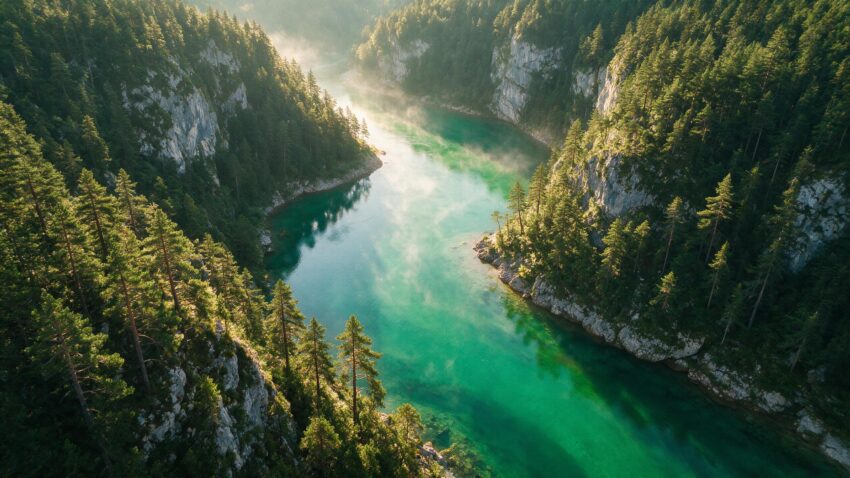
The Soča River runs an implausible turquoise-green, the kind of colour that looks fake in photos until you’re standing over it and realise the camera undersold it. It’s glacial meltwater running over pale limestone riverbed, and it holds that colour for roughly 140 kilometres from its source near Trenta down through the valley. This is the part of Slovenia that mountain-biking and kayaking Europeans already know well; Indian travellers, by and large, don’t.
Kobarid is the valley’s anchor town — small, a few thousand people, with a WWI history museum that’s more moving than its size suggests (this was the front line of the brutal Isonzo battles Hemingway wrote about in A Farewell to Arms, and the town takes that history seriously without turning it into spectacle). It’s also home to Hiša Franko, chef Ana Roš’s restaurant, which holds three Michelin stars and books out months in advance — worth knowing even if you don’t plan to eat there, because it tells you the level of seriousness this unassuming mountain town brings to food.
Tolmin Gorges, a 15-minute drive from Kobarid, is where the Soča’s tributary rivers carved a narrow limestone canyon you walk through on a suspended wooden walkway, crossing the “Devil’s Bridge” 60 metres above the water. It’s open from late March to mid-November (closed for winter), with entry around €8 in shoulder season (March–May, October–November) and €12 in peak summer (June–September) for adults — cheaper and considerably less crowded than the marquee gorges elsewhere in the Alps.
A mistake to avoid: people plan Soča Valley as a day trip from Ljubljana. It’s a two-plus-hour drive each way on mountain roads, and the valley genuinely rewards an overnight — the light in the gorges is better in early morning before the day-trippers from Bovec arrive, and the drive back in the dark on those same roads is not something you want to do tired.
Local tip: for swimming, skip the main tourist beach at Bovec and head to Sotočje in Tolmin, where the Soča meets the Tolminka river over a long white-stone beach, or Napoleon’s Bridge over the Nadiža river near Kobarid — the Nadiža runs noticeably warmer than the glacial Soča, closer to 20°C in summer versus the Soča’s rarely-above-10°C. If you’re travelling with kids, the Nadiža spots are the ones to pick; the Soča itself is cold enough to take your breath away on entry.
Piran: The Old Town Beyond the Postcard
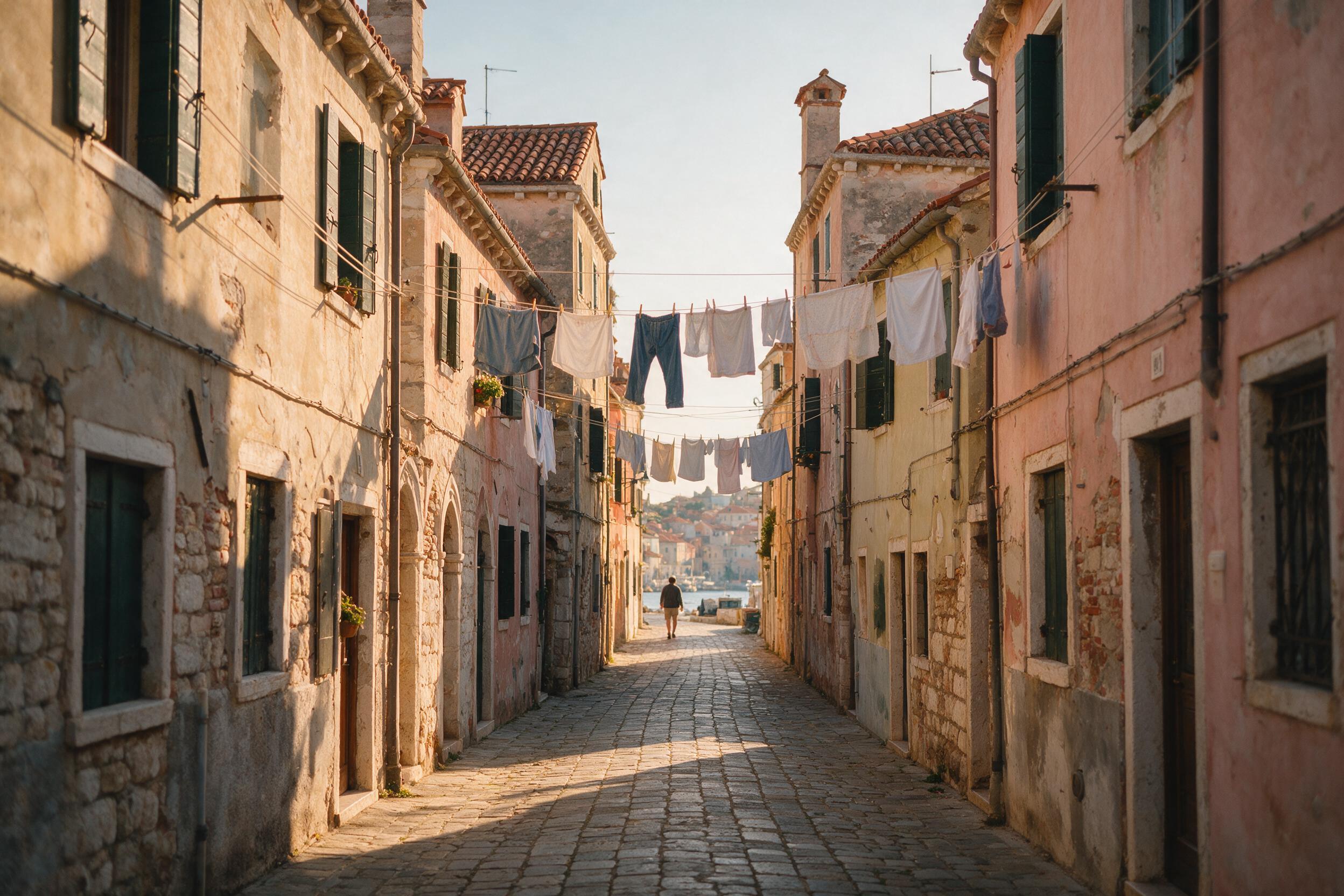
Everyone who’s been to Piran posts the same shot from the town walls at sunset, looking down over the terracotta rooftops toward the Adriatic. Fair enough — it’s a genuinely good shot. But Piran rewards slower attention than a five-minute walk to the wall and back.
The town was Venetian territory for five centuries, and it shows — narrow stone lanes too tight for cars, shuttered windows, a central square (Tartinski trg) laid out like a miniature Venetian piazza because it used to be the harbour before it was filled in. There are no cars allowed in the old town itself; you park at the edge and walk in, which is part of what keeps it feeling unhurried compared to bigger coastal towns.
A few kilometres south, the Sečovlje Salt Pans are still worked using methods essentially unchanged since the 14th century — you can walk or cycle out to see the salt fields and buy Piran salt (fleur de sel, in particular) directly from the source, which makes a genuinely good, non-tacky souvenir. The salt museum near the pans is small but worth 45 minutes if you want the history behind why this coastline built its economy on salt for 700 years.
Honest caveat: Piran in July and August gets busy too — this isn’t a secret anymore in Europe, just under-visited by Indians specifically. If you want the quiet version, shoulder season (May, June, September) gives you warm Adriatic water and empty lanes.
For couples: Piran’s boutique hotels in restored Venetian buildings, several with rooftop terraces facing the sea, make a genuinely strong honeymoon or anniversary stop — better suited to a slow two-night stay than a rushed day trip from Ljubljana.
Škocjan Caves: The UNESCO Cave Everyone Skips for Postojna
Postojna Cave is the one every group tour includes — a 20-minute train ride through illuminated chambers, a gift shop, and, in peak season, a queue that moves like an airport security line. It’s not bad. It’s just not the best cave experience Slovenia has.
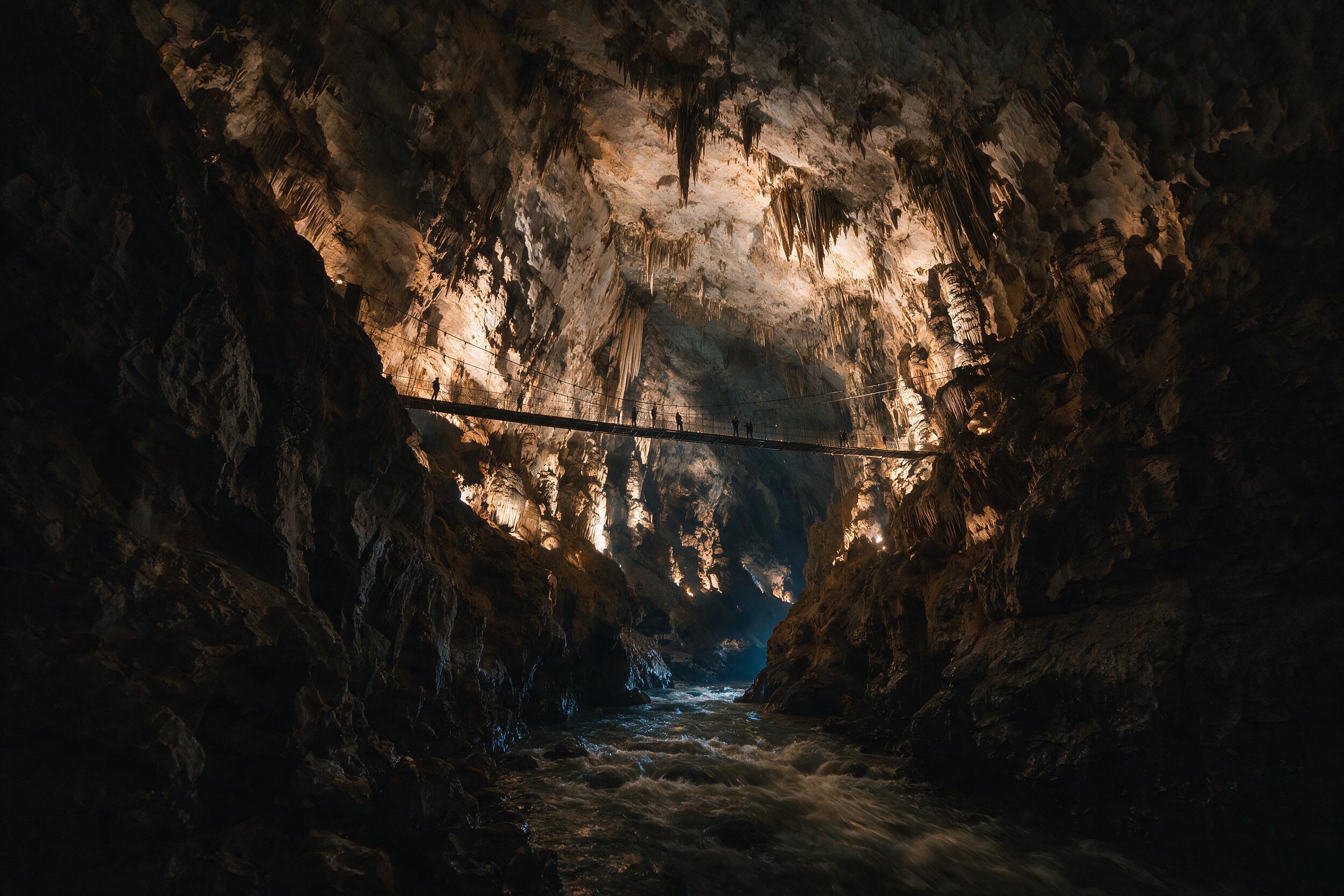
Škocjan Caves, about 45 minutes further south near the town of Divača, is a UNESCO World Heritage Site in its own right and contains one of the largest known underground canyons on Earth — a chamber so large it has its own microclimate and, in places, its own weather. You walk it on foot with a guide (there’s no train), across a suspension bridge slung 45 metres above the underground Reka river, with the sound of the river below you the whole way. It’s a 90-minute guided walking tour, roughly 3km, over uneven paths with some stairs — not stroller or wheelchair accessible, and it demands moderate fitness, not extreme.
Adult entry runs around €24 (seniors and students €18, children 6–17 about €12.50, under-6s free), and tours run on a fixed schedule through the day rather than continuously, so book your slot in advance for July–August — Škocjan is far less crowded than Postojna, but “less crowded than a place that gets a queue” still means it sells out in peak summer. The cave stays a constant 12°C year-round, so bring a layer even in August; people who show up in shorts and a t-shirt regret it about ten minutes in.
Fun fact: the Reka river, which carved this whole system, actually disappears underground here and doesn’t resurface until it reaches the Adriatic near Trieste, Italy — over 34km away and under a different name (the Timavo). You’re standing above a river that’s about to cross an international border underground.
Lake Bohinj: The Bled View Without the Bled Crowd
Bohinj sits about 30 minutes further into the Julian Alps from Bled, inside Triglav National Park, and it’s actually Slovenia’s largest natural lake — bigger than Bled, ringed by higher, wilder mountains, with none of the castle-on-a-cliff postcard drama, which is exactly why it doesn’t get photographed as much and exactly why it’s worth the extra half hour.
No island, no castle — what you get instead is water clear enough to see the bottom in the shallows, a walking or cycling path around the full shoreline, and mornings where you can hear the water instead of a tour guide’s amplified commentary. The cable car up Vogel gives you a genuinely spectacular panoramic view down over the lake and out toward the Alps — arguably a better view than anything you get standing at Bled itself. From the lake’s far end, a roughly 45-minute walk leads to Savica Waterfall, a 78-metre two-tier cascade that’s the source, indirectly, of the Sava river.
For families: Bohinj’s shallower, calmer shoreline areas are easier and safer for kids to swim in than the open, boat-traffic-heavy waters at Bled, and there’s more room to actually spread out on the grass without fighting for a patch of shade.
Mistake to avoid: don’t try to “do” Bohinj as a rushed add-on after Bled in the same afternoon. The lake and the Vogel cable car deserve a half-day minimum on their own, and cramming both into one day means you’ll rush the better of the two.
Vipava Valley: Slovenia’s Wine Country Nobody’s Geotagging Yet
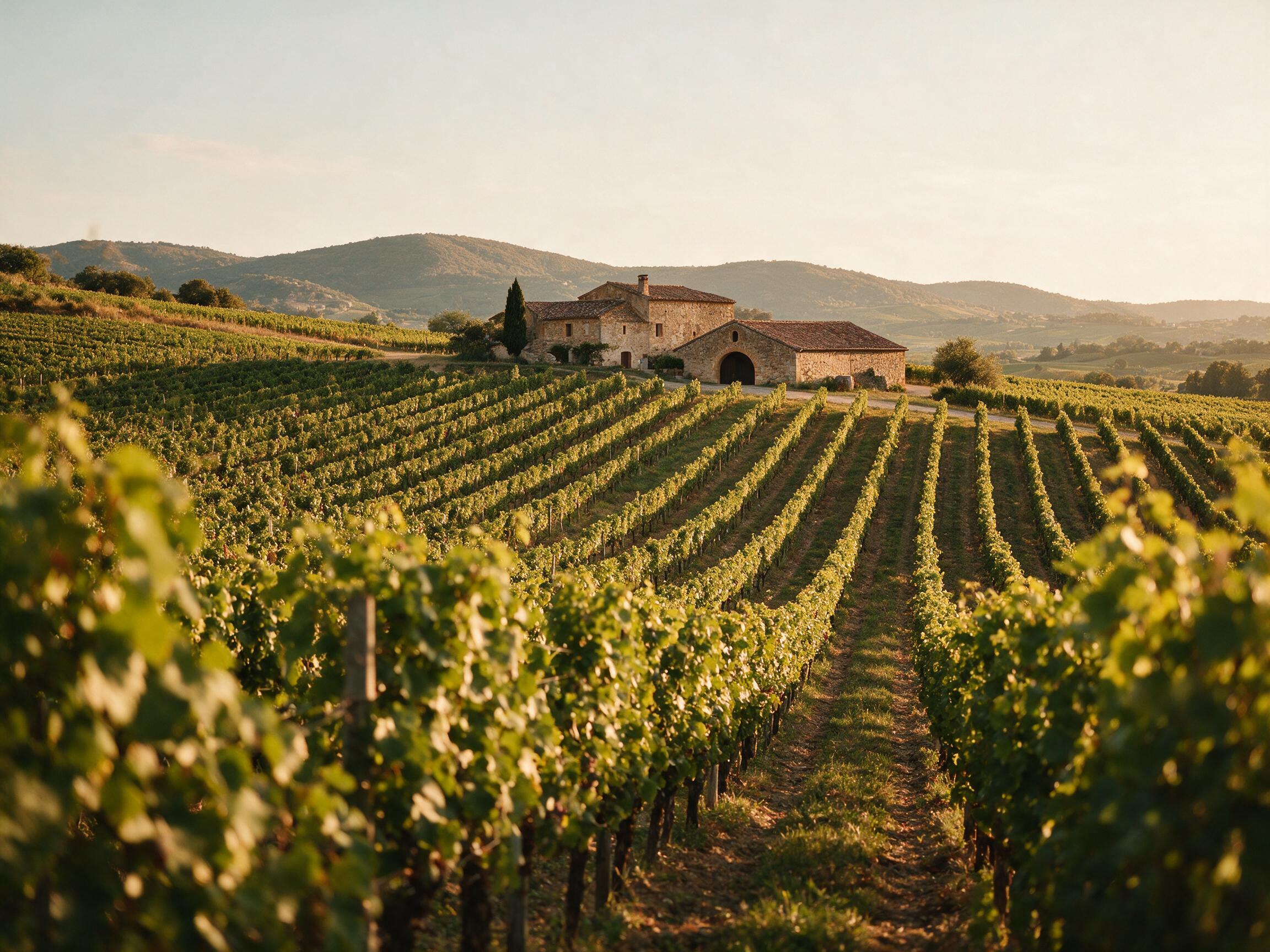
If Soča Valley is the well-known secret and Bohinj is the known alternative, Vipava Valley is the genuine blind spot — most Slovenia guides for Indian travellers don’t mention it at all, and that’s the strongest argument for going.
It’s a wine region roughly 45 minutes from Ljubljana toward the Italian border, growing indigenous grape varieties you won’t find on any wine list back home — Zelen and Pinela, both native to this valley specifically and grown almost nowhere else in the world. The valley is also famous locally for the burja, a fierce, cold wind that funnels down from the Alps through the valley in gusts, and which locals will tell you (with some pride) is part of what gives the wine its character. Family-run cellars around the towns of Vipava and Vipavski Križ do tastings that are unhurried and unstaged compared to the more tourist-polished wine regions of Tuscany or Bordeaux — you’re often talking directly to the person who grew the grapes.
Pair a tasting with local prosciutto (the valley’s dry, cool climate makes it genuinely good, closer in style to Italian prosciutto than most Slovenian cured meat) and, if you’re visiting in late June, the valley’s cherries, which get their own small local festival.
For solo travellers: Vipava is one of the easier hidden-gem day trips to do without a group — small enough that a single afternoon covers a cellar visit and a walk through Vipava’s old town, and most wineries are used to solo visitors booking a tasting slot rather than expecting a group.
Slovenia Visa for Indian Passport Holders
Slovenia is a full Schengen member, so Indian passport holders need a standard Schengen Type C visa — there’s no separate Slovenia-specific track. Apply through VFS Global; since Slovenia doesn’t run a large independent consular network in India, confirm current routing before booking an appointment.
Budget roughly €90 per adult in visa fees plus VFS service charges, Schengen travel insurance covering at least €30,000, proof of funds, and a return flight and hotel booking for the application. Processing is officially 10–15 working days but stretches to 30–45 in peak season (June–September, December) — apply 4–6 weeks out, not two.
If you’re combining Slovenia with other Schengen countries, note the EU’s EES digital entry system is now live at Schengen borders — we’ve covered what that means for Indian travellers in our dedicated Schengen/EES guide, so we won’t repeat it here. Short version: first-time entrants now get fingerprinted and photographed at the border instead of a passport stamp, which adds a few minutes at immigration — build in a slightly longer buffer at your first Schengen entry point.
Getting to Slovenia from India
There are no direct flights from India to Ljubljana Jože Pučnik Airport (LJU) — every route connects through a hub. The most reliable options in 2026:
- Via Frankfurt — Lufthansa’s busiest route into Ljubljana, with strong connections from Delhi, Mumbai and Bengaluru.
- Via Munich — Lufthansa’s Munich–Ljubljana route was suspended for part of early 2026 during a regional fleet restructuring, then resumed from June 2026. It’s running again as of this writing, but double-check your dates when booking — regional routes like this shift more often than long-haul ones.
- Via Vienna — Austrian Airlines flies this route multiple times daily, with good Delhi and Mumbai connectivity into Vienna.
- Via Istanbul — Turkish Airlines runs frequent service, and Istanbul has the widest direct connectivity from Indian cities of any option here.
Round-trip economy fares from Delhi or Mumbai typically run ₹55,000–₹90,000 depending on season, with July–August and December pricier. Total journey time including a connection generally runs 12–16 hours.
Getting Around: Why This Itinerary Wants a Rental Car
Slovenia is compact enough that you could theoretically cover the whole country in a week, but the places on this list are not all equally easy to reach without your own wheels.
Buses connect Ljubljana reasonably well to Bled (about an hour), Bohinj (about two hours), and Piran (two to two-and-a-half hours, though note Piran itself has no railway station). Škocjan Caves is reachable by train to Divača with a short onward connection. Where public transport genuinely struggles is the Soča Valley and Vipava Valley — smaller towns, mountain roads, and infrequent evening service that can strand you if you’re relying on the last bus back.
For the itinerary in this guide — Soča Valley, Piran, Škocjan, Bohinj and Vipava in one trip — a rental car is close to essential. Renting in Ljubljana runs roughly €35–€60/day depending on car size and season, and Slovenia’s roads are well-maintained, well-signed, and genuinely enjoyable to drive, if occasionally narrow through the mountain passes near Soča. If you’d rather not self-drive, Get Tripped can build this as a chauffeur-driven private itinerary instead — worth asking about if you’re travelling with family or prefer not to navigate Alpine switchbacks yourself.
Best Time to Visit
Late May to June is arguably the sweet spot for this exact itinerary — the Soča is running full and vividly green from spring snowmelt, Tolmin Gorges and Škocjan are open on full summer-adjacent hours without July’s crowds, Piran’s water is warm enough to swim, and Vipava’s valley is green rather than dust-dry.
September to early October is the other strong window — warm Adriatic water at Piran, clear skies for the Vogel cable car at Bohinj, grape harvest season in Vipava (worth timing a visit around if you can), and noticeably thinner crowds everywhere on this list compared to August.
July–August is peak season across the board — warmest swimming water in the Soča’s tributaries and at Piran, but also the highest prices, the fullest Škocjan tour slots, and the Tolmin Gorges’ priciest entry tier. Avoid it if crowds are exactly what you’re trying to skip by reading this article.
Winter (November–March) closes Tolmin Gorges entirely and makes Vogel’s cable car largely a ski-access run rather than a sightseeing one — this trip is fundamentally a warm-weather itinerary, not a year-round one.
Where to Stay
- Ljubljana — the natural base for the first and last nights, with riverside boutique hotels along the Ljubljanica up to a genuine luxury property or two near the old town.
- Kobarid or Bovec (Soča Valley) — small guesthouses and boutique mountain lodges, mid-range to upscale, several with valley or river views. This is where an overnight genuinely changes the experience.
- Piran or Portorož — Piran has characterful boutique hotels inside restored Venetian buildings, limited in number and worth booking ahead; Portorož next door offers more modern resort-style options with a pool.
- Vipava Valley — a handful of countryside guesthouses attached to working wineries — arguably the most memorable option if you’re building a wine-focused night into the trip.
How Many Days You Actually Need
A realistic version of this hidden-gems trip runs 8–10 days: two nights Ljubljana (with a half-day Bled detour and Vipava Valley day trip from there), two nights Soča Valley, two nights Piran (with the Škocjan Caves stop en route), and one to two nights Bohinj before flying out of Ljubljana. Trying to compress this into five or six days means cutting either the Soča Valley overnight or the Piran stay short — both are the two places on this list that most reward slowing down.
Costs, Currency and Practical Notes
Slovenia uses the euro, and it’s easy to navigate on cards — most restaurants, hotels, fuel stations and even smaller Vipava wine cellars accept them, though carry €50–€100 in cash for smaller guesthouses and market stalls. eSIMs work well; Slovenia’s networks (A1 being the main one) give solid 4G/5G coverage even on Soča Valley’s mountain roads, with dead spots limited to the deepest gorges and remote trails.
Rough daily budgets: mid-range travellers should plan €120–€180 per person, covering a boutique hotel, meals and one paid activity; a higher-end version (better hotels, Hiša Franko-tier dining, a private driver) runs €300+. Tipping isn’t obligatory — rounding up or leaving 5–10% at restaurants is standard, not expected.
FAQs
Is Lake Bled worth visiting at all if I’m going for the hidden gems? Yes, for half a day. It’s crowded because it’s genuinely beautiful, not because it’s overrated. Just don’t let it eat more than a morning or afternoon of a longer Slovenia trip.
Do I need a rental car to see Soča Valley and Piran? Piran is reachable by bus from Ljubljana. Soča Valley genuinely isn’t, in any practical sense — bus service is sparse and evening connections are unreliable. If Soča Valley is on your list, plan on a rental car or a private driver.
Is Škocjan Caves actually better than Postojna Cave? It’s a different experience rather than a strictly “better” one — Postojna is easier (train ride, wider paths, no walking required) but far more crowded. Škocjan is a walking tour with more physical demand but a genuinely more dramatic underground canyon and far fewer tourists. If you can only do one and mobility isn’t a concern, Škocjan is the pick for a hidden-gems trip.
When is the Soča River at its most vivid green? Late spring through early summer, once snowmelt is feeding the river fully but before late-summer algae growth can dull the colour slightly. May through July tends to be the most reliably vivid window.
Do Indian passport holders need a separate visa for Slovenia within the Schengen area? No — Slovenia is a full Schengen member, so a standard Schengen Type C visa covers entry. If you’re combining it with other Schengen countries on one trip, the visa still just needs to be applied for once, ideally through the country where you’ll spend the most days or first enter.
Can Vipava Valley wine tasting be done as a day trip from Ljubljana? Yes — it’s roughly 45 minutes each way, making it one of the easiest additions to a Ljubljana-based itinerary, and doesn’t require an overnight stay the way Soča Valley does.
Is Piran walkable, and is parking a hassle? The old town itself is fully walkable and car-free — you park at designated areas at the edge of town (paid, and can fill up in peak season) and walk in. Budget extra time for parking in July and August specifically.
What’s the biggest mistake people make planning this kind of trip? Treating every stop as a rushed day trip from a single Ljubljana base. Soča Valley and Piran specifically lose most of their appeal if you’re driving three-plus hours each way in a single day rather than staying over.
Conclusion
Bled will still be there, and it’s worth the half day. But the Slovenia trip that’s actually worth telling people about — the emerald river valley, the Venetian port town, the cave with its own weather system, the quieter lake, the wine country nobody’s heard of yet — is everything this guide just walked you through. Slovenia rewards travellers willing to drive an extra hour past the postcard.
Ready to build this exact trip? Get Tripped designs custom Slovenia itineraries for Indian travellers — private drivers for the mountain roads, boutique stays in Kobarid and Piran, and wine cellar visits that aren’t on any group tour’s list. Talk to our travel specialists to start planning your Slovenia hidden-gems trip.