
IndiGo’s New Mumbai Flight Makes a Tanzania Safari and Zanzibar Trip Easier Than Ever
In October 2026, IndiGo starts flying direct between Mumbai and Dar es Salaam — its fourth African destination after Kenya, Mauritius and Seychelles. That sounds like a small scheduling update. It isn’t. Right now, getting from India to Tanzania usually means a layover in Nairobi, Addis Ababa, Doha or Dubai, a search that eats an evening and a connection that eats half a day. A direct Mumbai-Tanzania flight collapses that into one leg, and it lands right as the country’s two biggest draws — dry-season safari in the Serengeti and Ngorongoro Crater, and peak beach weather in Zanzibar — are both in season at once. A Tanzania safari has never been this straightforward to plan from India. This guide covers what that flight actually means for your trip, what a Tanzania e-visa costs an Indian passport holder in 2026, when to go, what a proper mid-range-to-luxury safari and Zanzibar stay costs, and the details nobody puts on the tourism board homepage.
Table of Contents
- Why This Flight Route Actually Matters
- Best Time to Visit: Safari Season vs. Beach Season
- Tanzania e-Visa for Indian Passport Holders
- How Many Days You Actually Need
- A Sample 10-Day Safari + Zanzibar Itinerary
- Where to Stay: Safari Camps and Zanzibar Resorts
- Getting There and Getting Around
- What This Trip Actually Costs
- Food, Culture and Etiquette
- Safety Notes, Health and Insurance
- Currency, SIM Cards and Payments
- Frequently Asked Questions
- Final Word
Why This Flight Route Actually Matters
Tanzania’s civil aviation authority confirmed the plan in a meeting with IndiGo’s East Africa team in mid-2026, and the airline has been public about a launch window of October 2026 for direct Mumbai-Tanzania service. Right now, a Mumbai to Dar es Salaam search mostly turns up Air Tanzania and Kenya Airways fares connecting through Nairobi, priced roughly ₹24,000 to ₹45,000 one-way — plus a 3-5 hour layover each way. A direct service doesn’t just save time, it puts competitive pressure on those fares, which is good news for anyone building a serious two-country trip (safari plus beach) without burning two travel days just getting there.
Here’s the part that makes the timing genuinely interesting rather than just convenient: October sits at the tail end of Tanzania’s long dry season, which is exactly when the Serengeti’s grass is short, waterholes are few, and animals are easy to find because they’re all clustered around the same water sources. It’s also comfortably within Zanzibar’s best beach stretch, before the short “vuli” rains typically arrive in November. A flight that starts running in October isn’t landing in a random month — it’s landing in the window serious safari planners specifically build itineraries around.
One honest caveat: flight-specific details — exact departure days, aircraft, fare classes — weren’t public at the time of writing. IndiGo hadn’t released a formal schedule, only the October 2026 target and Dar es Salaam as the anchor city, with better onward connectivity to Zanzibar and Arusha part of the pitch. Treat the schedule as pending confirmation and check IndiGo’s booking page closer to your travel dates.
Best Time to Visit: Safari Season vs. Beach Season
Tanzania doesn’t have one “best time” — it has a best time for what you’re doing.
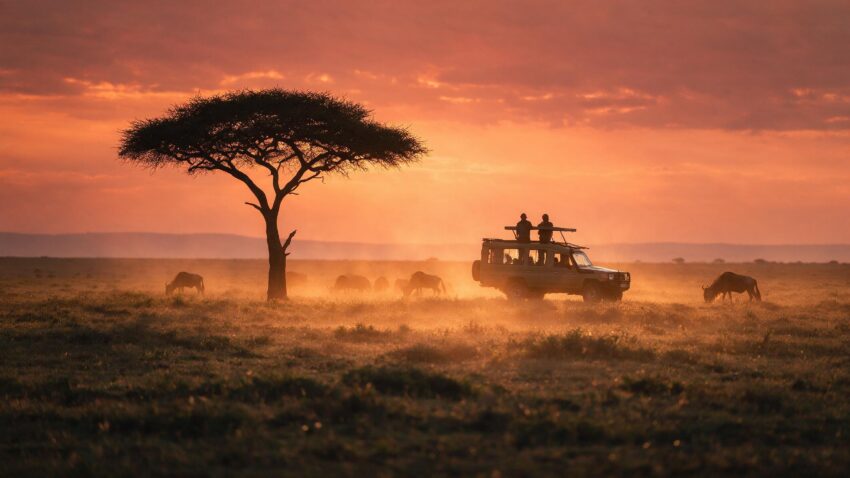
For the Serengeti and Ngorongoro Crater: June through October is the classic dry season, and it’s the safest bet if wildlife density is your priority — thin vegetation and shrinking water sources mean animals bunch up and stay visible. August and September specifically are peak for the Mara River crossings in the northern Serengeti, when wildebeest herds funnel through crocodile-heavy water in one of the more genuinely dramatic things you’ll see on any safari anywhere. If you’d rather see newborn wildebeest and the predator action that follows them, January and February bring the calving season to the southern Serengeti plains — a completely different, quieter kind of incredible.
For Zanzibar: June to October is also the sweet spot — dry, warm, low humidity, calm seas good for diving and dhow trips. December to February is hot and more humid but still workable. The long rains hit hard from March to May, and while a handful of properties drop their rates significantly during that window, a lot of activities (spice tours, some dive sites, certain boat trips) get disrupted, so it’s not a period Get Tripped would generally recommend building a first-time trip around.
An honest note on the October launch specifically: it’s a strong month for both halves of the trip, but it’s also the very end of dry season, so book your safari dates in the first half of the month if you can — by late October you’re starting to edge toward the short rains, which can bring brief, heavy afternoon showers that don’t ruin a trip but can mean a muddier drive and a slightly quieter game count on a bad day.
Tanzania e-Visa for Indian Passport Holders
Indian citizens need a visa to enter Tanzania, and the practical route for almost everyone is the e-visa, applied for online before you fly rather than on arrival. As of 2026, the process works like this:
- Cost: USD 50 for a single-entry tourist e-visa, paid online and non-refundable even if your application is rejected.
- Where to apply: the official government portal at eservices.immigration.go.tz — not a third-party agent site, several of which charge steep “service fees” on top of the government fee for doing nothing you can’t do yourself in twenty minutes.
- Processing time: typically 5-10 business days, though it can move faster. Apply at least 2-4 weeks before departure so a request for an extra document or a payment hiccup doesn’t put your trip at risk.
- Validity: up to 30 days per entry on the standard tourist e-visa, which comfortably covers a combined safari and Zanzibar trip.
- What you’ll need: a passport valid for 6+ months from your entry date with at least two blank pages, a colour scan of your passport bio page, a recent passport-style photo, proof of onward/return travel, and accommodation proof (a confirmed booking or your Get Tripped itinerary works fine).
A mistake worth flagging: a fair number of travelers assume Zanzibar has separate entry rules from mainland Tanzania since it feels like its own destination. It doesn’t — Zanzibar is part of the United Republic of Tanzania, and the same e-visa covers entry whether you land in Dar es Salaam, Arusha/Kilimanjaro, or directly into Zanzibar’s Abeid Amani Karume International Airport. You do not need two visas.
How Many Days You Actually Need
Ten to twelve days is the realistic minimum for doing both halves of this trip properly rather than rushing it. Tanzania is genuinely large — driving from Arusha to the central Serengeti alone can take 6-7 hours on rough roads, which is why most well-planned itineraries use short internal flights (Coastal Aviation and Auric Air both run scheduled routes between park airstrips and Zanzibar) rather than road transfers for the longer legs.
A workable split: 5-6 nights on safari covering Tarangire or Lake Manyara, Ngorongoro Crater, and the Serengeti, followed by 4-5 nights in Zanzibar to actually decompress. Cutting the safari portion down to 3 nights is common but it’s tight — you lose the buffer day that usually turns into your best game-viewing day, since wildlife sightings are not guaranteed on a schedule.
A Sample 10-Day Safari + Zanzibar Itinerary
Days 1-2: Arrive Kilimanjaro/Arusha, Tarangire or Lake Manyara
Fly into Kilimanjaro International Airport, transfer to Arusha, and head out the same or next day to Tarangire National Park for baobab-studded landscapes and large elephant herds, or Lake Manyara for tree-climbing lions and flamingo-lined shallows.
Days 3-4: Ngorongoro Crater
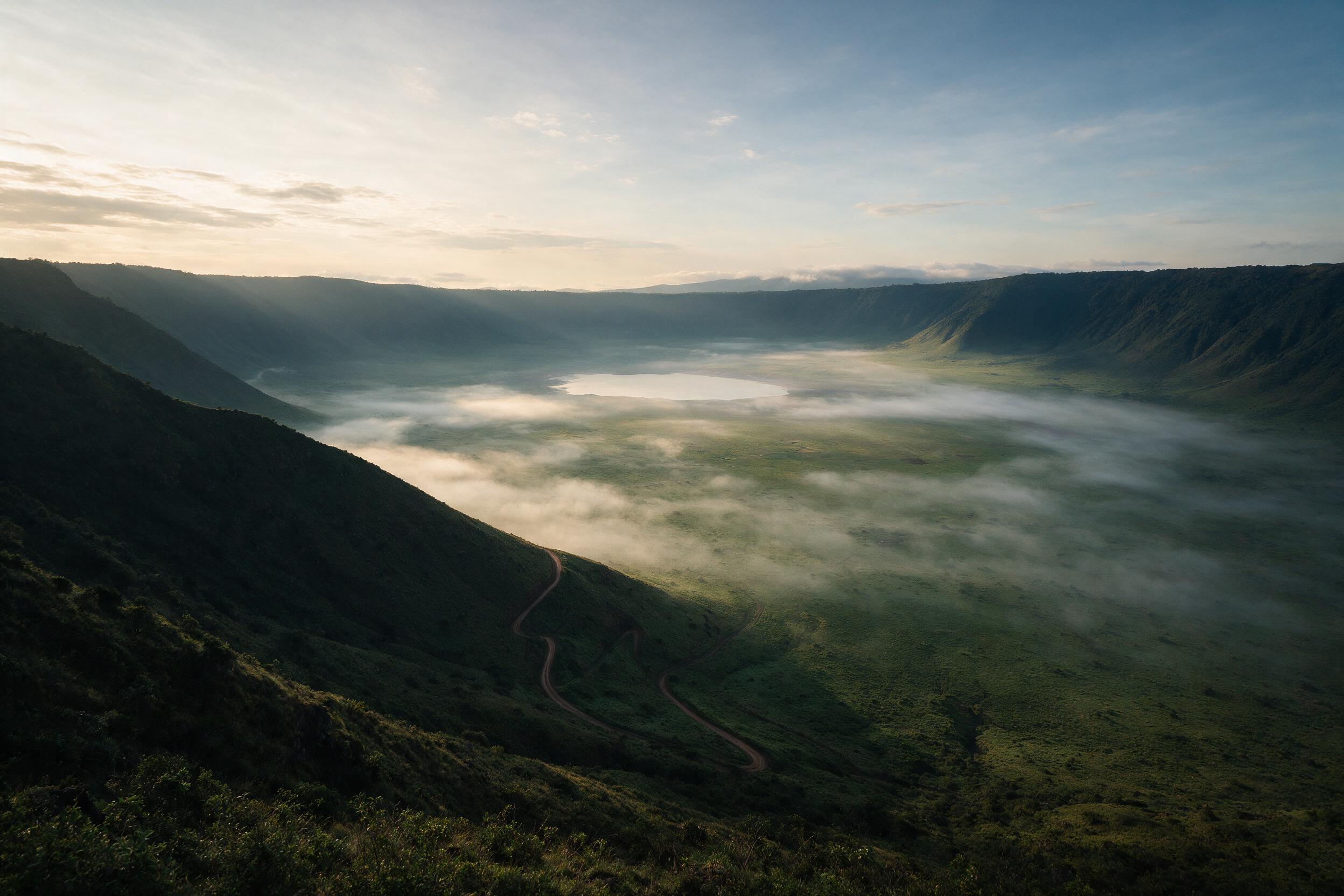
The crater is a full-day, one-shot destination — descend at dawn, spend the day among a dense, self-contained ecosystem of lion, rhino, elephant, hippo and flamingo, and climb back out by evening. Stay on the crater rim the night before for the sunrise descent.
Days 5-7: Serengeti National Park
Central or northern Serengeti depending on season — northern for the Mara River crossings in August/September, central (Seronera) for reliable year-round predator sightings. Two full days minimum, three if your dates align with the migration.
Days 8-10: Zanzibar
Fly directly from a Serengeti airstrip to Zanzibar, skipping the backtrack through Arusha, and spend your last days between a beach stay on the north or east coast and a day or two exploring Stone Town.
Where to Stay: Safari Camps and Zanzibar Resorts
Get Tripped works with mid-range lodges through to fully private luxury camps — this isn’t a segment where basic camping tents make sense given how remote most properties are.
Ngorongoro and Serengeti: mid-range lodges on the crater rim and inside the Serengeti give solid rooms, full board and included game drives without the ultra-premium price tag. Step up to luxury tented camps for private verandas, better food, and locations set further from the day-tripper crowds — a real difference on the crater rim, where budget lodges can feel like they’re all facing the same viewpoint.
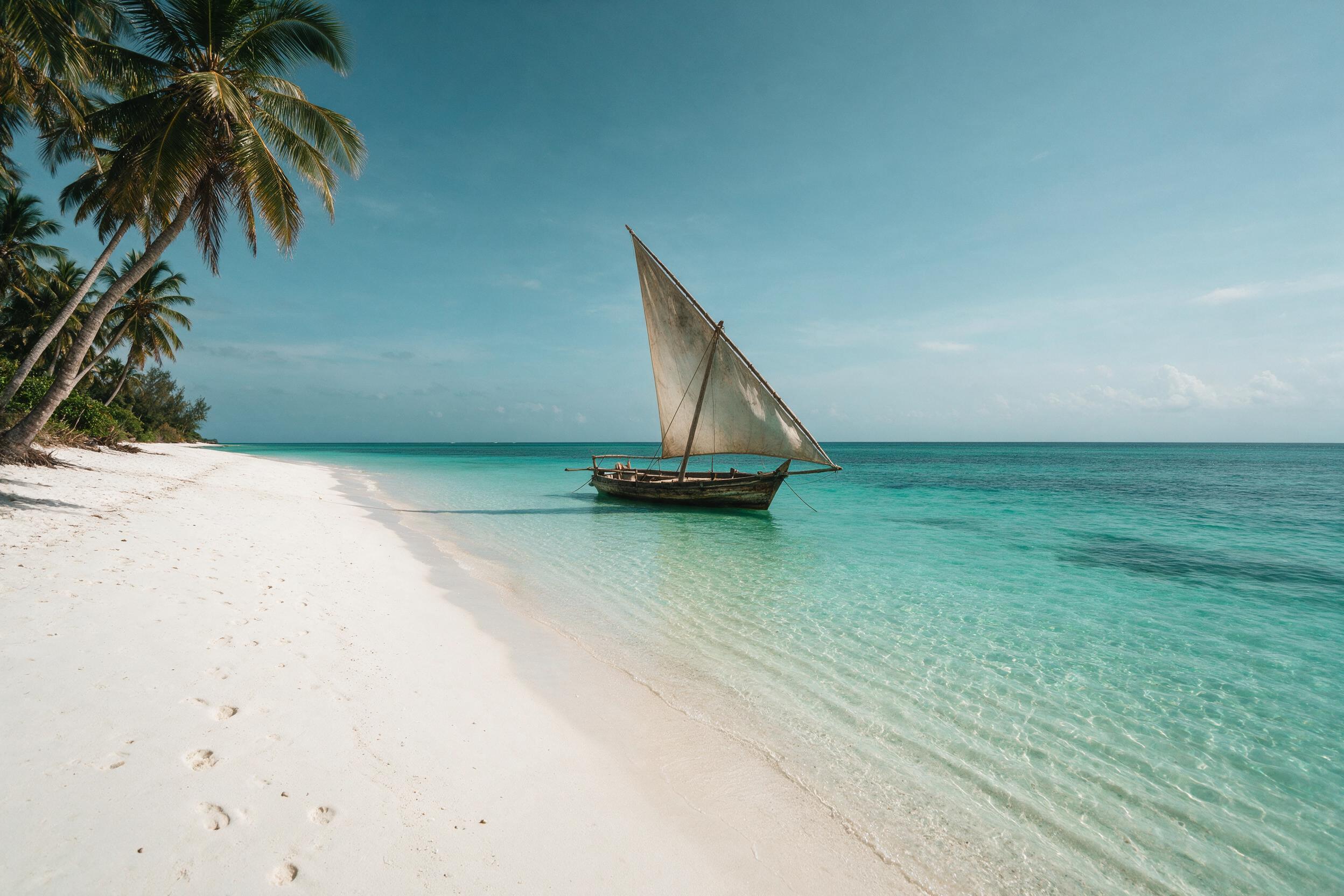
Zanzibar: the island splits by coast and vibe. Nungwi and Kendwa in the north have the most reliable swimmable beach at all tide levels (the east coast has a big tidal swing that leaves a long stretch of sand exposed at low tide, which some travelers love for the walk and others find inconvenient for an afternoon swim). Paje and Michamvi on the east coast are the kitesurfing and quieter-luxury zone. Stone Town itself is worth 1-2 nights for the history and food, even if you base your beach days elsewhere.
Getting There and Getting Around
Once live, IndiGo’s service becomes the most direct option for Indian travelers into Dar es Salaam, with the airline positioning it as improving onward connectivity to Zanzibar and Arusha too — worth confirming the exact connection structure once schedules are published. Until then, Kenya Airways via Nairobi and Ethiopian Airlines via Addis Ababa remain the most common one-stop routings from Mumbai and Delhi.
Inside Tanzania, plan on a mix of 4×4 safari vehicle transfers between parks and short hop flights on light aircraft for the longer legs — Arusha/Kilimanjaro to Serengeti airstrips, and Serengeti to Zanzibar. These flights aren’t expensive relative to the rest of the trip and they save half a day of driving each time.
What This Trip Actually Costs
This is not a budget trip, and it isn’t meant to be — a proper Tanzania safari runs on private vehicles, professional guides and small camps by design, and that shows up in the price. Rough per-person, per-day figures for 2026:
| Category | Mid-Range | Luxury |
|---|---|---|
| Safari lodge/camp (all-inclusive: room, meals, game drives) | USD 250-500/day | USD 600-1,200+/day |
| Zanzibar resort (room only or B&B) | USD 180-350/night | USD 350-800+/night |
| Zanzibar food, per day | USD 30-50 | USD 60-100+ |
Then there are park fees, which surprise a lot of first-timers with how steep they are — they’re what funds conservation in these parks, so it’s worth understanding rather than resenting. Serengeti National Park charges non-resident adults USD 83 per 24 hours (fee plus 18% VAT). Ngorongoro Conservation Area entry runs similar, plus a separate crater descent fee of roughly USD 295-348 per vehicle — flat per-vehicle, so it’s cheaper per person the more people share the ride. Most tour operators, including Get Tripped’s safari packages, build these fees into the quoted price rather than billing separately, so confirm whether a quote you’re comparing already includes them.
All told, a 6-night mid-range safari plus 4-night Zanzibar stay for two people typically lands somewhere between USD 6,500 and 11,000 all-in (flights, visas and shopping not included). The luxury version of the same trip can run USD 15,000-25,000+ for two. Neither number is small, and that’s the honest picture — this is a once-in-a-few-years trip for most people, not a long-weekend add-on.
Food, Culture and Etiquette

Safari camp food is usually better than people expect — full-board menus with a genuine effort at variety, often including Indian-friendly vegetarian options, a common ask from Indian and Gujarati travel groups specifically. Zanzibar’s food is where things get more interesting: centuries of Omani, Persian, Indian and Portuguese trade left the island’s cuisine loaded with clove, cinnamon, cardamom and tamarind, which shows up everywhere from a simple pilau rice to Zanzibar mix, a street snack of cassava chips, bhajia and boiled egg in a tamarind-tomato sauce that tastes like it grew up next to Indian traders’ kitchens, because it did.
A local tip that doesn’t make most top-10 lists: skip the crowded Forodhani Gardens night market on a Friday or Saturday — it’s fine but it’s also the single most photographed food stall row on the island, so it’s slower and more transactional than it looks in photos. For a quieter, better view, head to the rooftop restaurant at Emerson on Hurumzi in Stone Town instead, which serves a set dinner with views over the old town’s rooftops that most day-trippers never see because they’re back on the beach by sunset.
On etiquette: Zanzibar is predominantly Muslim, and while resort areas are relaxed about swimwear, Stone Town and local villages expect shoulders and knees covered, particularly during Ramadan, when some restaurants adjust their daytime hours. On the mainland safari circuit, tipping guides and camp staff is standard and genuinely appreciated — most camps post a suggested range, typically USD 15-25 per guest per day for the guide, split among camp staff separately.
Fun fact worth knowing before you go: Ngorongoro Crater is the world’s largest intact, unfilled volcanic caldera — roughly 19 kilometers across — formed when a volcano larger than Kilimanjaro erupted and collapsed in on itself around two to three million years ago. It’s also why the crater floor supports such a dense, self-contained wildlife population: the steep walls act as a natural, if imperfect, boundary.
Safety Notes, Health and Insurance
Tanzania’s well-established tourist circuits — Arusha, the northern safari parks, Zanzibar — remain among the safer, more tourism-infrastructure-heavy parts of East Africa, with millions of visitors passing through every year without incident. That said, some Western governments raised their overall Tanzania travel advisory level in late 2025, citing increased crime (assaults, robberies, occasional carjackings) concentrated in less-touristed, remote areas, plus general regional terrorism risk near certain border zones. None of it is specific to the safari or Zanzibar circuit, but read the current advisory rather than assume nothing’s changed, and travel with an operator who knows which routes to avoid after dark.
Health-wise: Tanzania is a malaria risk zone across the safari regions, so talk to a travel clinic about prophylaxis and pack repellent for evenings at camp. A yellow fever certificate is required only if arriving from a country with yellow fever risk, not simply for arriving from India — carry proof if you’ve transited through one recently, since it does get checked. Comprehensive travel insurance covering medical evacuation is genuinely worth it here; remote camps rely on it if something goes wrong, and it’s standard practice, not an upsell.
Currency, SIM Cards and Payments
The Tanzanian Shilling (TZS) is the local currency, trading at roughly 2,500-2,700 TZS to the US dollar in early 2026, but US dollars are widely accepted and often preferred for safari lodges, park fees and higher-end hotels — with one catch: notes need to be from 2009 or later and in clean, undamaged condition, or they’ll frequently be refused. Carry a mix: USD cash for the bigger safari-related payments, and a card or small TZS cash float for everyday spends in towns and Zanzibar. Cards work at most lodges and city hotels but usually carry a 3-5% surcharge, and connectivity drops out in the more remote camps, so don’t rely on card-only.
eSIMs are the easiest option for connectivity if your phone supports one — Tanzanian data eSIMs are available to pre-purchase online and activate on arrival, and most safari camps also offer WiFi in communal areas even if it doesn’t reach every tent. Local SIM cards (Vodacom, Airtel Tanzania) are cheap and easy to buy at the airport if you’d rather have a local number.
A mistake to avoid: don’t arrive assuming ATMs are everywhere in the parks — they aren’t. Withdraw or exchange what you need in Arusha or at the airport before heading into the safari circuit, since the next reliable ATM might be days away.
Notes for Different Kinds of Travelers
Couples and honeymooners: Ngorongoro’s crater-rim lodges paired with a private-plunge-pool villa in Zanzibar’s Michamvi or Paje area make a strong combination — safari drama followed by genuine quiet. Ask specifically for rooms with private decks facing away from shared walkways; not every “luxury” listing actually delivers it.
Families: several camps run family suites and kids’ programs, and many won’t take children under 6 on standard game drives for safety reasons — check age policies before you book. Zanzibar’s north coast resorts, with calmer swimmable beaches at all tides, tend to work better for families than the east coast’s bigger tidal swing.
Luxury seekers: fly-in safaris that skip road transfers entirely, private-vehicle game drives, and Zanzibar’s handful of fully private villas with their own chef and boat access are all realistic asks here — Tanzania’s high-end safari infrastructure is genuinely world-class, not an afterthought bolted onto a budget circuit.
Solo travelers: small-group scheduled safaris are a reasonable way to manage costs without sacrificing quality, and several camps skip the punishing single-supplement rates common elsewhere — worth asking about directly when comparing quotes.
Frequently Asked Questions
Is Tanzania expensive to visit from India?
Yes, relative to closer Southeast Asian destinations, mainly because of park fees, the small-vehicle safari model, and flight costs. It’s not designed to be a cheap trip, but the per-day cost buys you genuinely exclusive access — small camps, private guides, low visitor density per square kilometer compared to more crowded safari destinations elsewhere in Africa.
Do I need a visa on arrival or should I apply for the e-visa before flying?
Apply for the e-visa online before you fly. Visa-on-arrival exists at some entry points but processing can be slower and less predictable than having your e-visa approved in advance, especially during peak season when immigration counters are busier.
Can I combine Serengeti, Ngorongoro and Zanzibar in one trip without it feeling rushed?
Yes, with 10-12 days. Anything under 8 days tends to compress the safari portion to the point where you’re spending more time driving between parks than actually on game drives — budget the extra days if you can.
Is Zanzibar safe, and is it okay for women traveling solo?
Zanzibar’s main tourist areas — Stone Town, Nungwi, Kendwa, Paje — see heavy tourist traffic and are generally straightforward for solo travelers, including women, with normal precautions (dressing modestly outside resort grounds, avoiding empty beach stretches after dark, using licensed taxis). It’s a genuinely different safety profile from more remote mainland regions currently flagged in travel advisories.
What’s the best month to see the wildebeest migration?
August and September for the dramatic Mara River crossings in the northern Serengeti. If you’d rather see calving season and the predator activity around newborn wildebeest, January and February in the southern Serengeti plains are the better bet — both are worth planning around depending on what you want to see.
Do I need to be vaccinated against yellow fever to enter Tanzania from India?
Not simply for arriving directly from India. It’s required if you’re arriving from, or have recently transited through, a country with yellow fever risk — carry your certificate if that applies to your routing, since it can be checked on arrival.
Will the new IndiGo flight make Tanzania cheaper to visit from India?
It should help on the flight cost specifically, by adding direct competition to routings that currently connect through Nairobi, Addis Ababa or the Gulf. It won’t change safari lodge or park fee pricing, which are set independently and reflect Tanzania’s low-density, conservation-funded tourism model.
Is it better to fly into Kilimanjaro or Dar es Salaam for a safari-first itinerary?
Kilimanjaro International Airport (near Arusha) sits much closer to the northern safari circuit — Tarangire, Ngorongoro, Serengeti — so it’s the more efficient entry point if safari is your first stop. Dar es Salaam works better if you’re starting with Zanzibar or the southern parks. Once IndiGo’s Tanzania schedule and connections are confirmed, check which of these it actually serves before booking your onward internal flights.
Final Word
A new direct flight is a small thing on paper and a real thing in practice — it’s the difference between a trip that starts with a full day lost to layovers and one that starts with landing, transferring, and being on a game drive by the next morning. A Tanzania safari was always worth the extra effort to get to. From October 2026, it takes noticeably less of it, and it lands right in the window when both the Serengeti and Zanzibar are at their best. If you’ve been putting off a proper safari because the logistics felt like a project, this is a reasonable moment to stop putting it off.
Get Tripped builds custom Tanzania itineraries — safari-only, Zanzibar-only, or the full combination — matched to your travel dates, budget and the kind of trip you actually want (honeymoon, family, milestone birthday, or just a serious break). Reach out and we’ll build a day-by-day plan around your dates, including which lodges and camps genuinely deliver on what they promise, not just what photographs well.