
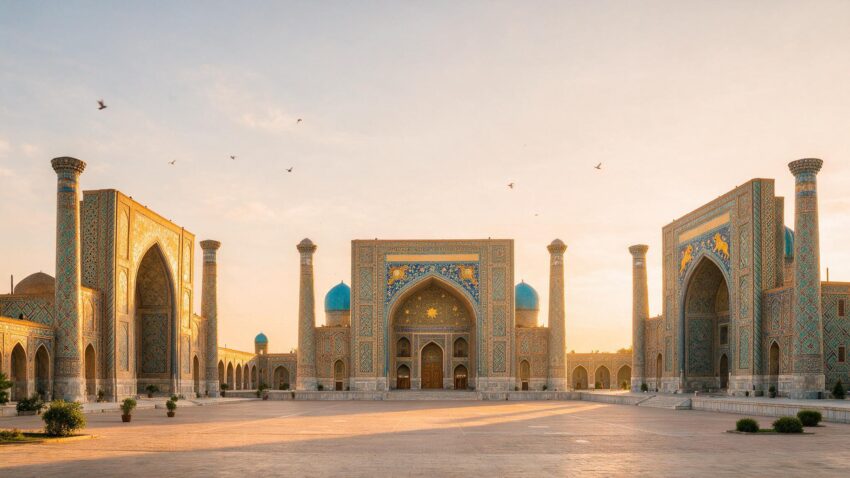
Ask ten well-travelled Indians in 2024 where Uzbekistan was on their list and most would have shrugged. Ask again in 2026 and you’ll hear a different answer — Samarkand keeps showing up in the same sentence as “before everyone else gets there.” That shift isn’t marketing. It’s showing up in the numbers: Turkish Airlines, Air Astana, China Southern and Uzbekistan’s own carriers have all added capacity into Tashkent this year, South Korean and Chinese travel demand into the region has spiked, and Uzbekistan’s government has been actively courting more of exactly the kind of traveller Get Tripped sends abroad — someone who wants a proper hotel, a private guide, and a destination their friends haven’t already posted to death.
We’ve been watching the Silk Road corridor for a while, and this autumn is the window we’d point clients toward if they asked us today. Here’s the real, current picture of getting from India to Uzbekistan, what it costs, when to go, and what three days between Tashkent, Samarkand and Bukhara actually looks like.
Why Uzbekistan Is Having a Moment in 2026
Central Asia’s tourism numbers have been climbing steadily since Uzbekistan simplified its visa regime a few years ago, but 2026 is when the airline map caught up. Turkish Airlines, Air Astana, Uzbekistan Airways and China Southern have all expanded routes through the region, and Uzbekistan is riding a broader “Silk Road travel boom” that’s pulling in visitors from South Korea, China, Russia, Turkey, Egypt and Saudi Arabia alongside the usual European crowd. For Indian travellers, the practical effect is more seat availability and more competitive fares into Tashkent than there were even two years ago.
There’s a second reason this matters for Get Tripped clients specifically: in 2025, Uzbekistan’s government publicly floated streamlining visa procedures further for Indian tourists, on top of the e-visa system that already exists. Combine that with a genuinely strong autumn weather window and three UNESCO World Heritage cities within a few hours of each other by train, and you’ve got a destination that’s early enough to still feel like a discovery — Registan Square at 7am has maybe a dozen people on it, not the crowd you’d fight through at Petra or Angkor Wat.
Visa & Entry for Indian Passport Holders
Indians need an e-visa for Uzbekistan — there’s no visa-free entry yet, though it’s worth watching that space given the direction policy has been heading. The e-visa is entirely online through the official portal (e-visa.gov.uz), and here’s what it actually costs and takes:
- Single-entry e-visa: USD 20 (government fee)
- Double-entry: USD 35
- Multiple-entry: USD 50
- Processing time: Usually 2–3 working days; budget up to a week if you’re applying close to travel dates, since some applications get pulled for additional review
- Visa validity: 90 days from issue date — you don’t have to travel immediately
- Permitted stay: Up to 30 days per entry, within that 90-day window
You’ll need a passport photo, your flight booking, hotel confirmations for your stay, and proof of travel insurance. Apply through the official government portal directly if you’re comfortable with the process — third-party visa services will do it for you for a markup, which is worth it mainly if you’re short on time or want someone checking your paperwork before submission.
Getting There: Flights from India
Delhi is your best-connected gateway — both IndiGo and Uzbekistan Airways fly the Delhi–Tashkent route, and it’s a short hop as international flights go, a little over three hours in the air. Fares swing a fair bit depending on how far out you book; budget roughly ₹18,000–₹25,000 one-way in economy if you book a few weeks ahead, though last-minute Uzbekistan Airways fares have dipped as low as ₹9,000 on off-peak dates, which tells you capacity has genuinely opened up. Mumbai and Bengaluru travellers will usually connect via Delhi or through Almaty/Astana on Air Astana, which adds a few hours but often works out cheaper if your dates are flexible.
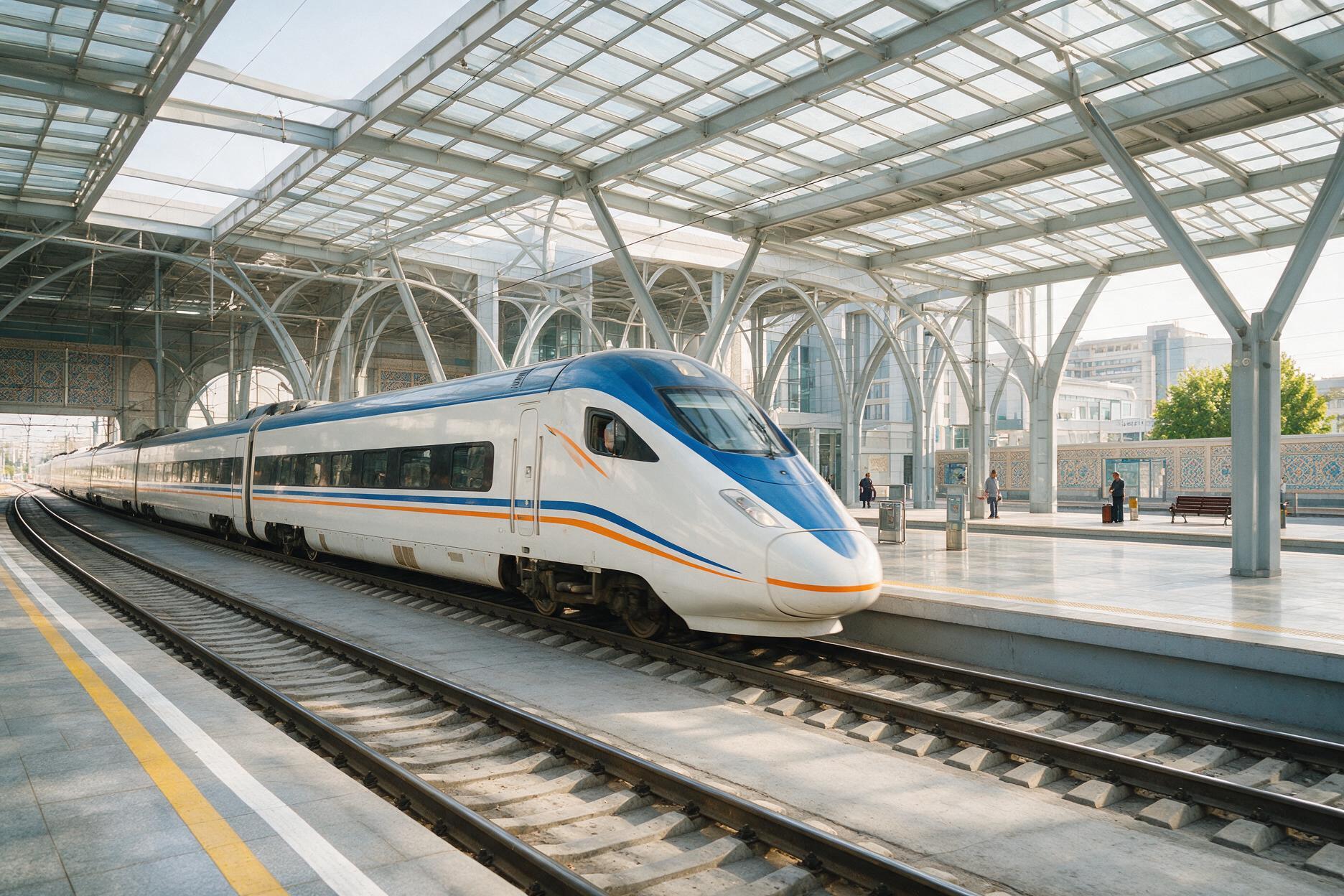
Once you land in Tashkent, skip renting a car for the Samarkand–Bukhara leg. The Afrosiyob high-speed train — yes, it’s genuinely called that — covers Tashkent to Samarkand in just over two hours at 230 km/h, for about $20 in economy or $33 in a business-class seat that’s honestly overkill for a two-hour ride. Samarkand to Bukhara adds another hour and a half for around $13. Tickets go live on the railway.uz website exactly 60 days before departure at 6am Tashkent time — mark your calendar, because the good seats move fast in high season. Foreign cards have worked reliably on the booking site since the start of this year; if the payment page glitches, switching the site to Russian fixes a known display bug more often than not.
Best Time to Visit
Skip summer entirely unless you enjoy sightseeing at 42°C — June through August in the Fergana Valley and the lowland cities is brutal, and even locals retreat indoors by midday. Spring (March–May) is Uzbekistan’s postcard season, with the Navruz festival in late March bringing music and food stalls to every town square, but it’s also when most European tour groups show up.
Our pick is September through the first half of October. Temperatures settle into a comfortable 21–30°C, the light goes golden in a way that makes even a phone photo of Bibi-Khanym Mosque look professional, and the bazaars fill with the year’s melon and pomegranate harvest — genuinely one of the best reasons to be in Samarkand in autumn is the fruit. Winter has its own appeal if you don’t mind the cold: near-empty monuments, snow dusting the turquoise domes, and noticeably lower hotel rates, plus skiing at the Chimgan resort an hour outside Tashkent if you want to bolt on something unexpected.
A Realistic 6-Day Route
Most first-time visitors try to cram in Khiva too and end up exhausted. Unless you have eight or nine days, we’d rather you actually enjoy Tashkent, Samarkand and Bukhara properly than rush a fourth city.
- Day 1–2, Tashkent: Land, settle in, walk the Chorsu Bazaar’s blue dome, and don’t skip the Soviet-era metro stations — several look like small palaces and photography is now officially allowed.
- Day 3–4, Samarkand: Afrosiyob train in, Registan Square at sunrise before the tour buses arrive, an afternoon at the Siab Bazaar, and a proper sit-down meal at a chaikhana rather than a tourist-menu restaurant.
- Day 5–6, Bukhara: Another short train hop, then the old city on foot — Bukhara’s centre is compact enough that you genuinely don’t need transport once you’re in it. The Lyab-i Hauz pool, ringed by mulberry trees and tea houses, is where you want to be around 6pm.
Where to Stay
Uzbekistan’s hospitality scene has grown up fast. In Tashkent, international chain hotels sit alongside newer boutique properties near the Amir Timur Square area — good for a first and last night with easy airport access. In Samarkand and Bukhara, the better move is a restored boutique guesthouse inside or near the old city walls — many are converted merchant houses with courtyards, and they put you a five-minute walk from the monuments instead of a taxi ride away. Expect mid-range boutique doubles in the $50–90/night range and true luxury properties, including a couple of well-regarded five-star openings in Tashkent, pushing $200+.
What to Eat (and Where)
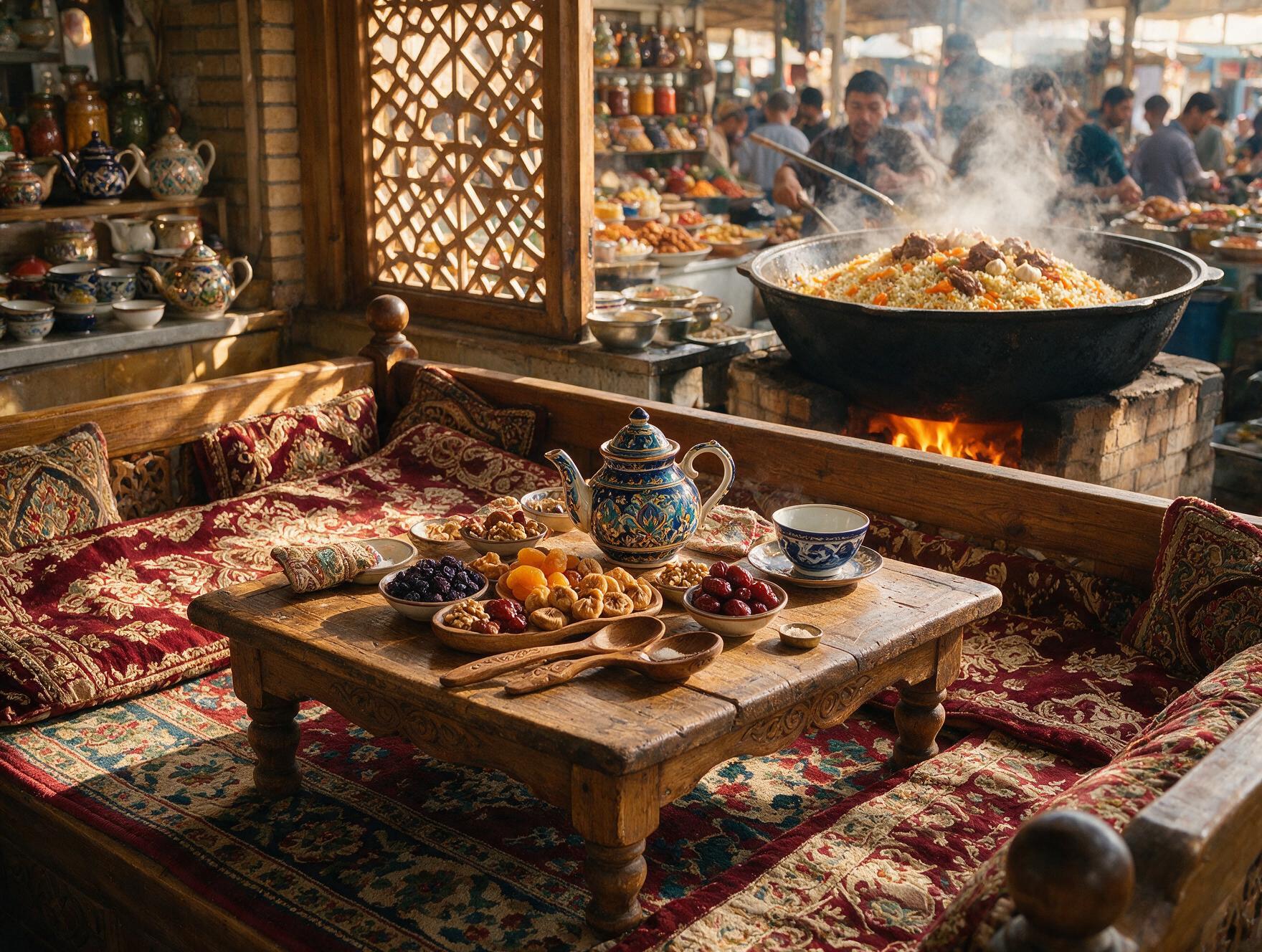
Plov is the dish everyone mentions and it’s worth the hype — rice cooked in a massive cauldron with lamb, carrot and cumin, different in character in every city. In Samarkand, locals line up at Samarqand Osh Markazi N1, a canteen-style spot that sells out its daily batch between 11am and 2pm, so go early or go hungry. If the menu’s mostly in Uzbek or Russian rather than English, that’s usually a good sign, not a bad one — it means the place is cooking for its own neighbourhood, not for tour groups.
Build in time for a proper chaikhana visit — the National Tea House near Registan does floor seating, traditional ceramic pots, and dried fruit and nuts on the side, and it’s as much about the ritual of sitting still for an hour as the tea itself. Samsa (the Central Asian cousin of the samosa, baked rather than fried, usually with lamb and onion) from a street stall at Siab Bazaar makes a better breakfast than anything a hotel buffet will give you.
A Hidden Gem Worth the Detour
Almost every visitor does Tashkent–Samarkand–Bukhara and stops there. If you have an extra day, the Nuratau mountains between Samarkand and Bukhara are where a small but growing number of community-based homestays let you spend a night in a village with working shepherds and near-total silence at night — a genuine contrast after three cities of monuments. It’s not on the standard tour operator itinerary yet, which is exactly the point.
Money, Cards and Staying Connected
The currency is the Uzbekistani som, and by law you pay for goods and services in som — don’t expect to hand over dollars at a bazaar stall. Cards work increasingly well in hotels, upscale restaurants and shopping centres in the big cities, but bazaars, taxis and smaller guesthouses are still cash-first. ATMs are common in all four major tourist cities; carry roughly 600,000–1,000,000 som (about $50–80) in cash per day for a comfortable mid-range trip, and always agree a taxi fare before you get in, since meters aren’t standard practice.
SIM cards from Ucell or UzMobile are sold at Tashkent airport and in city phone shops, and both offer tourist eSIM options now if you’d rather set things up before you land — worth doing, since navigating between old-city alleyways without data gets old fast.
A Mistake to Avoid
Don’t try to see Registan Square, Bibi-Khanym Mosque and the Gur-e-Amir mausoleum all in one afternoon on your first day in Samarkand, which is what most rushed itineraries push you toward. The light is completely different at 7am versus 5pm, the crowds are night-and-day different too, and Samarkand rewards a slower pace more than almost anywhere else on this route. Give it the full two days.
Who This Trip Is For
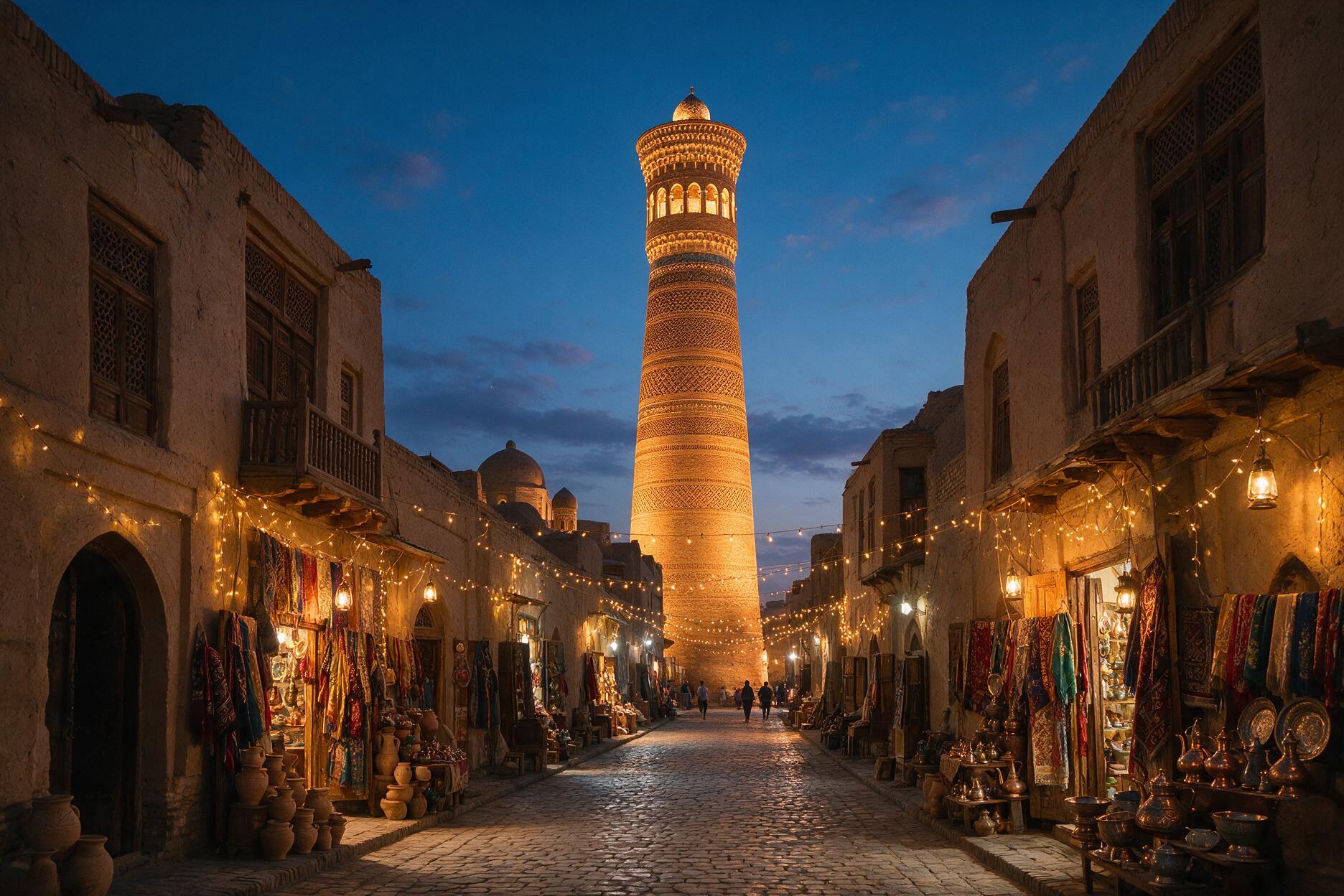
Couples will find Bukhara’s old town, with its lantern-lit evenings and rooftop restaurants overlooking the Kalyan Minaret, genuinely romantic without trying too hard to be. Families travelling with older kids or teens will get more out of this than a beach trip — the history is tangible in a way that photographs badly explain, and the train journeys themselves are half the fun. Solo travellers will find Uzbekistan easy and safe to navigate; English is patchy outside hotels and tour operators, but people are consistently helpful, and the compact old cities make wrong turns low-stakes. For a luxury take, a private guide who can get you into Registan Square before the gates officially open, paired with a stay at one of Tashkent’s new five-star properties, turns this from a good trip into an exceptional one.
Frequently Asked Questions
Do Indians need a visa for Uzbekistan?
Yes. Indian passport holders require an e-visa, applied for online, costing from $20 for a single entry with typical processing of 2–3 working days.
Is Uzbekistan safe for Indian tourists, including solo travellers?
Yes — Uzbekistan has a strong safety record for tourists, with visible police presence around major sites and a genuinely helpful local culture. Standard travel precautions apply, but it’s considered one of the safer countries in the region to explore independently.
How many days do you need for Uzbekistan?
Six days covers Tashkent, Samarkand and Bukhara at a comfortable pace. Add Khiva and you’re looking at nine to ten days given the extra travel time involved.
Is there a direct flight from India to Uzbekistan?
Yes, Delhi has direct flights to Tashkent on IndiGo and Uzbekistan Airways, taking a little over three hours. Mumbai and Bengaluru travellers typically connect via Delhi or through Central Asian hubs like Almaty.
What’s the best month to visit Uzbekistan?
September and early October offer the best combination of comfortable temperatures, golden light for photography, and harvest-season markets, without the peak crowds of spring’s Navruz festival period.
Can I use my debit or credit card in Uzbekistan?
Cards work in hotels and upscale restaurants in major cities, but carry cash for bazaars, taxis and smaller guesthouses, since these remain largely cash-only.
Conclusion
Uzbekistan in 2026 sits in that narrow window every well-travelled person is chasing — genuinely easy to get to, properly set up for visitors who want comfort without losing the sense of discovery, and not yet crowded. Registan Square isn’t going to stay this quiet forever as more airlines add capacity and more travel publications catch up to what’s already happening on the ground. If Central Asia has been sitting on your someday list, this is the year to move it up.
Thinking about a Silk Road itinerary that takes the planning off your plate — visa paperwork, train bookings, and a guide who knows which chaikhana to walk into? Get in touch with Get Tripped and we’ll build it around exactly how many days you have.